Safari Luggage Rules: What Australian Travellers Arriving in Africa Get Wrong
In our overview of flying from Australia to Africa for safari, we flagged luggage as the detail that catches most first-time visitors off guard. The topic deserves its own guide, because the consequences of getting it wrong range from paying a significant surcharge on a dusty airstrip to having your bag refused entry onto the aircraft altogether.
There is nothing complicated about African luggage rules once you understand the logic behind them. The problem is that Australian travellers, accustomed to the generous allowances on Qantas or Emirates, arrive expecting the same standards throughout the journey. They don’t apply.
Two Sets of Rules: International vs Bush
Every African safari itinerary that involves light aircraft travel operates under two completely different baggage regimes.
Your international flight, whether it’s the Qantas nonstop from Sydney to Johannesburg, or an Emirates connection via Dubai, allows 23 kilograms of checked luggage in Economy and 30 to 40 kilograms in Business Class. Qatar Airways allows up to 40 kilograms in Business. On these aircraft, your bags ride in a pressurised, temperature-controlled hold. The baggage rules exist to manage revenue and weight distribution across a large aircraft.
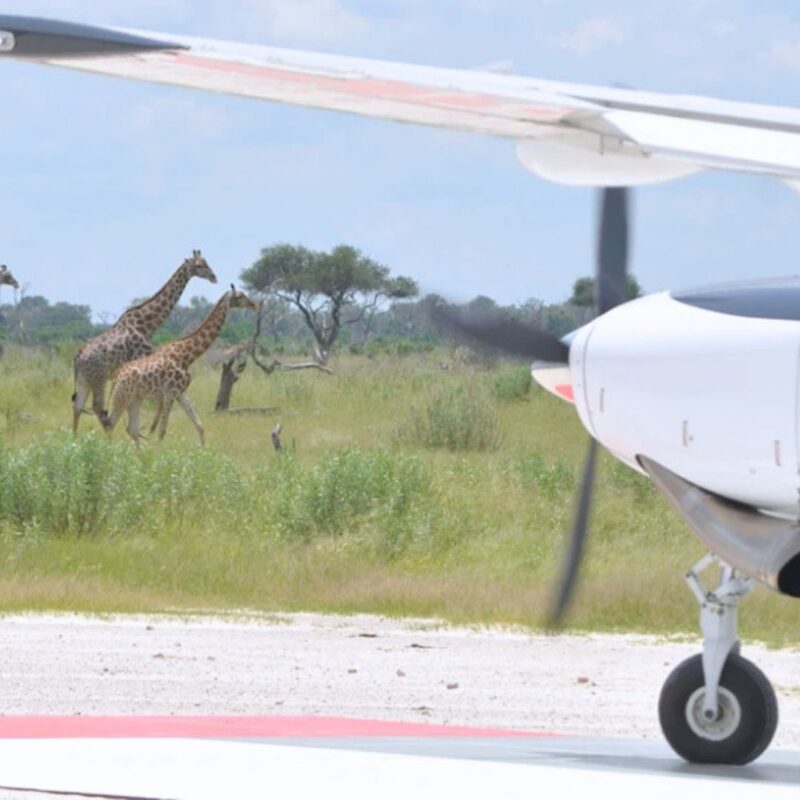
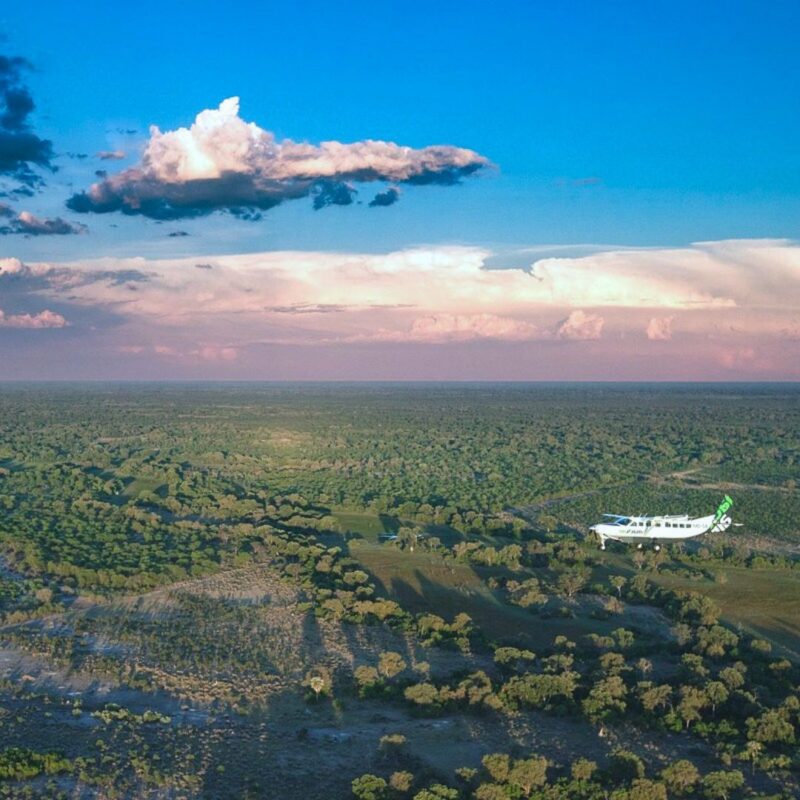
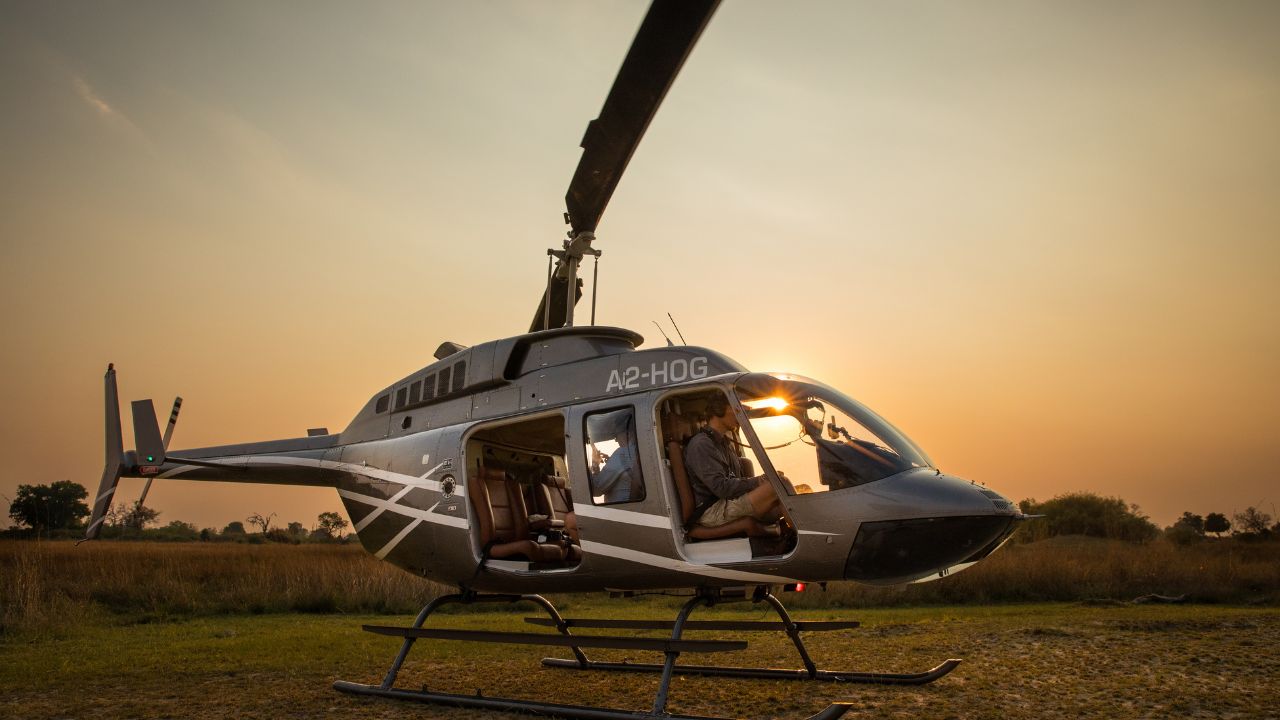
Bush plane rules are different in kind, not just in degree. Light aircraft operating in East and Southern Africa, Cessna Caravans, Pilatus Porters, and similar six- to twelve-seat aircraft, carry passengers to remote airstrips that are nothing more than cleared grass in the middle of a national park. The planes operate at altitudes above 1,000 metres, often in heat that reduces engine performance. Every kilogram of luggage directly affects how safely the aircraft can take off and land.
The pilot has the legal authority to refuse any bag or any passenger that exceeds the weight limit. There is no supervisor to appeal to. There is no later flight. The next option, if your bag is refused, is a private charter at considerable additional cost, and only if you can organise one at all.
The Weight Limits by Region
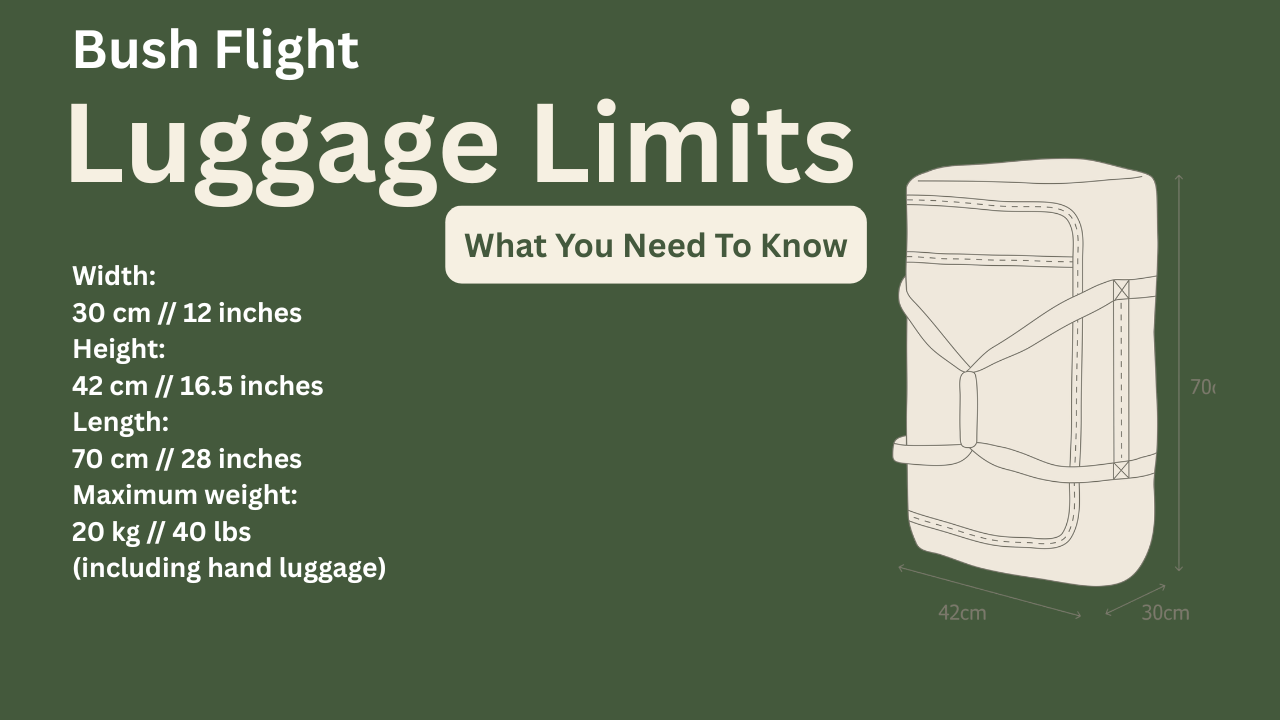
East Africa — Kenya, Tanzania, Uganda, Rwanda: Most light aircraft operators in this region enforce a combined limit of 15 kilograms per person. This includes your main bag and your daypack. Air Kenya enforces 15 kilograms. Governors’ Aviation enforces 15 kilograms. On these bush flights, hand luggage sits on your lap, the aircraft do not have overhead lockers or under-seat storage.
Southern Africa — Botswana, Zimbabwe, Zambia, Namibia: The standard limit here is 20 kilograms per person in soft bags. Mack Air in Botswana allows 20 kilograms. Charter operators in Zimbabwe and Namibia apply the same limit. Zambia’s Proflight, which operates to Livingstone and other safari destinations, enforces a 15-kilogram limit.
South Africa — Kruger and surrounds: Scheduled regional flights from Johannesburg to Hoedspruit, Skukuza, or Phalaborwa on South African Airlink or similar carriers have more generous allowances than pure bush operators, typically 20–23 kilograms, and will accept soft-sided luggage with wheels. These are proper regional airports, not grass airstrips. The rules are closer to a commercial airline than a charter.
The Soft Bag Rule
Weight is only half the constraint. The bag itself must be soft-sided.
Bush plane cargo compartments are small and oddly shaped. The holds on a Cessna Caravan or similar aircraft have narrow openings and curved walls. A rigid hard-shell suitcase, regardless of weight, cannot be physically squeezed in. Pilots report that guests arrive at remote airstrips with 23-kilogram hard Samsonites that were perfectly acceptable on every previous flight. They cannot be loaded.
The requirement is a soft-sided duffel bag with no rigid frame. Bags with wheels are generally prohibited if the wheel housing includes a rigid frame structure, though some operators allow soft-sided bags with wheels as long as the overall structure is pliable. When in doubt, choose a duffel with no wheels. The bag should squash and flex when compressed.
Dimensions typically need to be no more than approximately 70 centimetres long by 30 centimetres wide by 33 centimetres deep, though this varies by operator and aircraft. A 40- to 45-litre soft duffel fits comfortably within these constraints.
The Practical Solution: One Bag Per Person
The easiest way to manage the luggage problem is to choose your bags before you choose anything else, and pack for the bush from the beginning.
A 40-litre soft duffel as the main bag and a 15- to 20-litre daypack for camera gear, valuables, and in-flight essentials is the standard configuration used by experienced safari travellers. Combined, they typically weigh under 15 kilograms if you pack thoughtfully, and 20 kilograms is achievable without any sacrifice.
Most safari camps provide daily laundry service, included in the rate. There is genuinely no need to pack a separate outfit for every day. The dress code on safari is casual: neutral-coloured shirts and trousers, a light fleece for early morning game drives, and comfortable walking shoes. Nothing requires packing volume.
Camera equipment requires special thought. Telephoto lenses, a camera body, batteries, and chargers add weight quickly. If your camera kit alone approaches 5 kilograms, the rest of your pack needs to accommodate that. Some operators allow you to purchase an additional seat for oversized or camera-heavy luggage, but you need to book and pay for this in advance, not improvise at the airstrip.
Storing Excess Luggage
Australian travellers arriving via Johannesburg who are connecting to a fly-in safari in Botswana, Zimbabwe, or Zambia often find the easiest solution is to store excess luggage at OR Tambo International Airport or at a hotel in Johannesburg. Most city hotels will hold bags for the duration of your safari — typically at no charge or a minimal daily fee, and you collect on the way home.
This is a practical and common arrangement. You fly into Johannesburg with your full international allowance, transfer only the camp-compliant bag into the bush, and return to collect the excess before your homeward international flight.
The same approach works in Nairobi for East Africa safaris. Store your heavy international bags at a Nairobi hotel, take the compliant soft duffel into the Maasai Mara or Amboseli, and retrieve everything on the return connection through Nairobi.
Excess Baggage at African Airstrips
What happens if you arrive at a bush airstrip with an oversized or overweight bag?
The operator’s first offer will typically be to charge you for an additional luggage allowance, essentially purchasing space on a subsequent flight. This is expensive and, at many remote strips, simply not possible that day.
The alternative is to leave the bag behind at the nearest town or lodge, which is rarely a comfortable outcome on a 10-day safari. In some cases, you can arrange a private charter to carry excess luggage separately, at the cost of a full seat on a light aircraft.
None of these outcomes are pleasant. All are avoidable.
A Note on Carry-On Items in the Bush
Safari camp managers note that guests frequently arrive with camera cases, laptop bags, and over-stuffed personal items that weren’t counted in the weight declaration. On a Cessna Caravan with six passengers, the pilot weighs everything, including the daypack you planned to carry on your lap.
Consider your daypack weight honestly. A DSLR body with a standard lens, a wide-angle, and a telephoto can easily reach 4 to 5 kilograms. Add a tablet, chargers, sunscreen, and binoculars, and you are at 7 or 8 kilograms before you touch your main bag. Combined, that may already exceed the 15-kilogram East Africa limit.
Many experienced safari photographers book a dedicated luggage seat when their camera kit exceeds 5 kilograms. It costs roughly the equivalent of one night at a mid-range camp and avoids the alternative entirely.
Packing the Right Kit
The good news is that safari clothing is lightweight. Neutral colours, khaki, olive, tan, in technical fabrics, dry overnight when washed. Three to four sets of trousers or shorts, four to five shirts, and a light insulating layer cover almost any itinerary. Add a wide-brim hat, good sunglasses, and a pair of neutral-coloured shoes or boots.
White and bright colours disturb wildlife on game drives; leave them at home. Black and dark blue attract tsetse flies in parts of southern Zambia, Zimbabwe, and Botswana, so skip those too. The uniform of safari is functional, not fashionable, and that’s precisely what makes it so easy to pack.
Bring the Right Bag Before You Leave Australia
The simplest advice is this: buy a soft duffel before your trip and use it as your main bag on the entire journey. Most international airlines have no objection to a soft duffel in the hold; it fits any luggage rack and is often easier to handle than a hard-shell case. Brands like Eagle Creek, Osprey, and Patagonia make travel duffels specifically designed for trips like this.
Leave the wheeled hard case at home, or store it in Johannesburg or Nairobi. Everything you actually need in the bush fits in a 40-litre duffel if you think clearly about it.
For the broader picture of how Australian travellers should structure the full journey to Africa, return to our main guide: Australia to Africa Safari Flights: Complete Route Guide
For how to choose the right entry airport in East Africa, which affects your charter connections, see: Flying into East Africa: Nairobi vs Kilimanjaro for Safari
African Signature Journeys Will Walk You Through It
Getting the luggage right is one of the first things we discuss with every client planning a fly-in safari. The constraints are real, the solutions are simple, and it makes a significant difference to how the journey feels, in both directions.
Contact African Signature Journeys to start planning your African safari, and we’ll make sure every detail of the journey is sorted before you leave home.
Also in This Series
- Pillar: Australia to Africa Safari Flights: Complete Route Guide
- Hub 1: Dubai or Doha: Which Hub Works Best for Your Safari Route?
- Hub 2: Flying into East Africa: Nairobi vs Kilimanjaro for Safari
- Hub 3: Safari Luggage Rules: What Australian Travellers Get Wrong (You are here)
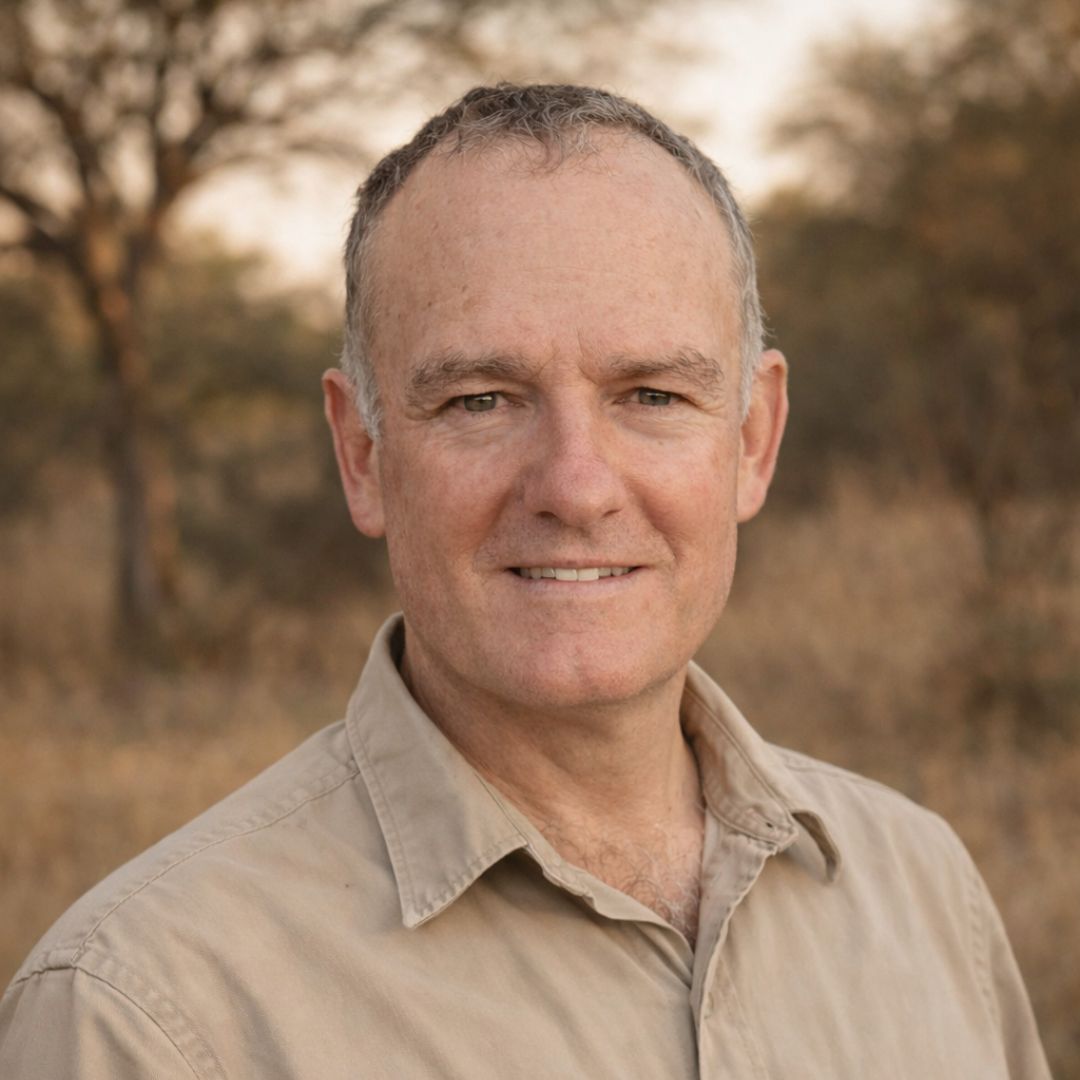
Sean Lues
Award Winning Safari Guide
Content by Award Winning Safari Guides
The content on African Signature Journeys is overseen by Sean Lues, an award-winning professional safari guide who was born and raised in Zimbabwe and has spent decades living, guiding, and managing safari operations across Africa.
Winner of the Zimbabwe Professional Guides Association Guide of the Year award, Sean is recognised for his deep knowledge of African wildlife, landscapes, and safari experiences. Now based in Australia, he combines firsthand African expertise with an understanding of what Australian travellers want from their safari adventure.
His experience helps ensure the information, recommendations, and insights shared by African Signature Journeys are practical, accurate, and based on real-world experience.
Do You Have a Question We Can Answer For You?
Connect with Sean