African Conservancies: How Community Ownership Delivers a Better Safari
In our guide to safari land types, we described conservancies as the third distinct category, different from both national parks and purely private reserves. They are, in many ways, the most interesting category of all.
A conservancy is land owned by a local community and leased to safari operators under agreements that return income to the landowners. The model is conservation-driven. The experience delivered is comparable to and often exceeds what a private reserve offers. The ethical dimension is transparent and genuine.
This post goes deep on how conservancies work, where the best ones are, and what the experience actually looks like on the ground.
How the Conservancy Model Was Born
The clearest story comes from Kenya.
The Maasai Mara National Reserve was established in 1961. Before that, the land was Maasai territory pastoral, communally managed, and shared between people and wildlife. With the reserve’s boundaries drawn and formal protections in place, Maasai communities found themselves excluded from land they had always used. Wildlife protected inside the reserve increasingly raided their cattle beyond it. And as safari tourism grew through the 1980s and 1990s, the economic benefits flowed largely past the Maasai to tour operators and the Kenyan government.
By the early 2000s, Maasai landowners began exploring an alternative. Instead of selling or ceding their land, they would lease it converting cattle grazing land adjacent to the reserve into wildlife habitat, under agreements that guaranteed monthly income to each landowning family. Operators would pay per-bed, per-night fees. No wildlife would be hunted. Cattle grazing would be strictly controlled. The land would recover.
The result, over the two decades since, has been one of conservation’s clearest success stories. Overgrazed ranches became savannah. Predator populations recovered. Lion numbers increased as prey returned. And the Maasai families more than 14,500 landowners across the Mara conservancies today, receive reliable income that funds schools, clinics, clean water, and economic development.
Your stay in a conservancy is not charity. It is a direct economic transaction. That distinction matters. The conservancy model works precisely because it makes conservation profitable for the people living alongside the wildlife.
The Mara Conservancies: Africa’s Most Developed Conservancy System
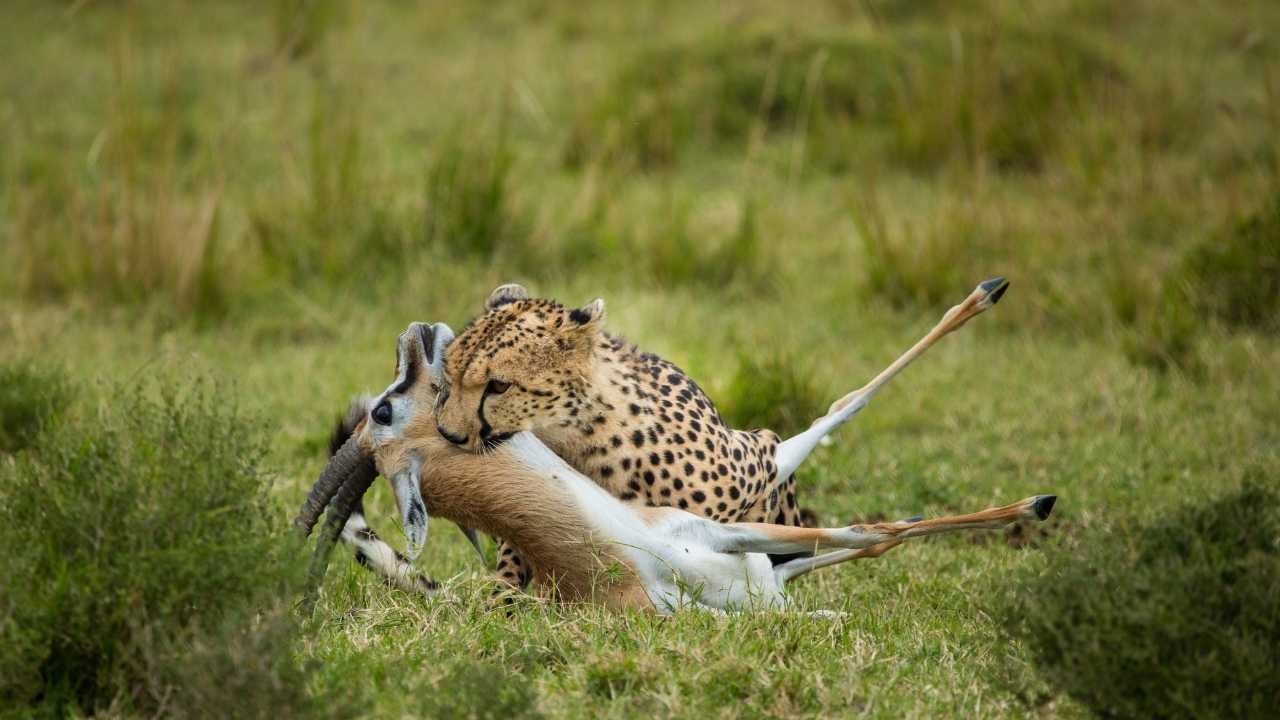
More than 15 conservancies now border the Maasai Mara National Reserve in Kenya. Together, they add more than 350,000 acres to the greater Mara ecosystem. Wildlife moves freely between the conservancies and the reserve, no fences, no barriers. What changes is the management model, the visitor density, and what you’re allowed to do.
Each conservancy has a slightly different character. Four stand out for Australian travellers planning a Kenya safari.
Mara Naboisho Conservancy was established in 2010 through an agreement with over 500 Maasai landowning families. The name means “coming together” in Maasai. It covers 145 square kilometres and operates nine camps and lodges — roughly 877 acres per tent. Lions here are exceptional: more than 70 to 100 identified individuals live in or near the conservancy, one of the highest densities in Africa. Off-road driving, night drives, and guided walks are all available. Day visitors are not admitted. Your stay contributes directly to women’s business programmes, clean water access, and renewable energy projects in nearby Maasai communities.
Olare Motorogi Conservancy is widely regarded as the template for the conservancy model. Founded in 2006, it operates across 35,000 acres with just five camps and a maximum of 94 beds. The vehicle density figure tells the story: one game-viewing vehicle per 2,100 acres. It has the highest concentration of lions per square kilometre among the Mara conservancies, and the lowest tourist density. Big cats are reliable, unobstructed sightings are the norm, and the cultural depth, Maasai guides, village visits, knowledge of the land passed across generations, adds something a purely private reserve rarely matches.
Mara North Conservancy is the largest of the four major conservancies at around 70,000 acres. It lies along the northwestern edge of the Maasai Mara National Reserve. During the Great Wildebeest Migration, Mara North is often the furthest north the herds travel before turning south again, making it excellent for migration viewing away from the main reserve’s vehicle congestion. Dense woodland and riverine forest attract elephants and leopards in high numbers year-round. Fifteen camps operate within its boundaries, ranging from mid-range to luxury.
Ol Kinyei Conservancy is the oldest of the Mara conservancies, founded in 2005. It is one of the smallest, 18,500 acres, and one of the most exclusive. Just two permanent camps and two mobile camps serve the entire conservancy. The landscape combines undulating hills, riverine forests, and open savannah, with reliable resident lions, leopards, elephants, and buffalo. Guest numbers are minimal. The experience is among the most private available anywhere in the Mara ecosystem.
What a Conservancy Safari Actually Looks Like
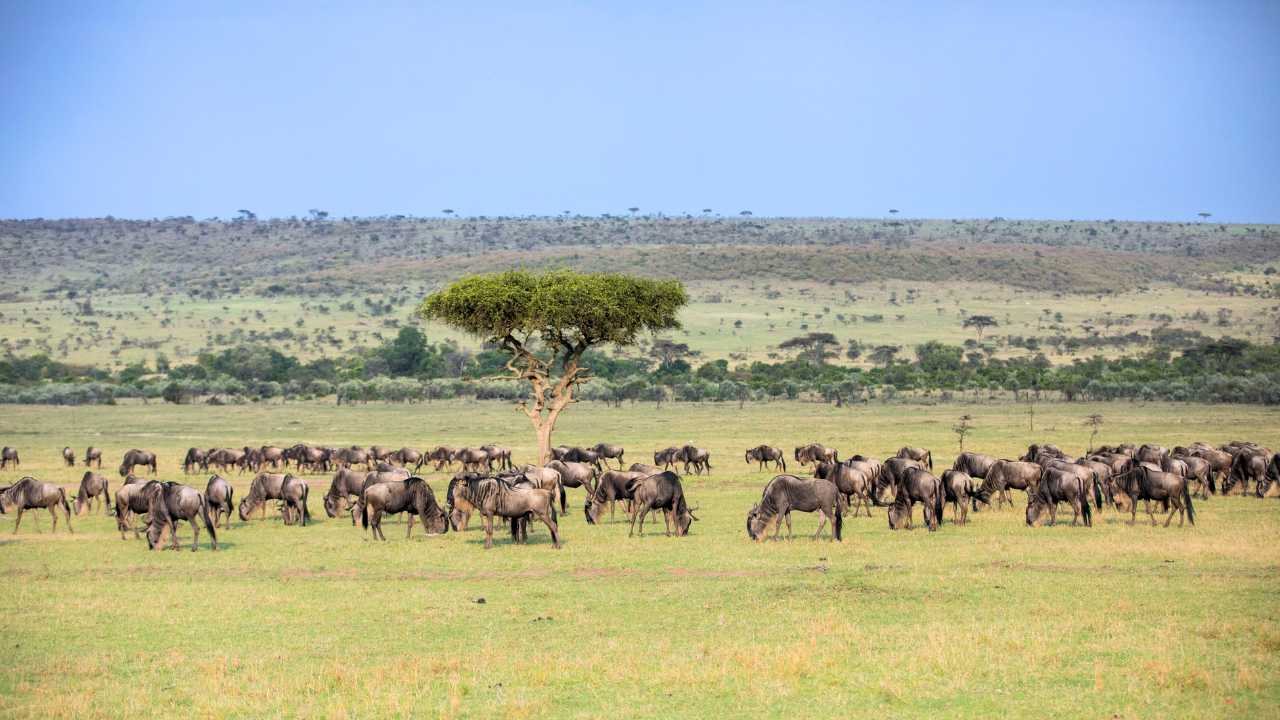
Arriving at a Mara conservancy camp is different from arriving at a national park lodge. The transfer, usually a light aircraft landing on a grass airstrip, delivers you directly into the conservancy. No public roads cross the property. No day visitors pass through.
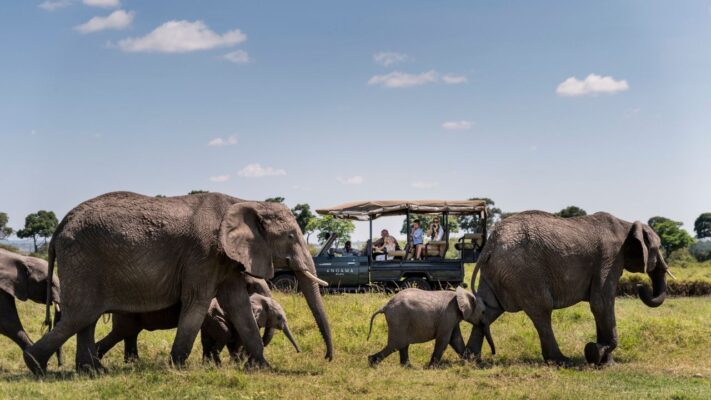
Game drives depart at dawn in open 4×4 vehicles, guided by Maasai guides whose families own the land you’re driving across. That relationship is not incidental. A Maasai guide’s knowledge of this land is generational, tracking skills, plant knowledge, and wildlife behaviour are learned across a lifetime. Moving through the conservancy with someone whose grandfather walked this same ground is a different kind of experience from following a trained but culturally disconnected guide.
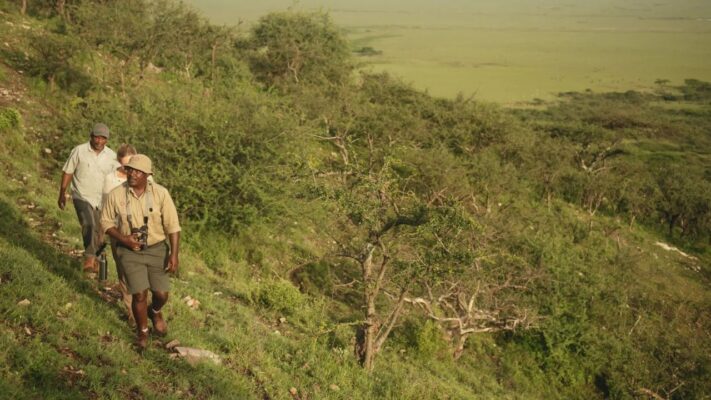
Off-road driving is standard. Night drives operate on most conservancies, though protocols vary slightly between camps. Guided walks, led by armed Maasai guides, are a genuine option and represent one of the best walking safari experiences in East Africa.
Crossing from the conservancy into the national reserve for a day game drive is generally available, at an additional day visitor fee. This means the best of both worlds is accessible from a conservancy base: the exclusivity and activity range of the conservancy, plus the sheer scale and wildlife volume of the Mara National Reserve.
Conservancies Beyond Kenya
Kenya’s Mara model is the most developed conservancy system in Africa, but it is not the only one. Similar models operate across the continent.
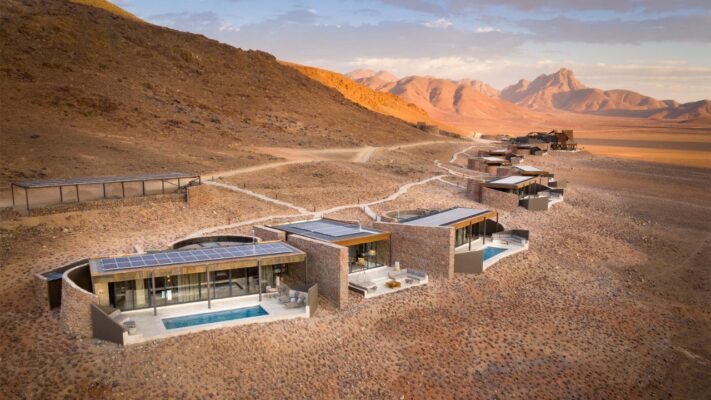
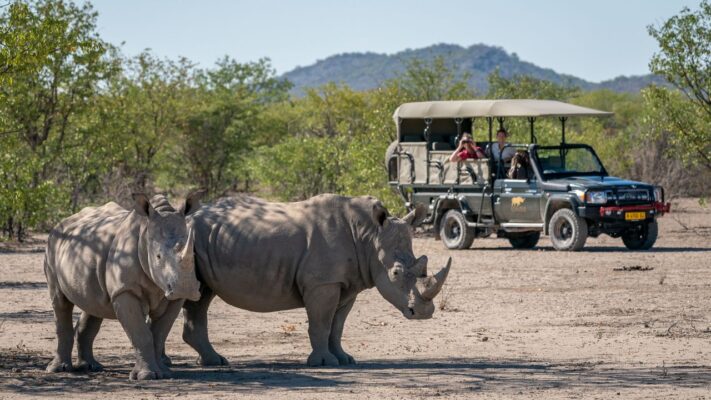
Namibia’s communal conservancies cover more than 20% of the country, a scale unmatched anywhere. The Namibian model, developed through the 1990s, gave rural communities the right to manage and benefit from wildlife on their communal land. Damaraland and Kunene regions support conservancies that protect desert-adapted elephants, lions, and black rhino. Tracking desert rhino on foot with a community guide is an experience that doesn’t exist in any national park in the world.
Zimbabwe’s CAMPFIRE programme (Communal Areas Management Programme for Indigenous Resources) pioneered the idea of community wildlife benefit sharing from the late 1980s. Areas like the Zambezi Valley’s Hurungwe District give communities direct income from wildlife-based tourism. The Hwange communal conservancy areas buffer the national park and provide additional wildlife dispersal zones for the region’s extraordinary elephant population.
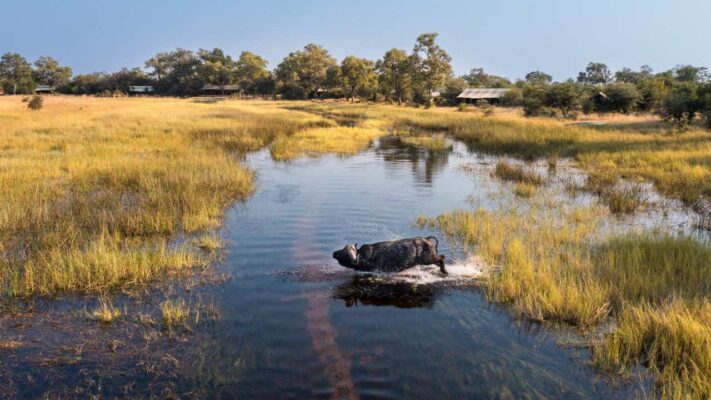
Botswana’s community trusts in areas around the Okavango Delta, Khwai, Mababe, and the CKGR periphery, operate under similar principles. The Khwai Community Trust, for instance, manages a concession bordering Moremi Game Reserve, with camp access restricted to trust guests and activities including walking, night drives, and open vehicle game drives unavailable inside the park.
Conservation Outcomes: What the Evidence Shows
The conservancy model has produced measurable conservation results. This is not a theoretical claim.
In the Mara conservancies, land that was overgrazed bare in the early 2000s has regenerated into healthy savannah. Prey populations recovered, and predator numbers followed. The Olare Motorogi Conservancy today supports lion densities that match or exceed the national reserve. Wildlife seeks out the quieter conservancy areas during peak tourism season, when national reserve activity levels are highest.
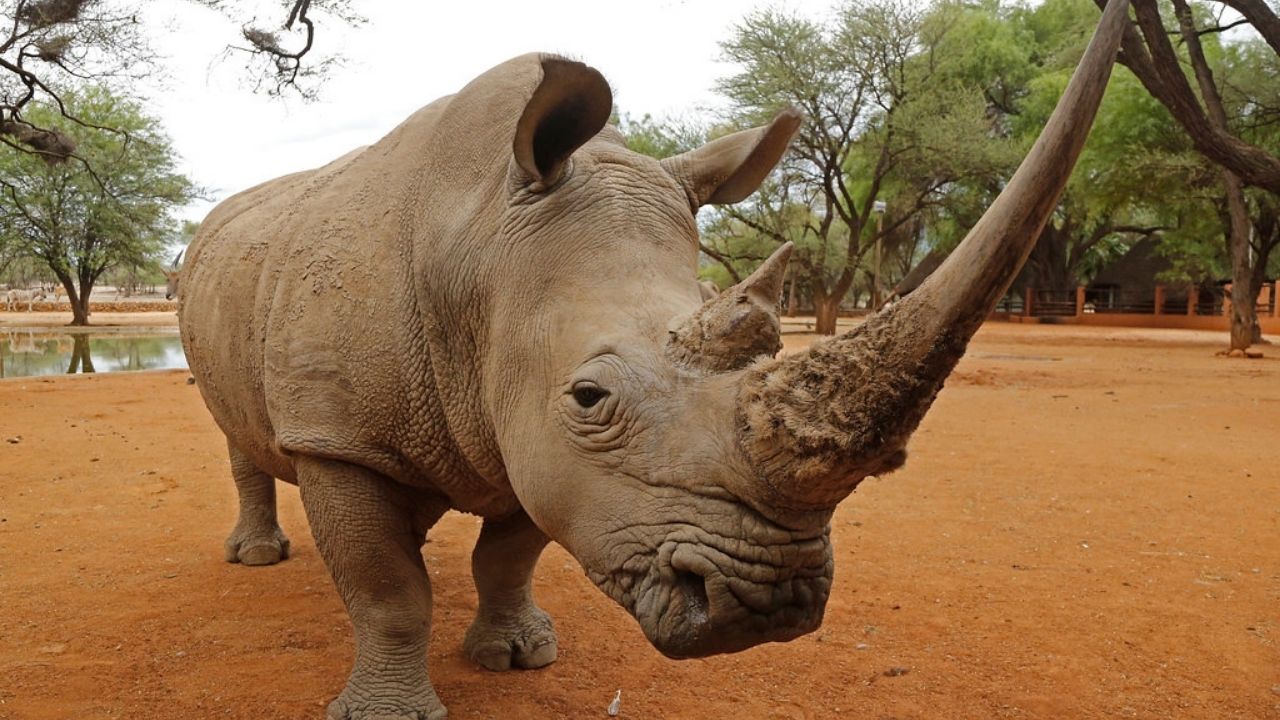
In Namibia, the black rhino population on communal conservancy land has grown significantly since the conservancy system was established. Desert-adapted lions, which were largely absent from communal areas in the 1990s, have returned.
The mechanism is straightforward. When communities benefit directly from wildlife, through reliable lease payments, employment, and tourism fees, the incentive to poach or to convert land to agriculture is reduced. Wildlife becomes an economic asset to the community, not a threat to it. That alignment is what national parks, with government-held revenue and often minimal community benefit, historically failed to achieve.
What You Should Know Before Booking a Conservancy
Conservancy camps are typically all-inclusive: accommodation, meals, guided activities, and conservancy fees are bundled. The conservancy fee, usually USD 80 to 120 per person per night, paid on top of the accommodation rate, goes directly to the landowner community. It is not a surcharge. It is the mechanism through which your stay funds the conservation model.
Day visitors are not admitted to most conservancies. The exclusivity is structural, not decorative.
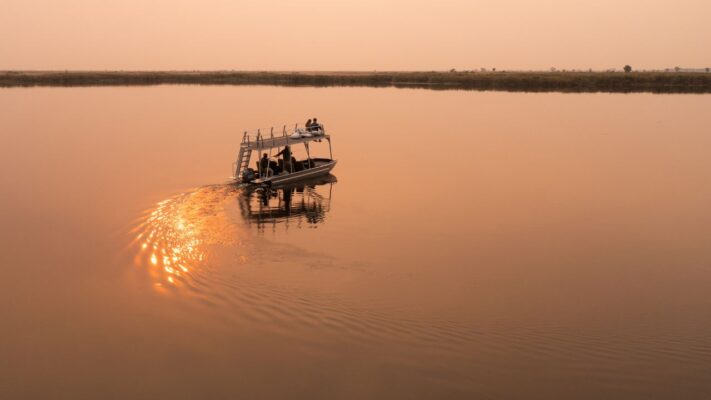
Activity offerings vary between camps. Some offer boat excursions (where rivers or wetlands exist). Most offer walking, night drives, and cultural visits. Confirm specific activities with your travel designer before booking.
Seasonal access matters. Some mobile camps within conservancies operate only during the migration window (June to October). Permanent camps offer year-round access, with the shoulder months of November and April often delivering exceptional value and lower visitor numbers alongside strong wildlife viewing.
Plan Your Conservancy Safari
African Signature Journeys designs Kenya and East Africa safaris that place conservancy stays at the centre of the itinerary. We know the specific camps and the seasonal windows that deliver the best experience for each type of traveller.
In This Series
Safari Land Types: The Complete Guide
Private Game Reserves: What the Premium Buys
African Conservancies: Community, Conservation, and Safari (You are here)
National Parks: Where to Go and What to Expect
Explore Our African Signature Experiences

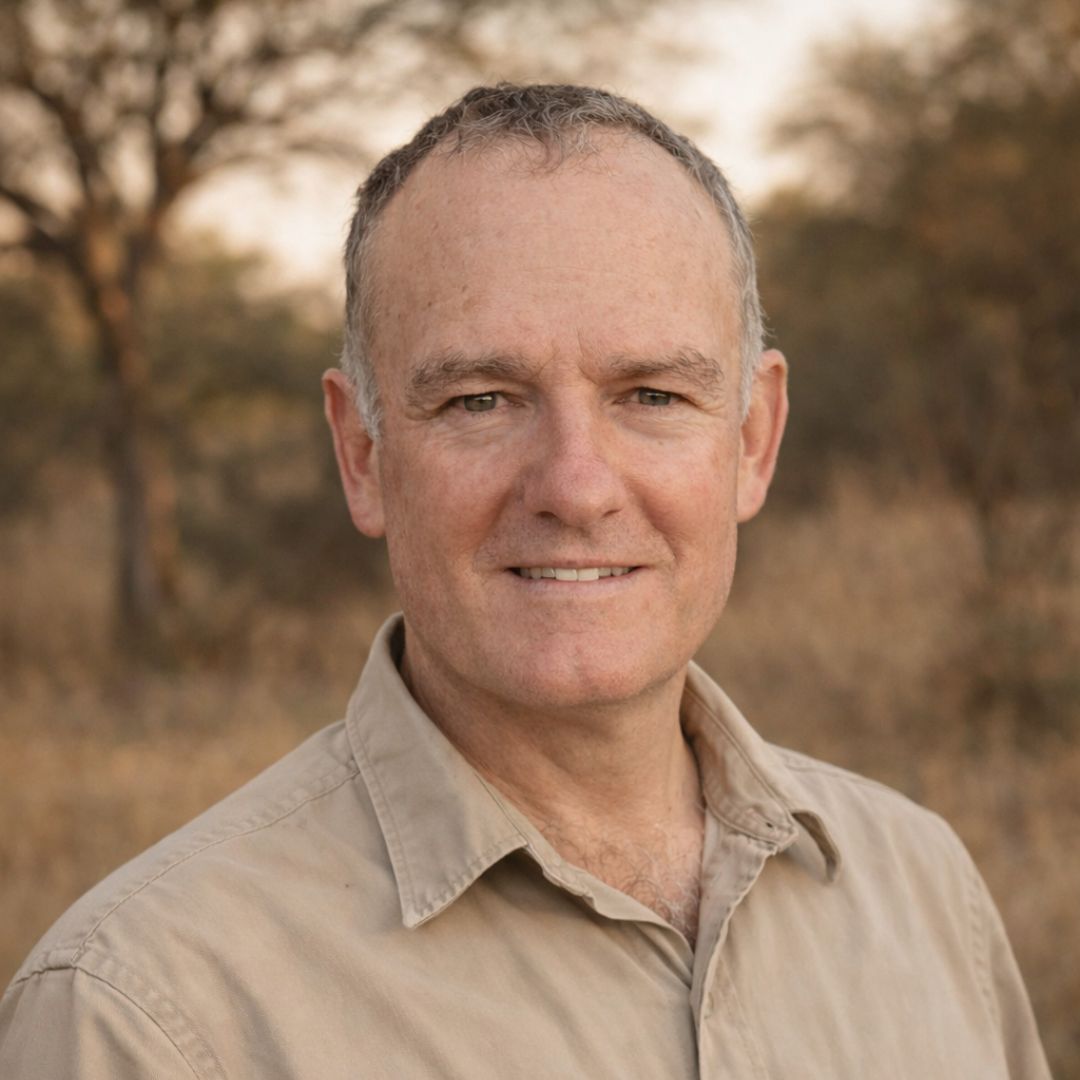
Sean Lues
Award Winning Safari Guide
Content by Award Winning Safari Guides
The content on African Signature Journeys is overseen by Sean Lues, an award-winning professional safari guide who was born and raised in Zimbabwe and has spent decades living, guiding, and managing safari operations across Africa.
Winner of the Zimbabwe Professional Guides Association Guide of the Year award, Sean is recognised for his deep knowledge of African wildlife, landscapes, and safari experiences. Now based in Australia, he combines firsthand African expertise with an understanding of what Australian travellers want from their safari adventure.
His experience helps ensure the information, recommendations, and insights shared by African Signature Journeys are practical, accurate, and based on real-world experience.