Madikwe Game Reserve: The Benchmark for Malaria-Free Safari in South Africa
Our complete guide to malaria-free safaris in South Africa identifies four regions where you can track the Big Five without antimalarial medication. Among those, Madikwe stands apart. Experts and experienced travellers widely regard it as the gold standard, the reserve that delivers the most complete malaria-free safari experience in South Africa, and one that holds its own against any Big Five destination on the continent.
Madikwe sits in the North West Province against the Botswana border, four to five hours from Johannesburg. Travellers do not pass through this part of South Africa by accident. They come here specifically because nowhere else combines this scale of wilderness, this breadth of wildlife, and this quality of lodge infrastructure in a single malaria-free reserve.
Scale and Setting
Madikwe covers 75,000 hectares, roughly the footprint of Berlin. A single lodge’s game drive territory within that area is vast. The low density of lodges across the reserve means encounters with other vehicles are genuinely rare. This is not a reserve where you share sightings with a queue of cars.
The landscape occupies an ecologically unusual transition zone where the semi-arid Kalahari meets the more verdant lowveld bushveld. Open savanna, acacia woodland, rocky outcrops, and permanent waterholes create a mosaic of habitats within one reserve. That variety directly explains the breadth of species Madikwe carries.
The Dwarsberg Mountain range defines the southern boundary. Several lodges sit on ridgelines with views across it. The early morning light in winter is exceptional.
How Madikwe Was Built
In the early 1990s, a consortium of the North West Parks Board, private lodge operators, and surrounding communities converted degraded cattle farmland into a wildlife reserve. Operation Phoenix, one of the largest wildlife translocation projects ever undertaken, moved more than 8,000 animals into the reserve. Madikwe did not inherit its wildlife. It rebuilt it from scratch.
The reserve was designed as a genuine partnership between conservation, private enterprise, and local communities. Several lodges are community-owned. Others structure meaningful community employment and shareholding into their operations. Madikwe is widely cited internationally as the model for what conservation tourism can achieve when the intent is serious and long-term.
What You Come to See
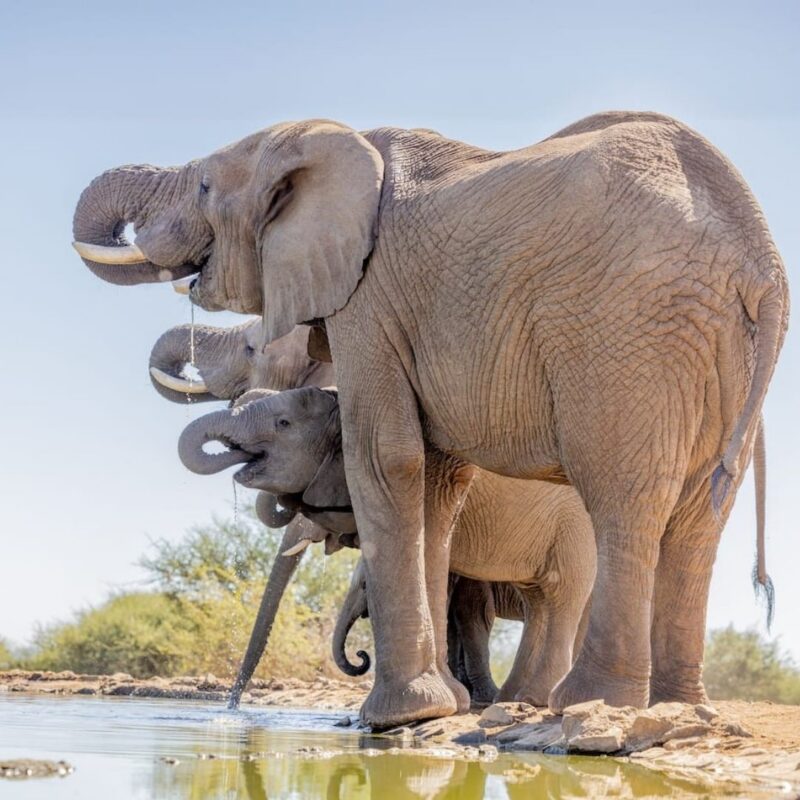
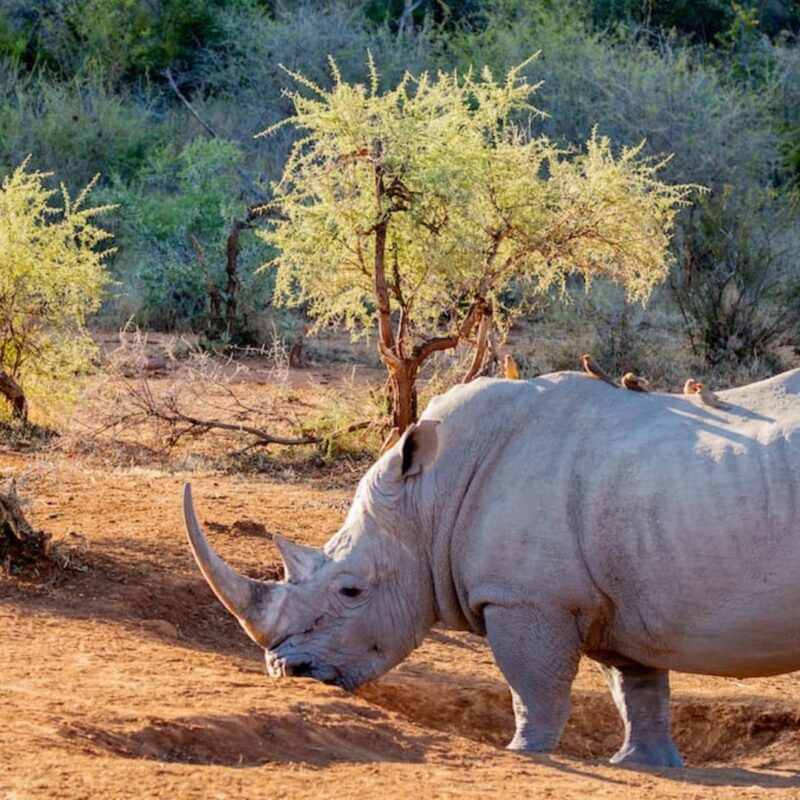
The Big Five are well established and reliably encountered. Lions are frequently sighted. White rhinos are very common. Black rhinos are present but elusive. Elephant herds move through the reserve constantly. Buffalo appear in numbers. Leopards exist but require patience; dense bush works against sightings, as it does in most reserves.
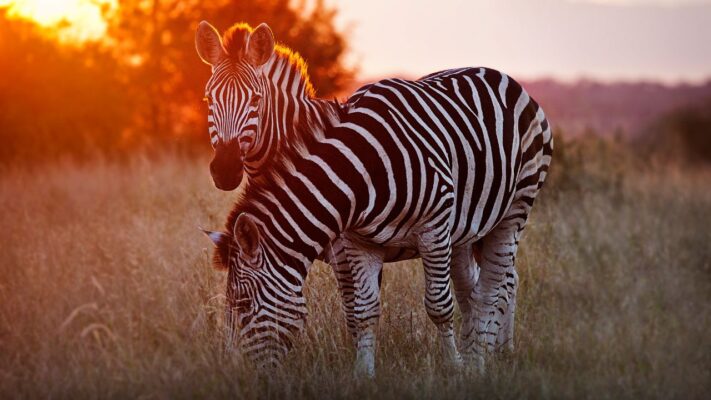
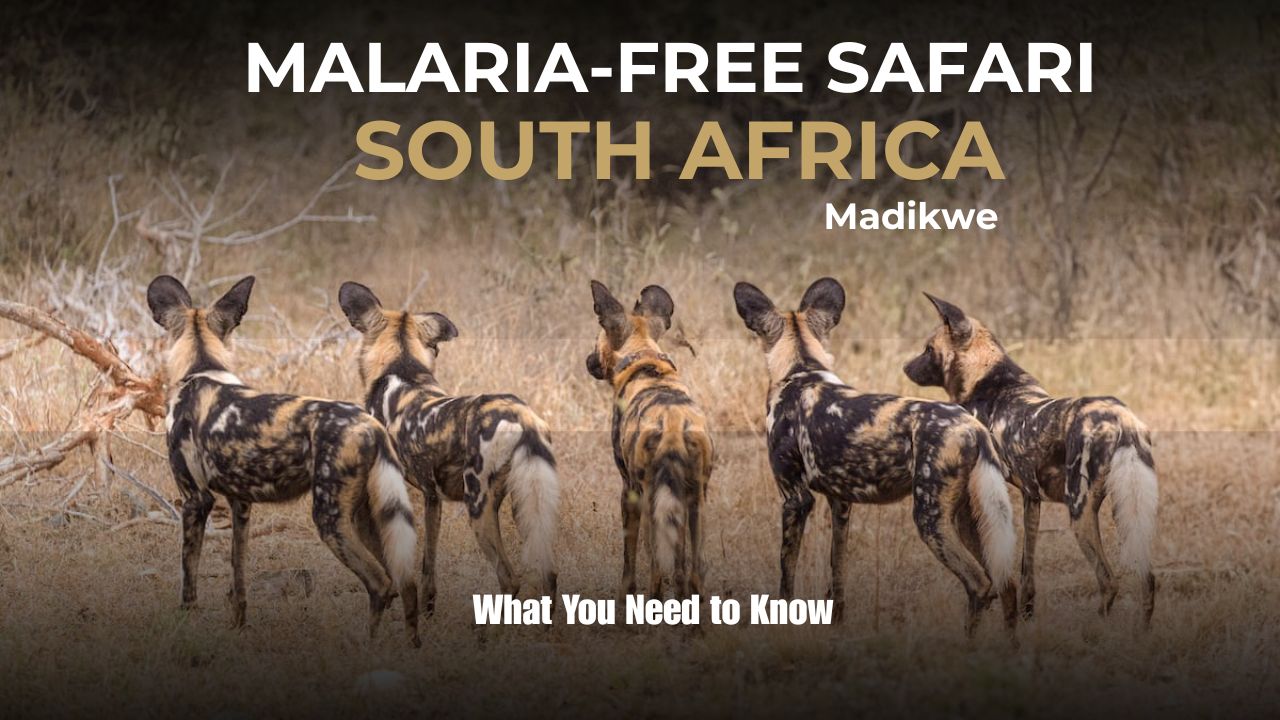
What places Madikwe above every other malaria-free reserve in South Africa is the African wild dog. Several packs live within the reserve. An encounter on a game drive, watching a pack coordinate, communicate, and move at pace, ranks among the most compelling wildlife experiences Africa offers. Wild dogs have disappeared from the vast majority of their former range. Reserves that sustain viable packs are increasingly rare and genuinely important.
Cheetahs are present, though sightings are less predictable than lion or elephants. Brown hyena, shy, predominantly nocturnal, and absent from most other South African reserves, are possible on night drives. The reserve holds strong populations of gemsbok, eland, sable antelope, and giraffe. More than 350 bird species have been recorded.
Guests who stay three nights can reasonably expect to see four of the Big Five. Many see all five. The combination of Big Five, wild dog, and cheetah in a single certified malaria-free reserve exists nowhere else in South Africa.
The Lodges
Madikwe has 22 lodges. That sounds like a lot until you understand the scale of the reserve and the strict guest limits each lodge maintains. Most properties host between six and twelve guests at a time. The effect is intimate and unhurried, closer to a private wilderness than a managed tourism product.
The portfolio runs from ultra-luxury to high-quality mid-range. Family properties, couples’ retreats, and exclusive-use options are spread across the reserve.
Jaci’s Tree Lodge places suites in elevated treehouses connected by walkways above the bush. Madikwe Hills Private Game Lodge sits on a hilltop with panoramic views and a strong reputation for service and food. Jamala Madikwe, in the reserve’s eastern section, is built around a heavily trafficked waterhole, and elephants, zebra, and predators move through it constantly. Morukuru sits along the Marico River and operates on an exclusive-use basis for groups who want the reserve entirely to themselves.
Madikwe carries some of the strongest family lodge options of any malaria-free reserve in South Africa. Junior ranger programmes, child-friendly menus, and family suite configurations are available across several properties. Children participate fully in game drives without the antimalarial complications that apply in the Kruger lowveld.
Getting There
By road, Madikwe is four to five hours from Johannesburg on good tarred roads. Daily scheduled flights operate from OR Tambo International to the reserve’s own airstrip in under two hours. Charter flights are available and widely used.
Australian travellers landing in Johannesburg find Madikwe works cleanly as a first or last leg. Some pair it with a night in Johannesburg or the Magaliesberg before continuing to Cape Town. Others use it as a standalone fly-in experience at either end of a longer South African itinerary.
See our series on Australia to Africa Safari Flights
When to Visit
Game viewing peaks during the dry season, May through September. Vegetation thins, animals concentrate around permanent water, and sightings are more consistent. Winter nights are cold, and temperatures in June and July drop sharply after sunset. Warm layers on evening game drives are not optional.
October through April brings heat, green vegetation, and afternoon thunderstorms. Newborn animals appear in significant numbers from November. Migrant bird species arrive from the north and birdlife reaches its richest point. Game viewing takes more patience in the thicker vegetation. The landscape, however, is beautiful.
How Madikwe Sits Within South Africa’s Malaria-Free Regions
The Eastern Cape reserves, covered in Hub 1: Malaria-Free Safari: Eastern Cape, South Africa, connect more naturally with Cape Town and the Garden Route. They offer intimacy and strong conservation narratives at a smaller scale. The Waterberg, covered in Hub 3: Malaria-Free Safari: Waterberg, South Africa, delivers mountain scenery and a dramatically different aesthetic. Tswalu Kalahari, covered in Hub 4: Malaria-Free Safari: Tswalu Kalahari, operates at the ultra-premium end with a focus on rare desert-adapted species.
Madikwe suits travellers who want the widest wildlife range, Big Five, wild dog, and cheetah, in a large, genuinely wild reserve operating at the highest standard. If the malaria-free safari question is primarily a wildlife question, Madikwe is where that conversation ends.
If you would like to discuss whether Madikwe suits your itinerary and group, get in touch with us at africansignature.com.
Series Navigation
• Malaria-Free Safaris in South Africa: Complete Guide
• Malaria-Free Safari: Eastern Cape, South Africa
▶ Malaria-Free Safari: Madikwe Game Reserve (You are here)
• Malaria-Free Safari: Waterberg, South Africa
• Malaria-Free Safari: Tswalu Kalahari
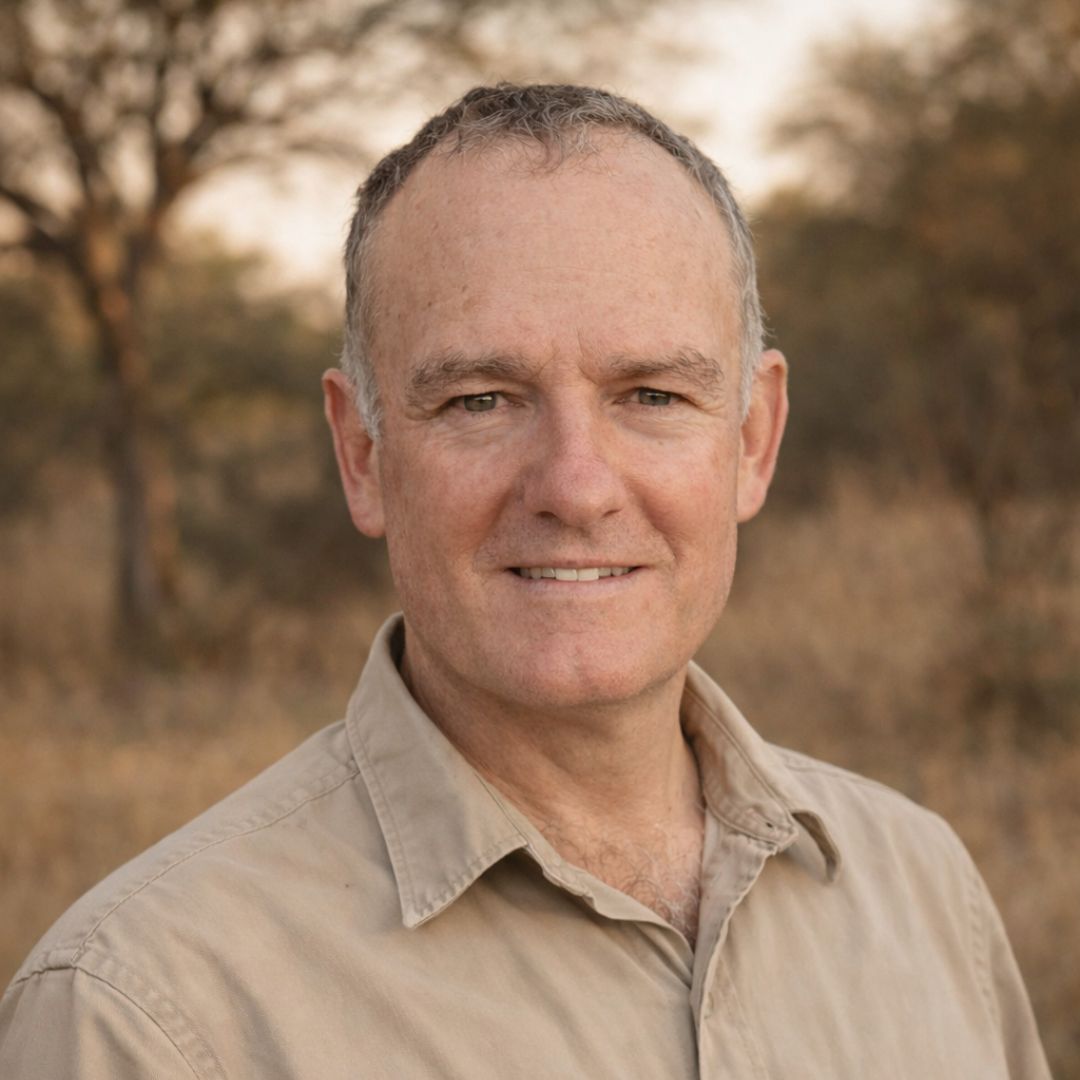
Sean Lues
Award Winning Safari Guide
Content by Award Winning Safari Guides
The content on African Signature Journeys is overseen by Sean Lues, an award-winning professional safari guide who was born and raised in Zimbabwe and has spent decades living, guiding, and managing safari operations across Africa.
Winner of the Zimbabwe Professional Guides Association Guide of the Year award, Sean is recognised for his deep knowledge of African wildlife, landscapes, and safari experiences. Now based in Australia, he combines firsthand African expertise with an understanding of what Australian travellers want from their safari adventure.
His experience helps ensure the information, recommendations, and insights shared by African Signature Journeys are practical, accurate, and based on real-world experience.
Do You Have a Question We Can Answer For You?
Connect with Sean