Planning a Wildebeest Migration Safari from Australia: The Practical Guide
Our guide to the Great Wildebeest Migration covers the wildlife and the seasons. This piece handles the logistics, everything you need to arrange before you leave home, and the rules that catch even experienced travellers off guard.
Tanzania and Kenya are both extraordinary destinations. They are also bureaucratically specific. Getting the paperwork wrong delays or derails your trip. Getting it right is straightforward, if you know what to prepare.
Visas for Australian Passport Holders
Tanzania
Australian passport holders require a tourist visa for Tanzania. The eVisa must be applied for online at visa.immigration.go.tz. Allow at least 15 days for processing. The stated window is seven to 15 business days, and delays near peak season are not uncommon.
Your passport must be valid for at least six months beyond your entry date. Carry a printed copy of your eVisa approval. Some border officials and airline check-in staff ask to see it before you depart.
Kenya
Kenya requires an Electronic Travel Authorisation (ETA), which replaced the previous eVisa system. Apply at etakenya.go.ke. The process is similar to Tanzania’s, but the fee structure differs; check the current rate at the time of application.
Multi-country itinerary
If your safari includes both Tanzania and Kenya, plus Uganda, the East Africa Tourist Visa covers Kenya, Uganda, and Rwanda. It does not include Tanzania. Most Tanzania-Kenya migration itineraries are handled with separate visas for each country.
Confirm current requirements directly with the relevant embassies before departure, as visa regulations in East Africa have changed multiple times in recent years.
Please note these details are subject to change at any time. To get the latest information, connect with one of our African Specialists
Yellow Fever: The Rule That Surprises Travellers
Tanzania requires proof of yellow fever vaccination under specific conditions. The rule applies if you are arriving from or have transited through, a yellow fever endemic country.
This catches many Australian travellers unaware. Common transit hubs for flights to East Africa include Nairobi and Addis Ababa. Both are considered yellow fever risk countries. If your layover in either exceeds 12 hours, Tanzania requires a valid vaccination certificate on arrival.
The vaccine must be administered at least ten days before your departure date to be considered valid. The certificate it generates is a yellow card, formally, an International Certificate of Vaccination or Prophylaxis (ICVP). It is valid for life.
Carry the original yellow card at all times. Border officials in Tanzania will not accept a photocopy, a photo on your phone, or a digital record. The physical document is required. If you cannot produce it, you may be vaccinated on the spot at a fee or refused entry.
Contact your GP or a travel health clinic well in advance. Yellow fever vaccines require an approved clinic and the card must be issued on official WHO documentation. Some clinics have limited appointment availability.
Please note these details are subject to change at any time. To get the latest information, connect with one of our African Specialists
Malaria: Year-Round Risk, Year-Round Prevention
Malaria is present throughout Tanzania, including the Serengeti and Ndutu. It is a year-round risk. There is no safe season to skip prevention.
See a travel health clinic or your GP at least four to six weeks before departure. The two most commonly prescribed antimalarials for East Africa are atovaquone-proguanil (Malarone) and doxycycline. Each has different start-date requirements, side-effect profiles, and costs. Your doctor will advise based on your health history.
Antimalarials are not complete protection on their own. Use DEET-based insect repellent on exposed skin from dusk onwards. Sleep under a mosquito net where provided. Wear long sleeves and trousers for evening activities.
Mosquitoes at altitude, such as on the Ngorongoro Crater rim, are less active. That does not mean risk-free. Continue your medication consistently throughout the trip and for the required period after returning home.
Internal Flights and Luggage: The Hard Limits
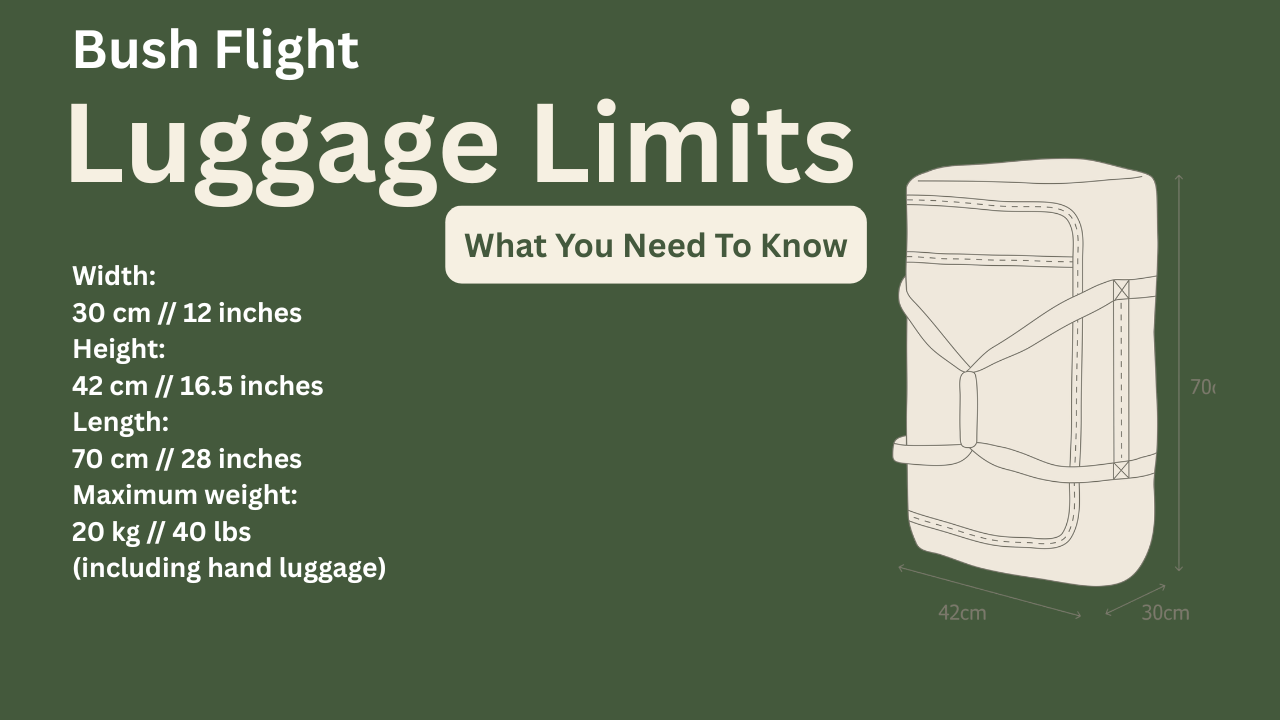
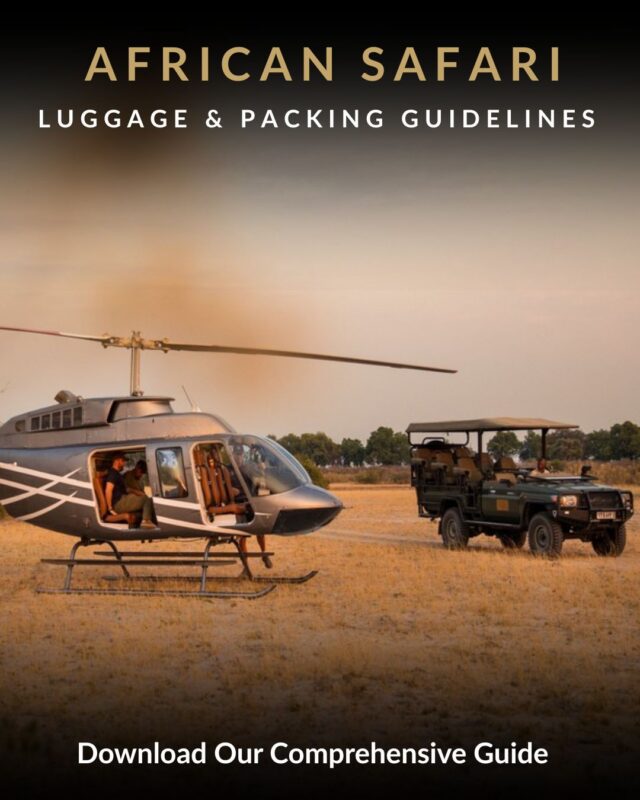
Most migration safaris in Tanzania involve internal bush flights between airstrips, Kilimanjaro or Arusha to Seronera, Kogatende, Ndutu, or Grumeti. These flights use light aircraft: Cessna Caravans, Twin Otters, or similar.
The luggage restrictions are strict and non-negotiable.
The aircraft cargo pods are physically small. Hard-shell suitcases and rigid frames simply do not fit. Every internal airline in Tanzania requires soft-sided bags, duffel bags or soft holdalls as checked luggage. Ground crew will refuse hard luggage at the airstrip, not at check-in, which means you may have already arrived at a remote location when the problem becomes apparent.
Pack everything in a soft duffel from the beginning of the trip.
| Airline | Weight Limit | Max Dimensions | Bag Type |
|---|---|---|---|
| Coastal Aviation | 15 kg (33 lbs) | 29 × 48 × 76 cm | Soft-sided only |
| SafariLink | 15 kg (33 lbs) | 60 × 35 × 70 cm | Soft-sided only |
| Air Kenya | 15 kg (33 lbs) | 33 × 60 × 45 cm | Soft-sided only |
| Auric Air | 20 kg (44 lbs) | 65 × 35 × 90 cm | Soft-sided only |
Note that the 15 kg limit typically includes your carry-on bag as well as checked luggage. Camera gear, lenses, and a laptop can rapidly consume half that allowance. Weigh everything at home before you travel. Premium seats on some Coastal Aviation routes allow 30 kg, confirm at booking.
If your international airline allows 23 kg or more per bag, the excess cannot come with you onto the bush flights. Most camps and lodges in Arusha have storage facilities. Leave anything unnecessary behind before boarding the internal flight.
Please note these details are subject to change at any time. To get the latest information, connect with one of our African Specialists
What to Pack: The Migration Context
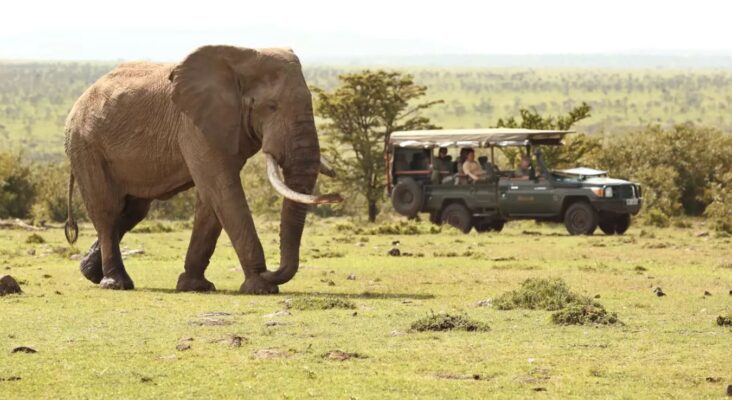
The Serengeti sits at approximately 1,500 metres in elevation. Days are warm to hot, 25–30°C in most seasons, but mornings in the open-sided game drive vehicle before sunrise can be genuinely cold. A midweight fleece or softshell jacket is not optional; it is essential.
Dust is constant. Seal electronics in zip-lock bags when not in use. Protect camera lenses. A dust cloth for optics is worth more than it weighs.
Clothing colours should be neutral, tan, khaki, olive, and grey. Bright colours and patterns are not dangerous, but they are unnecessary, and some guides prefer clients to blend into the environment for the animals’ comfort at close range.
Small things to remember when planning your safari: a wide-brimmed hat, high-SPF sunscreen, and quality sunglasses are not optional on the open plains. The southern Serengeti in particular offers almost no shade. Full days at the river during crossing season mean extended exposure with no overhead cover.
Booking Timelines
The migration is a known annual event. The most sought-after camps, particularly mobile tented camps in Ndutu for calving season and Kogatende for the river crossings, sell out 12 months or more in advance.
This is not marketing pressure. It is the practical reality of a limited supply of high-quality, well-positioned accommodation in an enormous, relatively undeveloped ecosystem.
If you are planning your safari and intend to travel in July or August for the river crossings, and you want a first-rate mobile camp in the northern Serengeti, begin the planning conversation 12 to 18 months before departure. January and February calving-season camps in Ndutu are similarly in demand.
The low season, April and May, offers more flexibility on the timeline, considerably lower rates, and far fewer travellers in the parks. For those with a flexible schedule, it is genuinely worth considering.
For context on what different seasons offer in terms of wildlife experience, return to our migration overview: The Great Wildebeest Migration: Complete Safari Guide. And for details on the two key spectacle phases, the calving season and the river crossings, see the dedicated guides for each.
African Signature Journeys handles every element of planning your safari for Australian travellers. Contact us to begin designing your migration safari.
CONTENT SERIES: THE WILDEBEEST MIGRATION
→ Complete Safari Guide: Wildebeest Migration
→ Ndutu Calving Season: Wildebeest Migration
→ Mara River Crossings: Wildebeest Migration
▶ Planning Your Safari: Wildebeest Migration ← You are here