The Great Wildebeest Migration: What It Is, When to Go, and How to Plan It
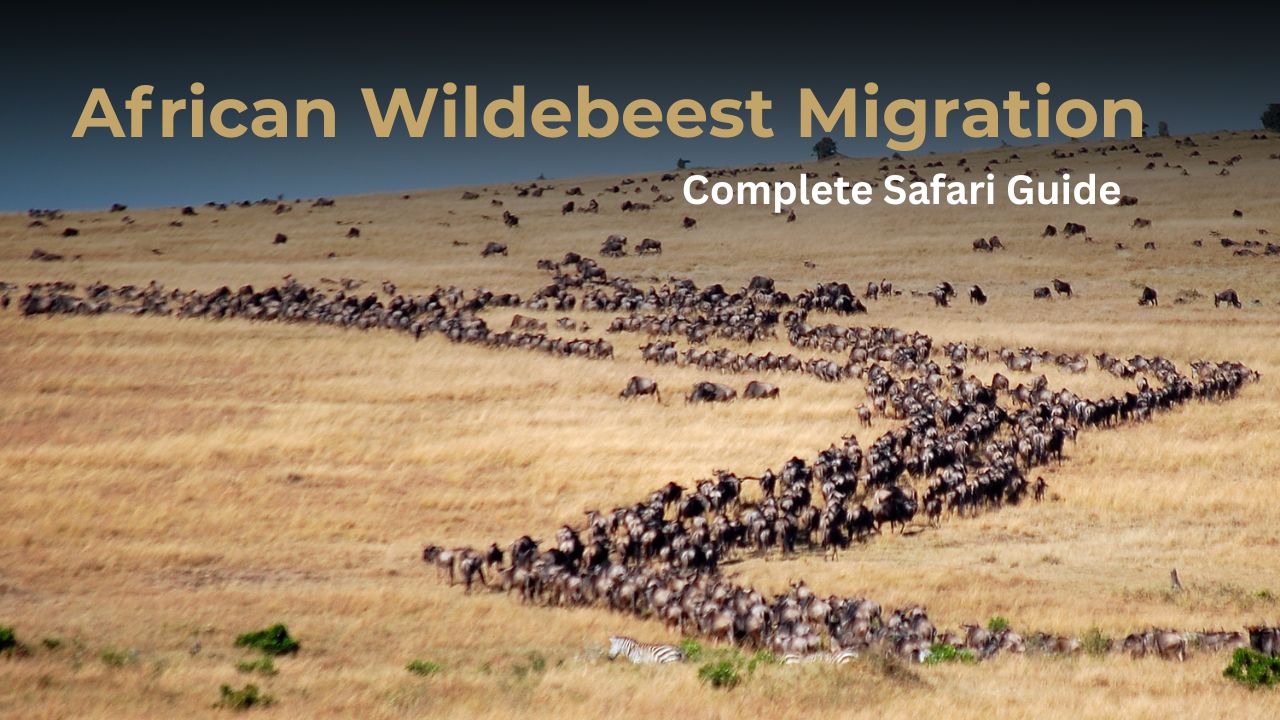
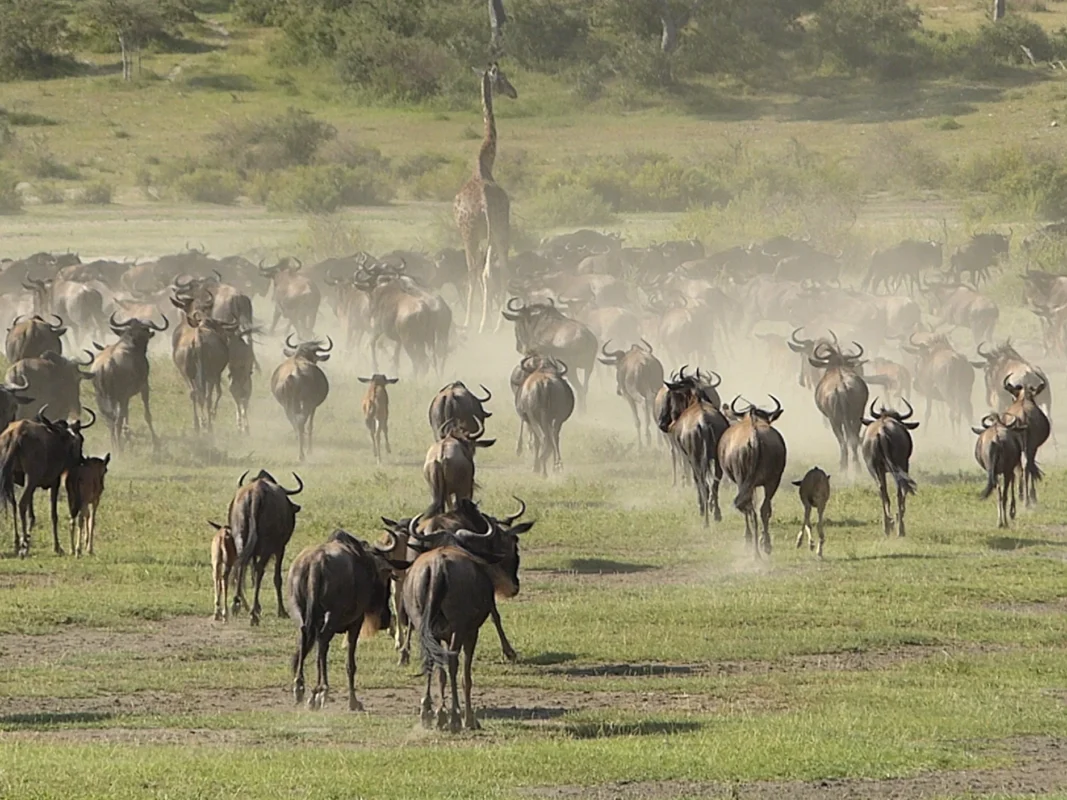
More than two million wildebeest, zebra, and gazelle move in a continuous loop across East Africa’s greatest wilderness. They travel roughly 800 kilometres every year, following the rains and the grass, completing a circuit that has no beginning and no end.
This is the Great Wildebeest Migration, and it is widely regarded as the most spectacular wildlife event on earth.
It happens every year across the Serengeti-Masai Mara ecosystem, which straddles northern Tanzania and southwestern Kenya. For Australian travellers making the long journey to East Africa, understanding how the migration works is the difference between an extraordinary safari and a forgettable one.
The right place at the wrong time means you miss everything. The right time without the right camp puts you hours from the action. This guide explains all of it.
The Ecosystem: Where the Migration Happens
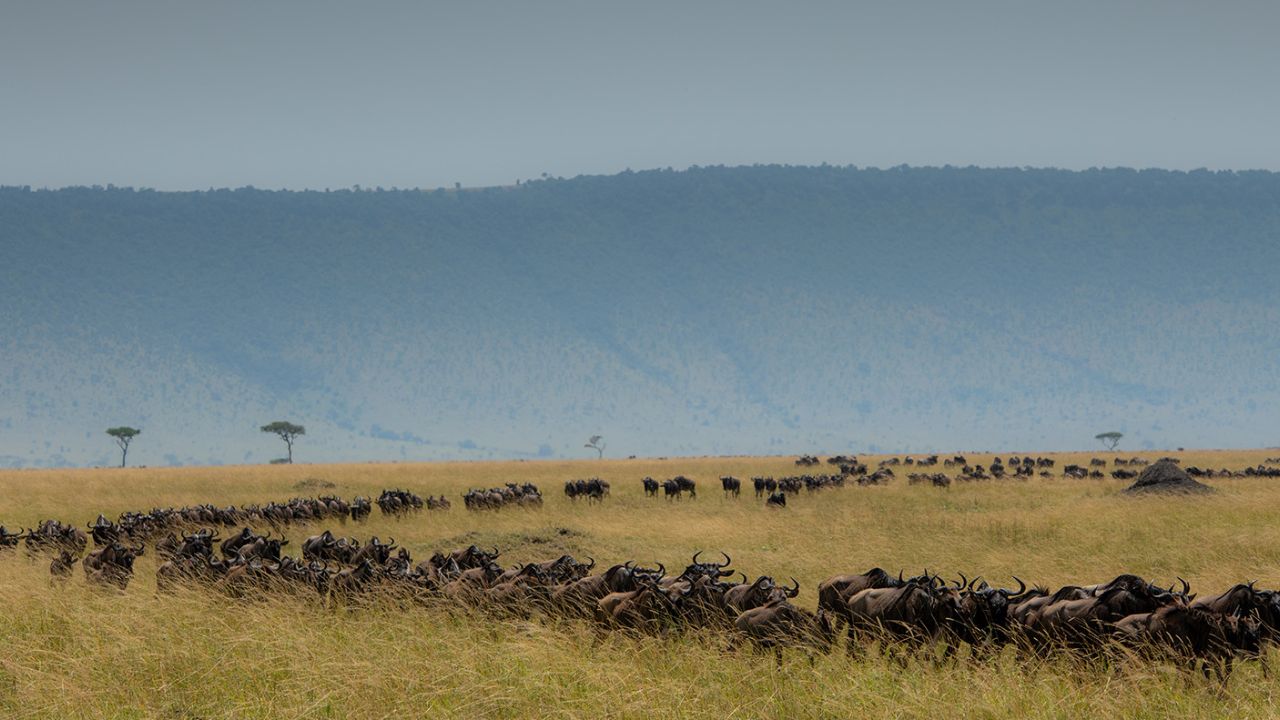
The Serengeti is enormous. It covers approximately 30,000 square kilometres in northern Tanzania, and it connects seamlessly, with no fence, to the Masai Mara National Reserve in Kenya to the north. Together, they form one of the last intact savannah ecosystems on the planet.
The wildebeest don’t follow roads or borders. They follow rainfall. Satellite tracking shows the herds pursuing the growing edge of green grass as it advances across the plains with each season’s rains.
Within this ecosystem, there are four distinct zones that matter for safari planning:
The southern Serengeti and Ndutu area (the short-grass plains) receives the herds from December through March. This is calving season. The northern Serengeti’s Lobo and Kogatende zones hold the herds from July through October, when the famous river crossings occur. The Western Corridor, specifically around the Grumeti River, sees the herds push through in May and June. The Masai Mara in Kenya receives a portion of the herds from roughly August through October, though many animals remain in Tanzania throughout.
The Annual Calendar: Month by Month
The migration has no fixed start date. Rainfall patterns govern the timing, and those patterns shift year to year. Nevertheless, the sequence is consistent enough to plan around.
December through March, the herds concentrate on the short-grass plains of the southern Serengeti and the Ndutu area in the Ngorongoro Conservation Area. The volcanic soil here, enriched by ash from the Ngorongoro highlands, produces grass dense in phosphorus and calcium. Lactating mothers need exactly these minerals. Around 500,000 calves are born in a compressed window of just a few weeks.
The calving season is one of the migration’s most underrated phases. Yes, there are lions. Yes, there are cheetahs. But the sheer density of newborn animals on open plains with predators hunting in real time is something few travellers anticipate.
April and May see the herds begin pushing north and west through the central Serengeti. The long rains fall during this period. The landscape turns vivid green. Tourist numbers drop sharply, and those who travel in May often experience exceptional game viewing in near-solitude.
June brings the herds to the Western Corridor and the Grumeti River. The Grumeti is slow and murky, choked with aquatic vegetation and filled with some of the largest Nile crocodiles in Africa. The first river crossings of the year happen here.
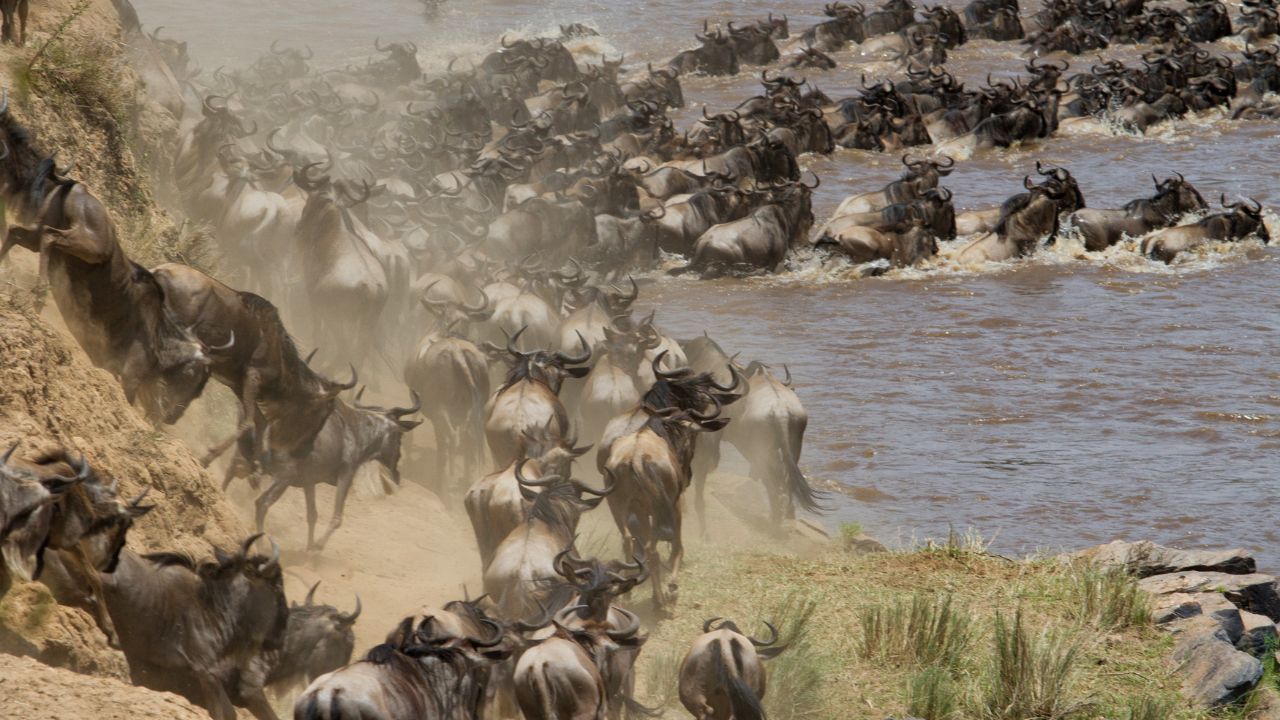
July through October is river crossing season in the northern Serengeti. The herds reach the Mara River, a different, faster, more dangerous obstacle, and the iconic crossing spectacle unfolds. Crocodiles patrol the water. The banks are steep. Wildebeest plunge in, hesitate, surge, and sometimes drown. Other times, thousands cross in minutes.
November brings the short rains. The herds turn south. By December, they are back on the southern plains, and the cycle begins again.
A Common Misconception About the Crossings
Many travellers assume they must go to Kenya’s Masai Mara to see the river crossings. This is not accurate.
The Mara River does not mark the international border between Tanzania and Kenya. The river runs through the northern Serengeti. Wildebeest cross from one Tanzanian bank to another. Some herds later move north on dry land into Kenya, but a significant portion of the migration never leaves Tanzania at all.
The crossings are visible from both sides of the border. However, Tanzania’s northern Serengeti, around the Kogatende area, offers an experience that is often less crowded and more intimate than the Masai Mara, particularly in the first half of the river crossing season.
This matters for planning. A Masai Mara-focused itinerary can mean higher tourist density and a shorter window of optimal access. The northern Serengeti extends your opportunity significantly.
How to Choose When to Go
Every month of the migration offers something worth seeing. The question is what you most want to witness.
The calving season, January through March, delivers extraordinary predator action on open plains that allow unobstructed viewing. Cheetahs, lions, hyenas, and jackals all concentrate around the herds. The photography is exceptional. The crowds are manageable.
The river crossings, July through October, offer adrenaline, unpredictability, and drama. A crossing can happen at any time. You wait on the bank, sometimes for hours, sometimes for days. Then it erupts. There is nothing quite like it.
May is for serious safari travellers who want the Serengeti largely to themselves. The rains are retreating. The grass is green. The animals are moving. Visitor numbers are low.
There is no bad time to visit the Serengeti. There are only different experiences. A migration safari is never a single, guaranteed moment, it is a sustained encounter with a living, moving ecosystem.
For a deeper look at the calving season, including the Ndutu area, the predator dynamics, and the biology behind the birthing synchrony, read our dedicated Hub on the Ndutu Calving Season.
For everything you need to know about the Mara River crossings, timing, tactics, and which camps to choose, see our guide to the Wildebeest River Crossings.
Accommodation: Matching the Camp to the Season
Where you stay determines what you see. This is the single most consequential planning decision for a migration safari.
Mobile tented camps move several times a year, repositioning themselves as close as possible to the herds. They use traditional canvas tents and bucket showers. Comfort is modest. Proximity to the action is exceptional. For the calving season and the northern crossings, a mobile camp is hard to beat.
Permanent luxury lodges offer high-end amenities, swimming pools, private decks, gourmet menus, and reliable electricity. Their fixed locations mean longer game drives to reach the herds during peak movement. They suit travellers who want a base to return to after intense morning and afternoon drives.
Intermediate camps, walk-in tents on elevated platforms, private plumbing, consistent power, balance comfort with reasonable proximity. They excel in the transitional months of May, June, and November when the herds are moving through but not yet concentrated.
Most serious migration itineraries combine two or three camps, each positioned for a specific phase. An African Signature Journeys specialist can design the right sequence based on when you travel and what you want to see.
For detailed guidance on visas, health requirements, luggage limits, and booking timelines for Australian travellers, read our planning guide: Planning Your Migration Safari.
What the Migration Means Ecologically
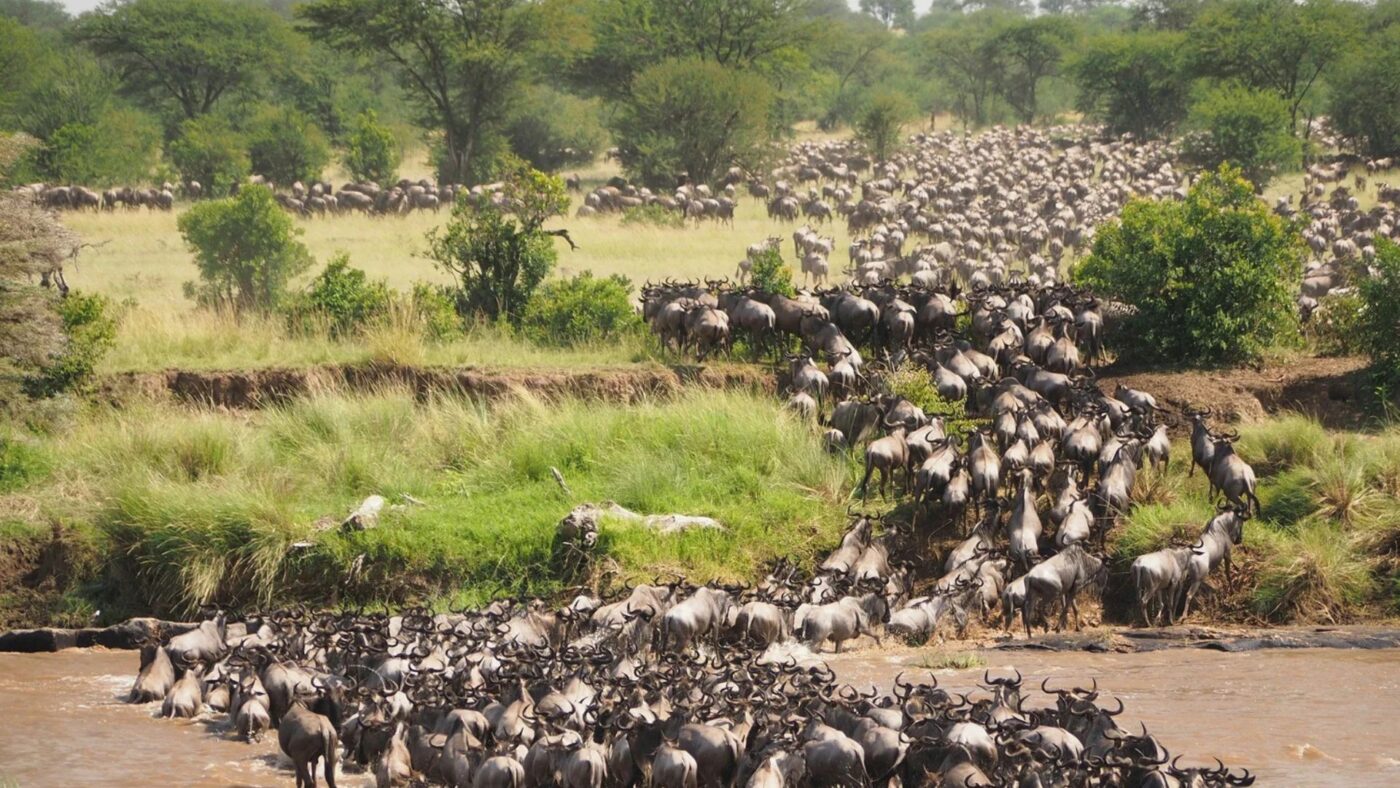
The sheer numbers make this the largest overland mammal migration on earth. But the ecological significance goes beyond spectacle.
Approximately 250,000 wildebeest die each year from predation, drowning, exhaustion, and disease. Their carcasses return nutrients to the soil and water. The Mara River floods with organic matter from drowning animals, sustaining a downstream food chain that extends far beyond what safari guests ever see.
The grazing pressure of two million animals stimulates grass growth, prevents shrub encroachment, and maintains the open character of the plains. The Serengeti, as travellers know it, vast, open, golden, exists because the migration shapes it.
You are not watching wildlife against a backdrop. You are watching the engine of the ecosystem itself.
African Signature Journeys designs bespoke migration itineraries for Australian travellers. Contact us to start planning yours.
CONTENT SERIES: THE WILDEBEEST MIGRATION
▶ Wildebeest Migration: Complete Safari Guide ← You are here
→ Ndutu Calving Season: Wildebeest Migration
→ Mara River Crossings: Wildebeest Migration
→ Planning Your Safari: Wildebeest Migration
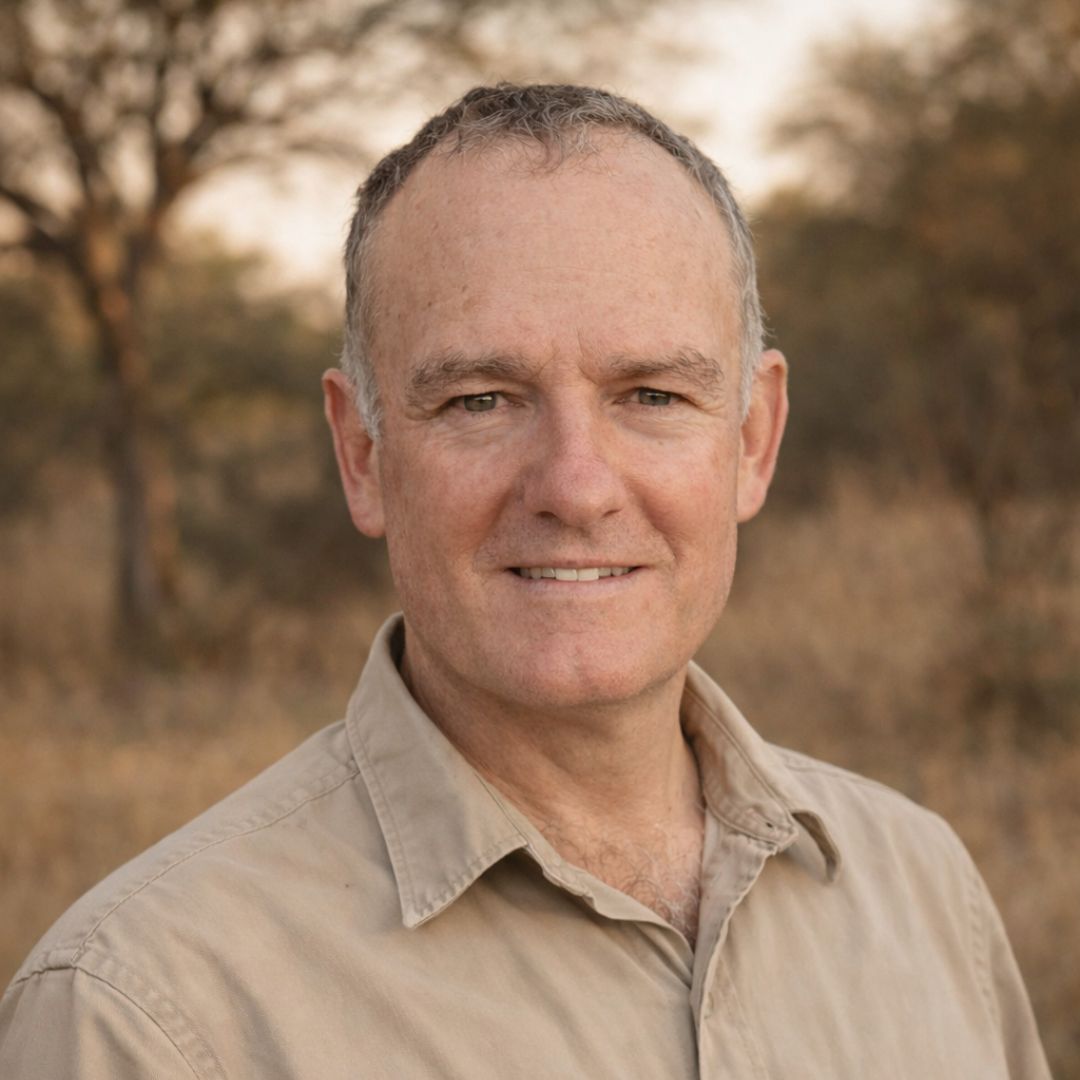
Sean Lues
Award Winning Safari Guide
Content by Award Winning Safari Guides
The content on African Signature Journeys is overseen by Sean Lues, an award-winning professional safari guide who was born and raised in Zimbabwe and has spent decades living, guiding, and managing safari operations across Africa.
Winner of the Zimbabwe Professional Guides Association Guide of the Year award, Sean is recognised for his deep knowledge of African wildlife, landscapes, and safari experiences. Now based in Australia, he combines firsthand African expertise with an understanding of what Australian travellers want from their safari adventure.
His experience helps ensure the information, recommendations, and insights shared by African Signature Journeys are practical, accurate, and based on real-world experience.
Do You Have a Question We Can Answer For You?
Connect with Sean