Sundowners to Starlight: The Culture of a Safari Evening
In the typical day on an African safari, the evening hours carry a quality entirely their own. The drives are exhilarating. The bush breakfasts are memorable. The afternoon wildlife encounters are often the most dramatic of the day. Nevertheless, the hours between the sundowner and sleep are when something else happens, quieter, harder to define, and for many travellers, the part of the day they talk about longest when they get home.
Here is what the safari evening actually looks like.
Why Dusk on Safari Is Worth Paying Attention To
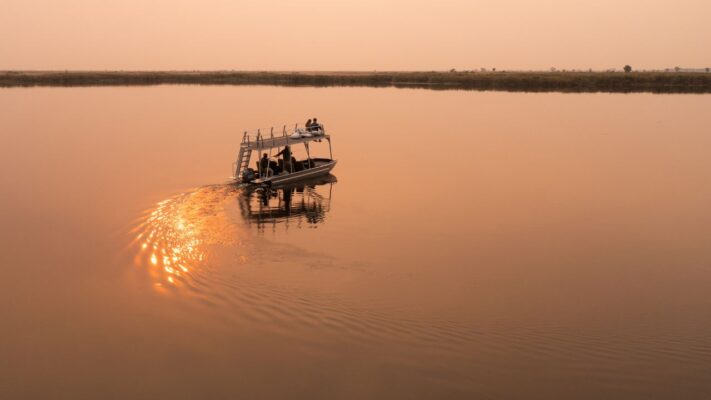
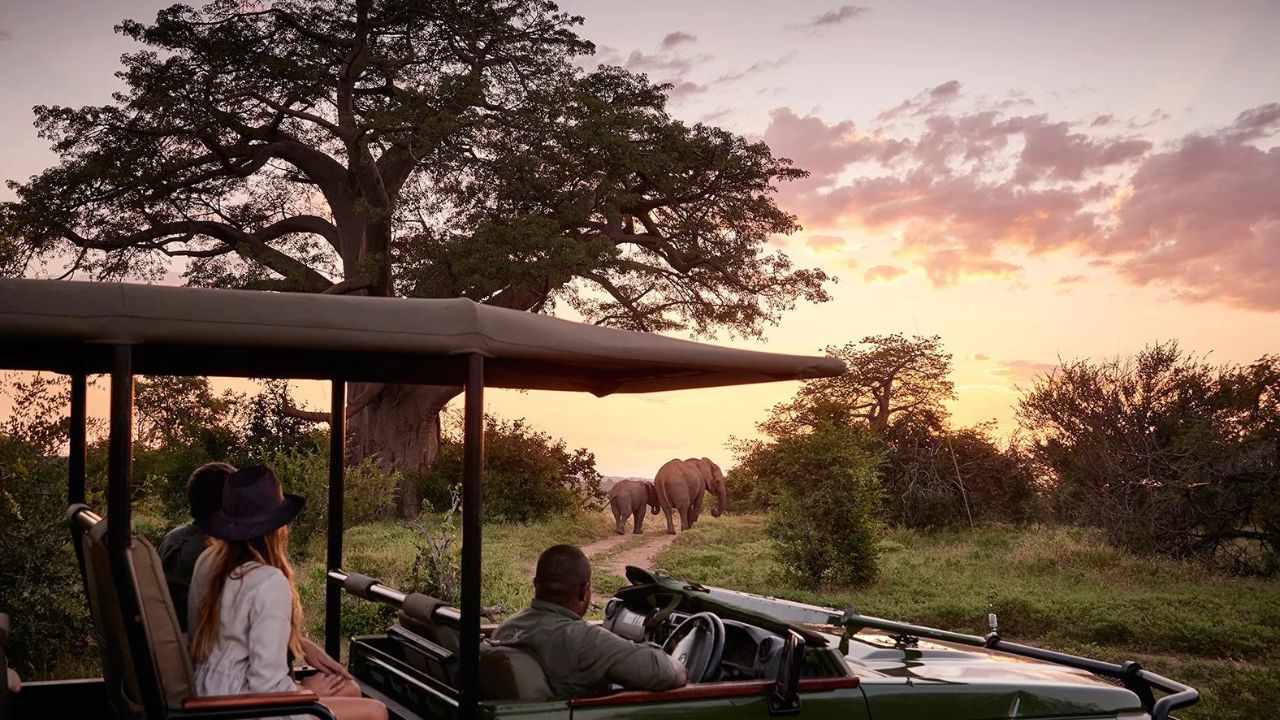
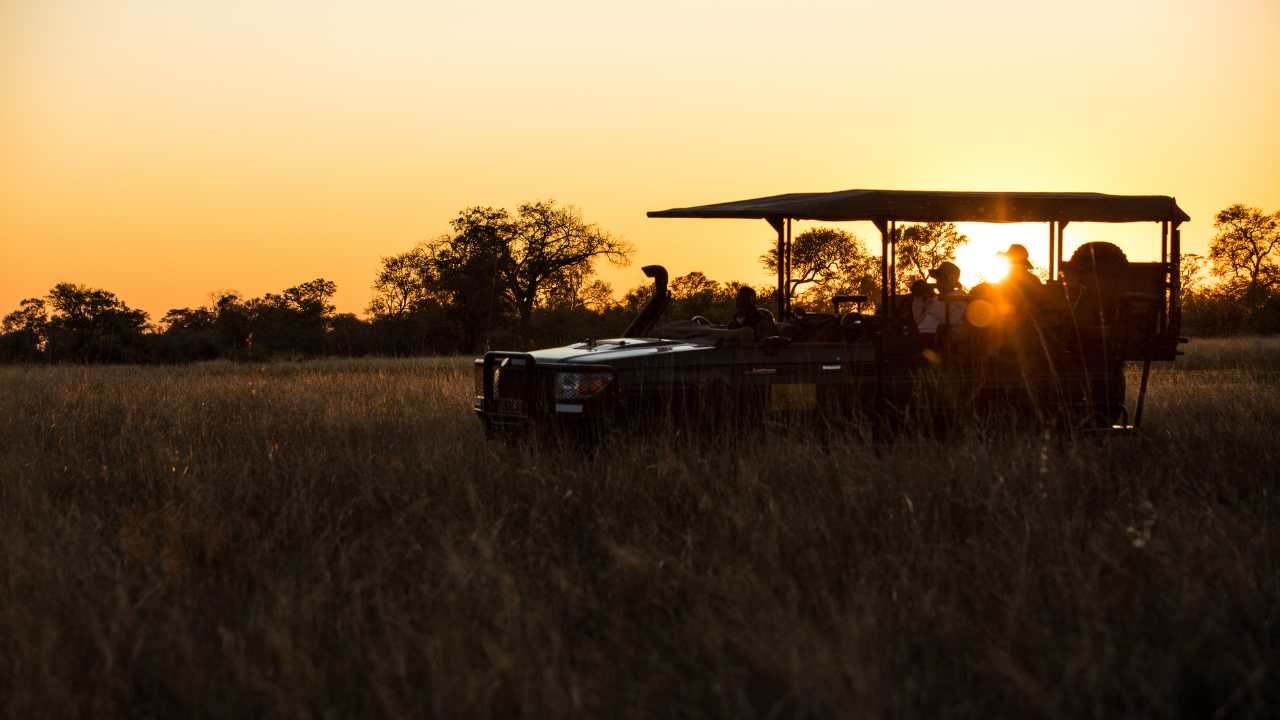
The light in Africa at dusk does not behave like light anywhere else. The sky turns a specific shade of amber that bleeds into pink and then into a deep violet-blue at the horizon. Game drive vehicles stop moving for a reason at this hour: the landscape demands to be looked at without the distraction of motion.
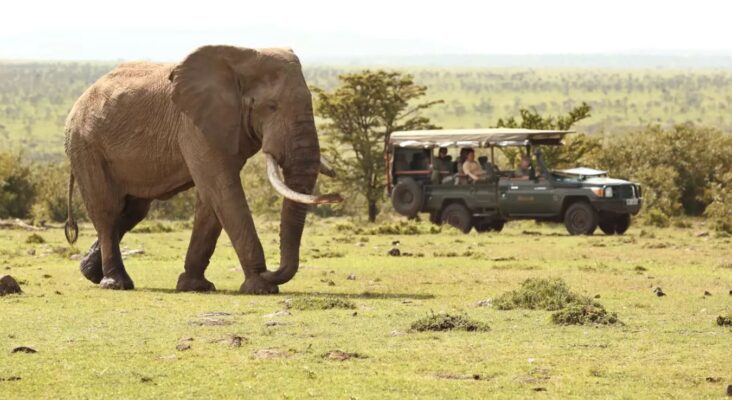
Your afternoon drive has been building toward this moment. By 5:30 pm or 6:00 pm, shadows have stretched long across the plains, and the animals that sheltered through the midday heat are fully active. This is prime predator time, lions regrouping, hyenas beginning their circuits, leopards moving down from trees and into the undergrowth. Your guide has been reading the light and landscape and has chosen a spot. The vehicle stops. The engine goes off.
The Sundowner Tradition
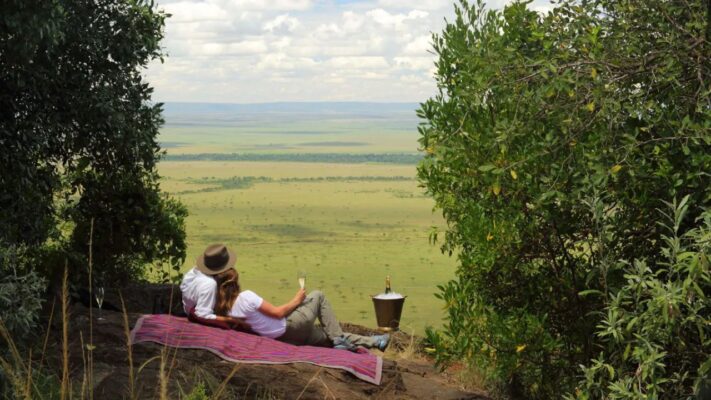
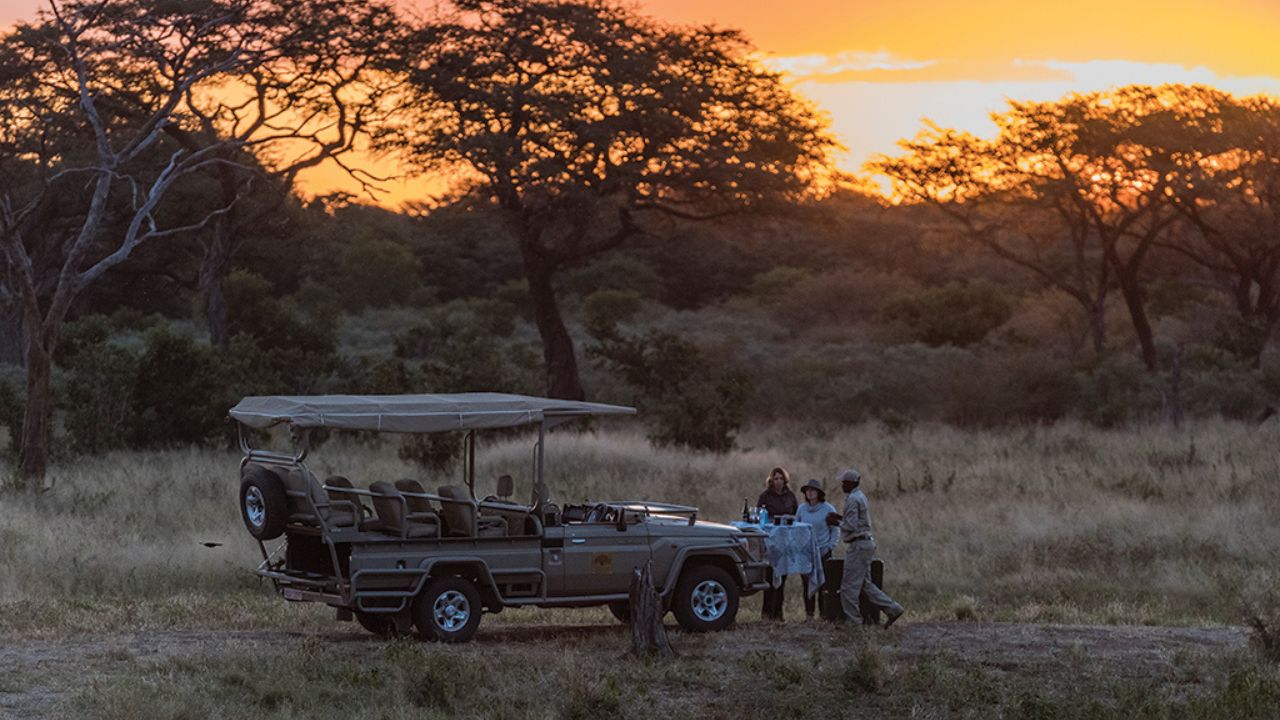
A sundowner is the drinks stop that happens during the afternoon game drive, timed to coincide with sunset. The tradition runs deep in African safari culture. Its roots are genuinely colonial, linked to the British habit of a drink at the end of the working day and the gin-and-tonic that British administrators drank partly as a vehicle for quinine in malarial climates. The practice became woven into the daily rhythm of bush camps in the 1920s and 1930s and has never left.
In practice, your guide, or a camp staff member who has driven out separately to meet you, produces a cooler box from the vehicle. Drinks are poured: cold beer, gin and tonic with ice and a slice of lime, a glass of local wine, sparkling water, juice. Alongside the drinks appear small plates of snacks: biltong, spiced nuts, and small savoury pastries.
You hold your drink and look at the sky.
The quality of this moment is difficult to oversell without risking the accusation of overselling it. The combination of the day’s accumulated experience, the physical openness of the landscape, the near-certainty that there are large predators within earshot, and the sheer quality of African light at this hour produces something that bypasses rational evaluation entirely. Most seasoned travel writers will tell you that sundowners on safari are among the dozen things in a life of travel that genuinely earn the word unforgettable.
The closer to the equator you are, the faster the sunset happens. In Kenya and Tanzania, the sun drops below the horizon in under twenty minutes. In the Okavango Delta in Botswana, or on the edge of the Kalahari in the dry season, the sky takes longer to change, and the final colours are extraordinary. Either way, have your camera ready, and be prepared to put it down.
Night Drives: What You Find After Dark
In national parks across East and southern Africa, vehicles must exit by gate closure, typically around dusk. In private concessions and conservancies, however, the rules are different. Guests can stay out after dark, and in many operations, the afternoon drive simply continues into the night.
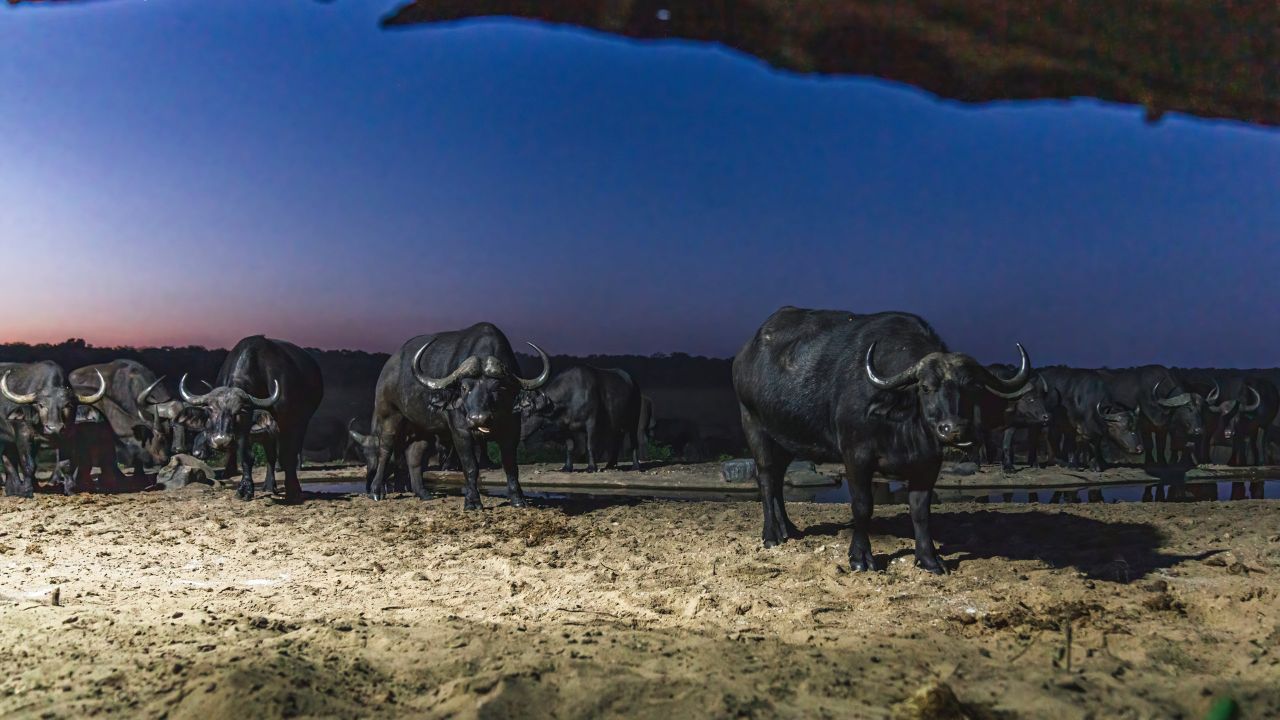
The guide produces a spotlight, a powerful handheld lamp, usually with a red filter to reduce disturbance to nocturnal animals. A second staff member may handle the light while the guide drives. The vehicle moves slowly through the dark, and the spotlight sweeps the bush at eye level, looking for the reflective shine of animal eyes.
The nocturnal world on safari is populated by species most daytime travellers never know exist. Porcupines ambling along the road, impossibly large, their quills rattling softly. African civets, cat-sized and intricately marked, hunt rodents and insects. Spring hares, long-eared, kangaroo-gaited creatures that bounce through the beam of the spotlight in pairs. Aardvarks move with a purposeful shuffle across the road before vanishing into darkness.
Leopards are also more active after dark. A night drive through a property with a good leopard population often delivers sightings that the afternoon drive missed. Some of the most iconic images in African wildlife photography were taken after dark.
Night drives are standard in private reserves adjoining Kruger in South Africa, in most Botswana concessions, in the private conservancies bordering the Maasai Mara in Kenya, and in many Zambian and Zimbabwean operations. They add a dimension to a safari evening that most first-time travellers do not anticipate and almost universally rate as a highlight.
Return to Camp: Safari Evening Dinner
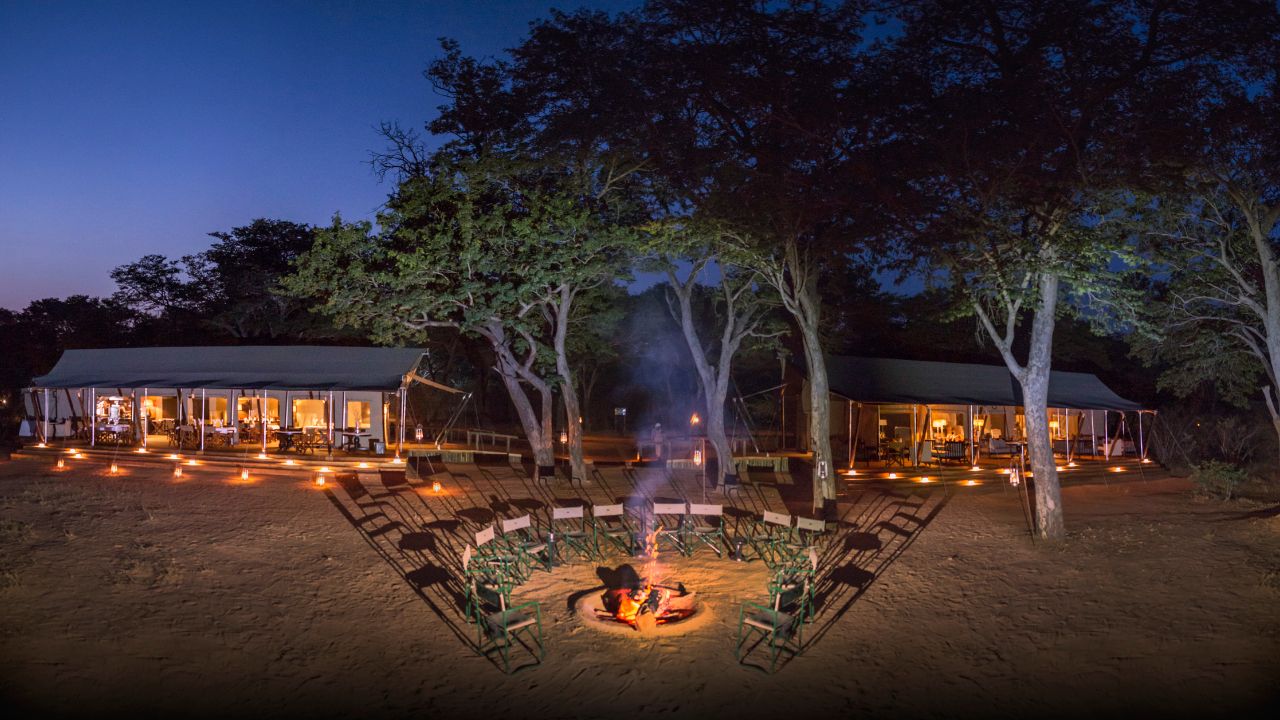
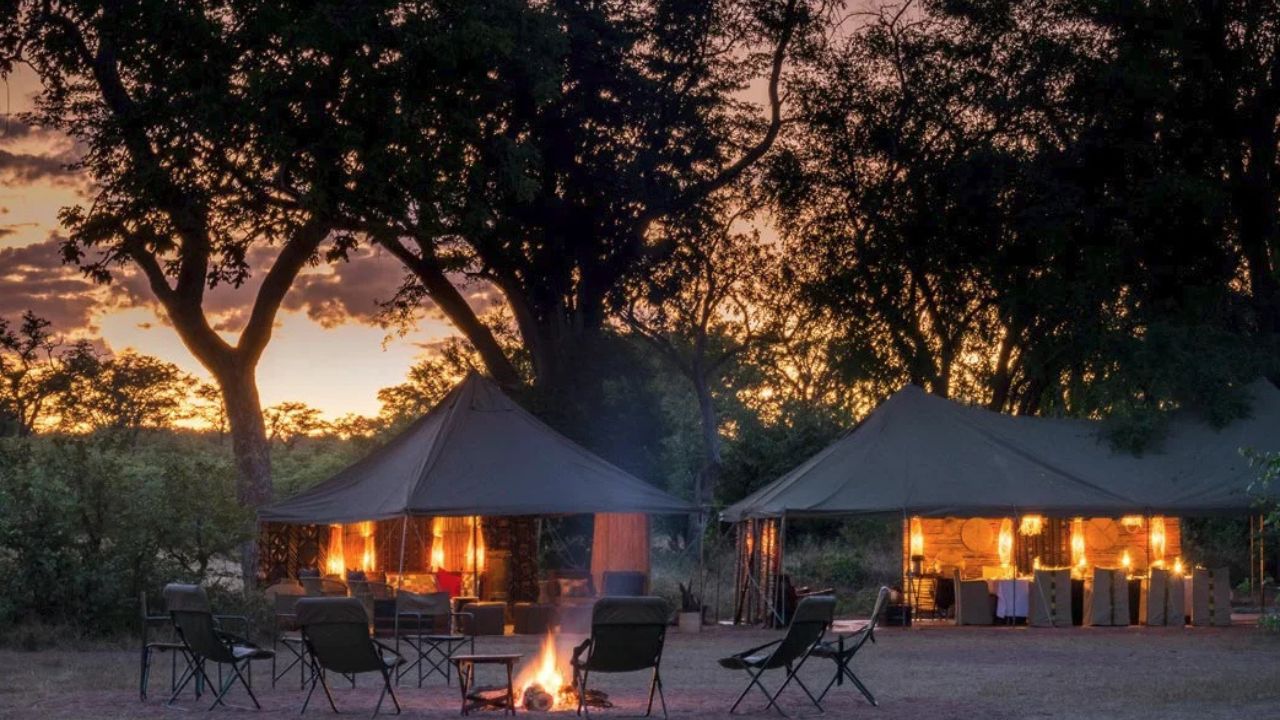
The vehicle returns to camp between 7:00 pm and 7:30 pm. The camp is lit, with lanterns along the pathways, a fire already burning in the communal area, soft light coming from the dining space.
You will be escorted from the vehicle to your room or tent by a camp staff member. The escort is not theatre: it is a genuine safety measure. African bush camps do not maintain perimeter fences in most cases, and animals move through them at night. Buffalo, elephants, hyenas, and lions are regular after-dark visitors to unfenced camps. The escort knows the camp’s systems and protocols for exactly these eventualities.
You have perhaps thirty minutes to shower, change, and find your way to the fire or the deck for pre-dinner drinks. The shower, after a day in the dust and wind of the bush, is one of the simple, underrated pleasures of safari life. Even remote fly-in camps in Zambia and Botswana reliably deliver hot showers at the end of the day.
Dinner in the Boma — and Under the Stars
Dinner on a safari evening is a proper meal, and where it is served matters as much as what is on the plate.
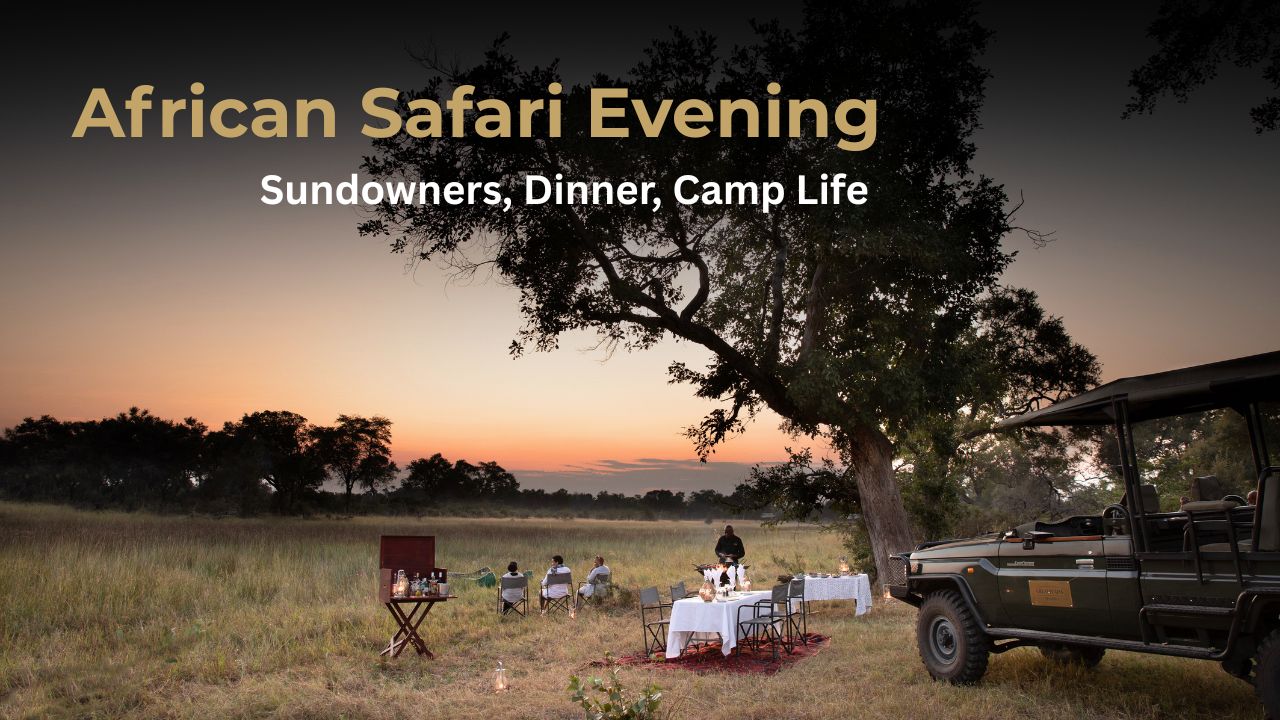
The boma, a traditional circular enclosure with open sides and a fire at the centre, is the most atmospheric option. It is also the one most strongly associated with the classic southern African safari experience. You sit in a ring around the fire, the sky open above you, the sounds of the bush audible in the darkness around the camp. In some camps in Zimbabwe and South Africa, staff will sing or perform traditional music before or during the meal. In others, dinner is simply a beautifully prepared, unhurried occasion for the table to debrief the day.
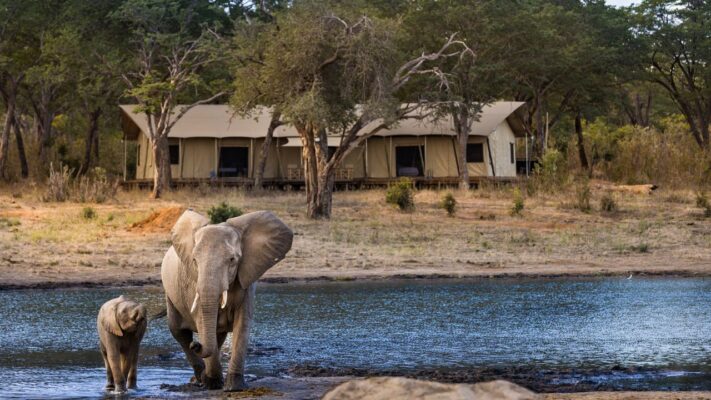
Al fresco dining under a full spread of stars is standard at many camps in Botswana’s Okavango Delta and in the drier eastern regions of Tanzania. In the Serengeti, unfenced tented camps sometimes position dinner tables on a raised platform with a floodlit view across the plain. The combination of good food, good wine, and a view of elephants drinking thirty metres away while you eat is, by any objective standard, extraordinary.
The food quality at four- and five-star lodges throughout eastern and southern Africa is consistently high. Executive chefs produce dinners of genuinely fine-dining standard. Menus change daily and draw on fresh, local ingredients alongside South African and international wine lists. Safari food is not a compromise. It is one of the consistent pleasures of the experience.
The meal is usually included in the lodge rate, as are drinks at most all-inclusive properties. The all-inclusive model, meals, game activities, drinks, and laundry all covered, is standard across most of Africa’s premium private lodge sector.
The Campfire and the End of the Day
Dinner finishes. The table dissolves into smaller conversations. Someone orders another glass of wine. Someone else asks the guide about the lion that was calling earlier, which pride was it, what were they saying to each other, and where will they be tomorrow morning?
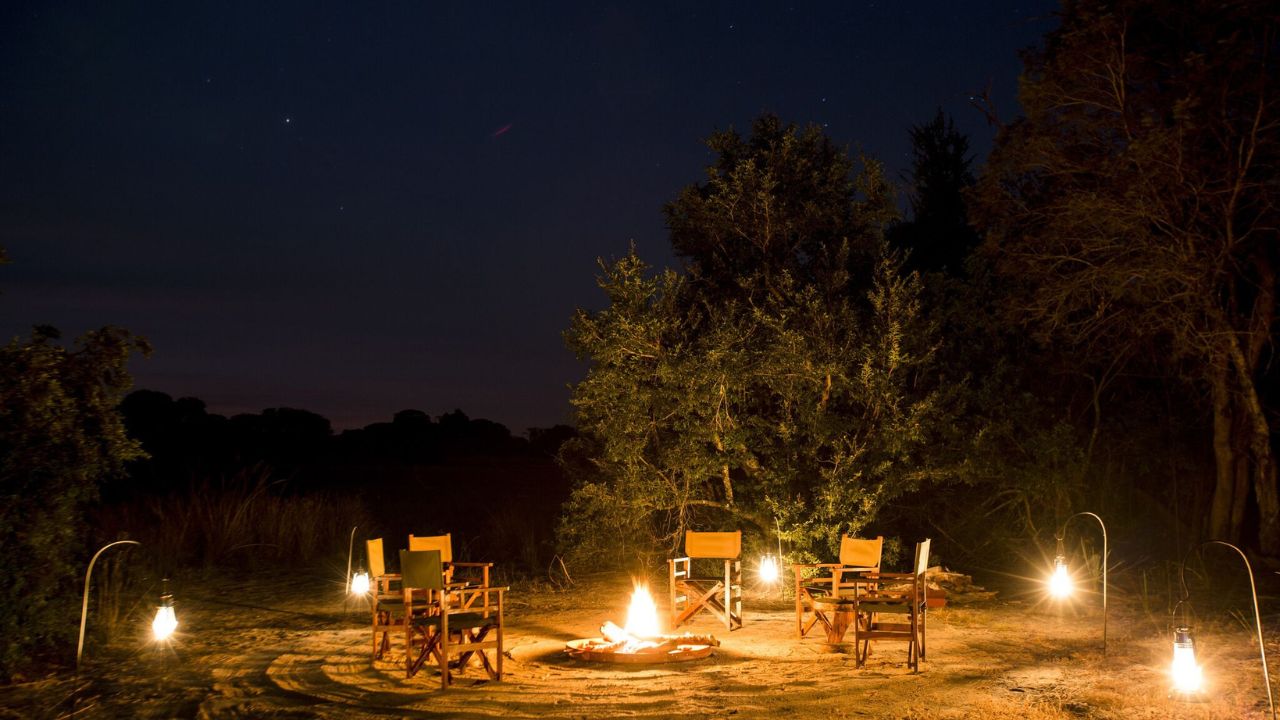
The fire burns down slowly. By 9:00pm or 9:30pm, most safari guests are thinking about bed. By 10:00pm, the camp is quiet. The sounds of the bush take over: a distant bark of a baboon, the persistent call of a fiery-necked nightjar, the whoop of a hyena carrying across the dark.
In the best camps, you fall asleep hearing Africa. You wake up hearing it again, five and a half hours later, when the knock comes at your door and a voice says, gently, Good morning. It’s time.
What to Bring for Safari Evening
Temperature: Evenings in Africa drop sharply, particularly in the dry season and at altitude. A warm layer a fleece or light down jacket, is essential for the drive back to camp and for sitting at the fire. Even in summer in East Africa, the shift from afternoon heat to evening cool is pronounced.
Clothing and mosquitoes: Mosquitoes are most active after dark. Neutral or muted colours, khaki, olive, grey, are less attractive to mosquitoes than black or dark blue. Long sleeves and trousers are practical, not just a traditional safari aesthetic. A good insect repellent, ideally DEET-based or a quality natural alternative, is essential. Apply it before the afternoon drive returns to camp.
Footwear: Closed-toe shoes are important after dark in unfenced camps. Do not walk between your tent and the main area without the camp escort, regardless of how short the distance.
Connectivity: Most camps have charging points in guest rooms or at the main area. WiFi, where available, is typically limited to the common areas. The limited connectivity is not a problem; it is, for most travellers, one of the quiet gifts of the experience.
African Signature Journeys puts considerable thought into the lodge and camp selection for each safari itinerary, because where you spend your evenings shapes the entire experience. If you want to talk through the options, we are glad to help. Get in touch at africansignature.com.
IN THIS SAFARI SERIES
PILLAR — African Safari: What to Expect Each Day
HUB 1 — African Safari Game Drive: What Really Happens
HUB 2 — African Safari Walking: What to Expect on a Bush Walk
▸ HUB 3 — African Safari Evenings: Sundowners, Dinner, Camp Life ← You are here

Sean Lues
Award Winning Safari Guide
Content by Award Winning Safari Guides
The content on African Signature Journeys is overseen by Sean Lues, an award-winning professional safari guide who was born and raised in Zimbabwe and has spent decades living, guiding, and managing safari operations across Africa.
Winner of the Zimbabwe Professional Guides Association Guide of the Year award, Sean is recognised for his deep knowledge of African wildlife, landscapes, and safari experiences. Now based in Australia, he combines firsthand African expertise with an understanding of what Australian travellers want from their safari adventure.
His experience helps ensure the information, recommendations, and insights shared by African Signature Journeys are practical, accurate, and based on real-world experience.
Do You Have a Question We Can Answer For You?
Connect with Sean