Safety is the first real question most people ask about walking safaris, and it deserves more than a reassuring answer. The honest explanation of how safety actually works on a walking safari — what the guide knows, what protocols are in place, and what the real risks are is both more interesting and more reassuring than a blanket “don’t worry.”
This guide covers the safety framework directly: guide qualifications, on-foot dangerous game management, what guests are briefed before every walk, and what to expect if something unexpected happens.
For context on which destinations apply which safety standards, see Walking Safari Countries Compared — Hub 2. For the full overview of the walking safari experience, see our Complete Guide to Walking Safaris in Africa.
Signature Walking Safari Experiences


How Are Walking Safari Guides Trained?
The guides leading professional walking safaris have completed qualification programmes specifically designed for on-foot dangerous game management. This is a distinct and more demanding qualification than standard vehicle-based guide certification, because the risk profile and the required responses are fundamentally different on foot.
FGASA Trails Guide (Southern Africa)
The Field Guides Association of Southern Africa’s Trails Guide qualification is the benchmark standard in Southern and East Africa. It involves assessment in:
- Animal behaviour and dangerous game management on foot
- Tracking and field craft
- Navigation without vehicle or road reference
- Field first aid and emergency response
- Firearm proficiency and judgement under pressure
Candidates must demonstrate competency in real field conditions, not in a classroom, and the assessment involves actual dangerous game encounters. The qualification cannot be obtained without logged field hours, and experienced assessors examine candidates in the same conditions they will operate in professionally.
Zimbabwe Professional Guide Qualification
Zimbabwe’s Professional Guide examination, conducted through the Zimbabwe Professional Hunters and Guides Association, is widely considered the most technically demanding guide qualification in the world. It is assessed on foot in the presence of dangerous game, with specific focus on the decision-making process under pressure. Years of apprenticeship are required before a guide can even be considered for the grueling week-long examinations held out in the middle of the bush. The standard required is uncompromising, and guides who hold this qualification have undergone a training process that most qualification systems in other countries do not approach in difficulty.
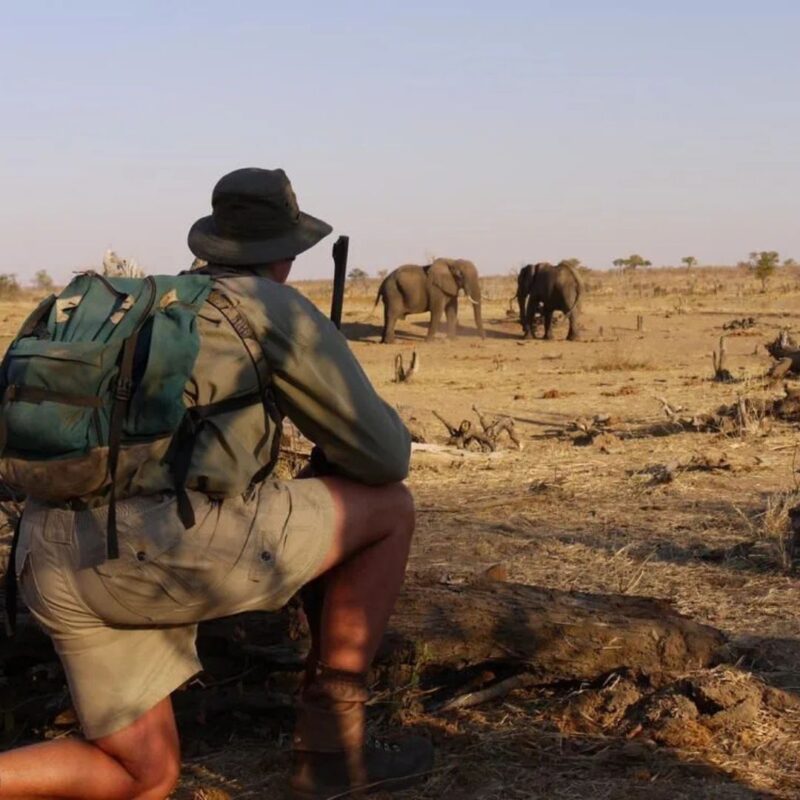
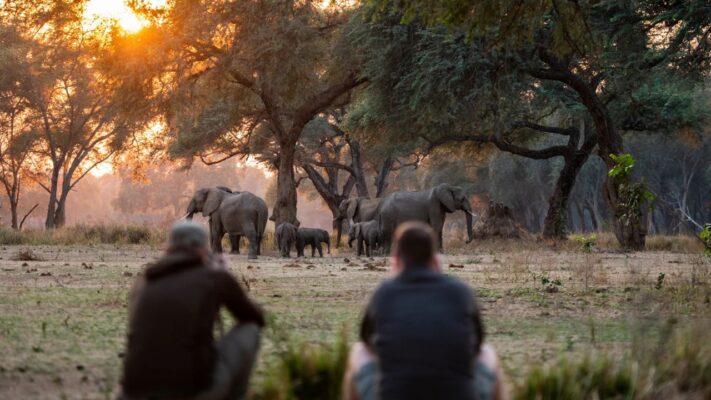
The quality of Zimbabwean guiding reflects this standard directly. The ability to manage a close elephant encounter on foot, reading the animal’s state in real time and making positioning decisions for a group of guests, is a specific competency that this qualification examines, and the Mana Pools guides demonstrate routinely.
Kenya and East Africa
Kenya’s professional guide standards are regulated through the Kenya Wildlife Service and related professional bodies. Guides working in community conservancies, particularly those from Maasai and Samburu communities, combine formal qualification with ancestral ecological knowledge, an understanding of animal behaviour and landscape that has been accumulated and tested across generations.
The Safety Framework
Understanding the specific protocols used on a walking safari removes much of the uncertainty people feel before their first walk.
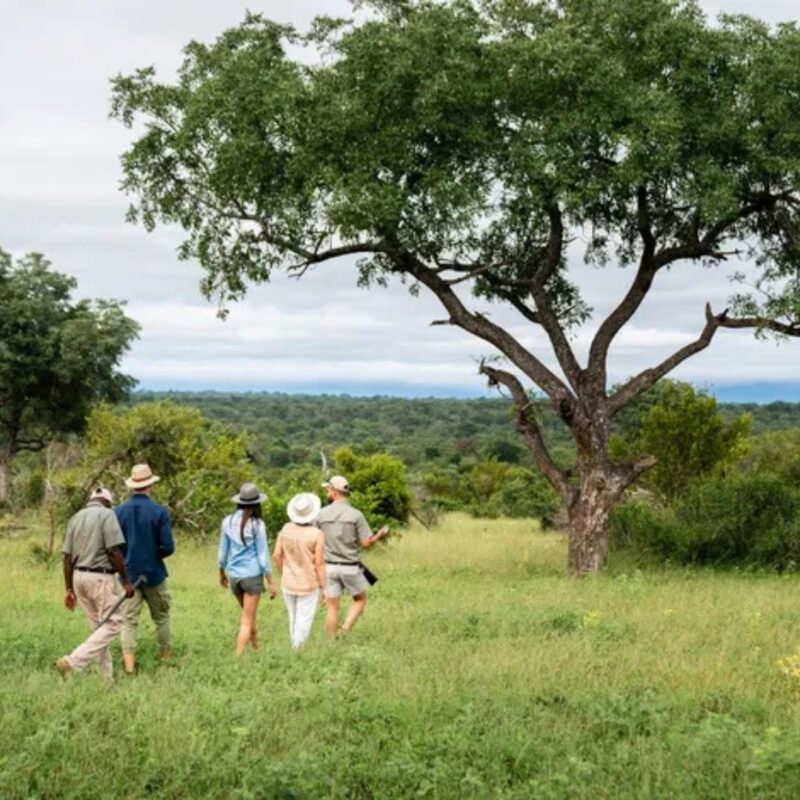
Group size: Walking safaris operate in small groups, typically four to eight guests. This is not a preference; it is a safety parameter. Larger groups generate more noise, are harder to position correctly, and require the guide to manage a wider field of human variables simultaneously. Reputable operations hold firm on maximum group size regardless of booking pressure.
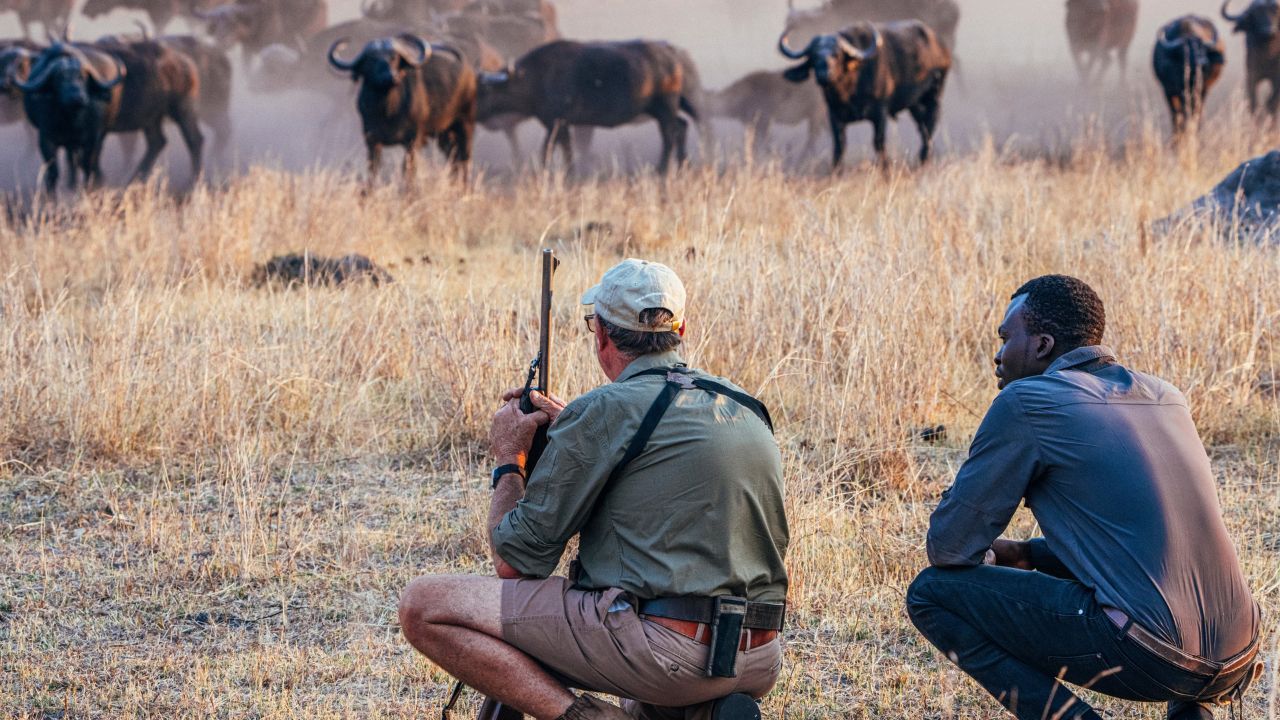
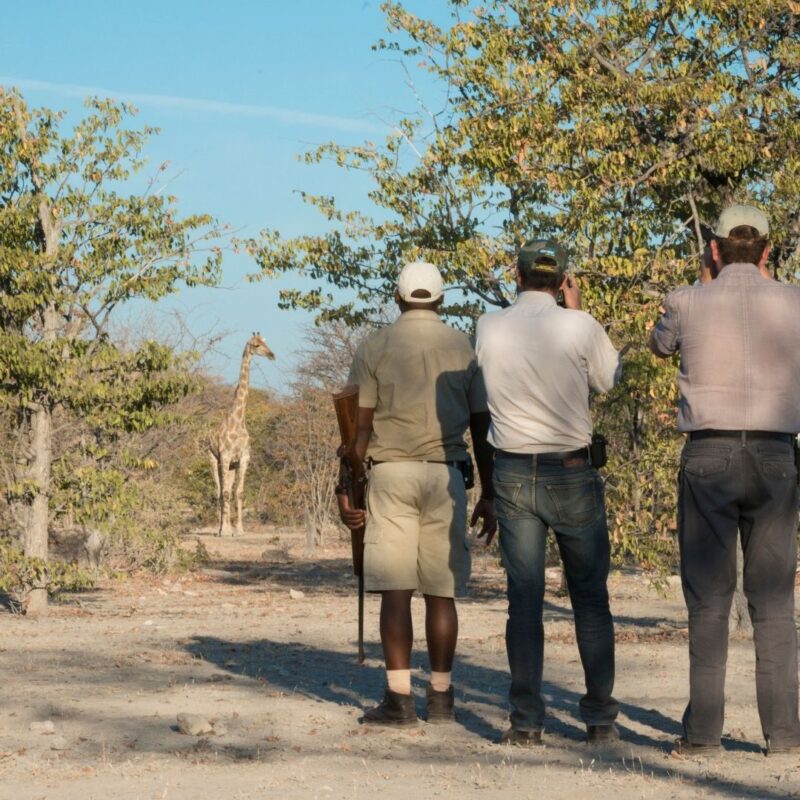
Firearms: The lead guide carries a high-calibre rifle. Its presence is not a guarantee of what will happen if a dangerous game encounter goes wrong; it is the last resort in a system designed to ensure that last resort is unlikely required. A guide who reaches for their rifle has, in their own assessment, exhausted the options that experience and knowledge provide. In practice, this is an extremely rare event in professionally guided operations.
Wind direction: This is one of the most continuous variables in walking safari management. Animals detect human scent at considerable distances. The guide positions the group consistently downwind of the target direction of travel, adjusting as wind shifts. This is something guests observe their guide doing constantly, checking wind direction, adjusting the group’s position or route without explanation, and reconsidering an approach because the wind has changed.
Positioning: When a dangerous game is encountered, the guide positions the group according to the specific animal’s behaviour and the terrain. Guests are placed behind the guide and to the side. Instructions stop, move left, move back slowly, are given quietly and must be followed immediately and without question. This is briefed before every walk and is the most important behaviour guests need to understand.
What Are You Briefed Before a Walk?
Before every morning walk, the guide conducts a safety briefing. This covers:
- Walk with the guide, not ahead of them, ever
- Follow hand signals and verbal instructions immediately
- When the guide stops, everyone stops
- No sudden movement or noise when dangerous game is present
- Where to position yourself if an animal charges: behind the guide, never running
- What charging behaviour looks like and how the guide will respond to it
- Communication protocols
This briefing is not bureaucratic compliance. It is the information transfer that makes the safety framework function. Guests who understand these protocols and who have thought about them rather than hearing them passively, make the guide’s job significantly easier in any encounter.
What Are the Real Risks?
Walking safaris carry real risk. That is part of their character, and pretending otherwise would be dishonest.
The risk on a professionally guided walking safari is managed rather than eliminated. The guide’s training, the group protocols, the firearm presence, and the specific positioning decisions made on the trail reduce the probability of a dangerous incident to a very low level. But the environment is wild, animals are unpredictable, and the guide operates with knowledge and judgment rather than certainty.
Incidents on professionally guided walking safaris are extremely rare. When they occur, they almost always involve a specific set of contributing factors, inadequate guide qualification, inappropriate group behaviour, or operating outside the parameters that professional guidance defines. Choosing a reputable operator with verifiable guide qualifications addresses the factors that are within your control.
Common non-dangerous concerns:
- Heat and dehydration (managed through early departure times and hydration protocols)
- Thorns and uneven ground (appropriate footwear addresses this)
- Malaria (prophylaxis required in most walking safari areas consult a travel medicine specialist)
- Sun exposure (early morning walks reduce this significantly)
Medical Evacuation and Emergency Protocols
All professional walking safari operations maintain:
- Satellite and/or radio communication systems for areas beyond mobile network coverage
- First aid equipment and guide-level first aid competency
- Access to fixed-wing or helicopter medical evacuation
Response times vary significantly by location. Remote wilderness camps in Tanzania or Zambia involve longer evacuation windows than properties closer to infrastructure. This is relevant to any guest with specific medical considerations.
African Signature Journeys includes a detailed pre-departure health and logistics briefing with every itinerary, covering malaria prophylaxis requirements, vaccination recommendations, travel insurance requirements, and emergency contact protocols specific to each destination.
The Question Underneath the Safety Question
Most people asking about walking safari safety are not really asking “is this dangerous?” They are asking “will I be okay?”
The answer, on a professionally guided walking safari with a qualified guide from a reputable operator, is yes. You will be in the hands of someone whose entire professional training has been oriented around keeping you safe while giving you access to an experience that cannot be replicated from behind glass.
The awareness that you are in wild terrain, that the risk is real, managed, and present, is part of what makes the experience what it is. It produces a quality of attention that safety removes from most other contexts. That attention is not anxiety; it is presence. And for most guests, it is the thing they remember most clearly when they return home.
Signature Walking Safari Experiences

Hub Series Navigation
- Pillar: Walking Safaris in Africa — The Complete Guide
- Hub 1: Is a Walking Safari Right for You?
- Hub 2: Walking Safari Countries Compared
- Hub 3: Walking Safari Safety (You are here)
- Hub 4: What to Pack for a Walking Safari
- Hub 5: Walking Safari Camps — The Difference Between Good and Great
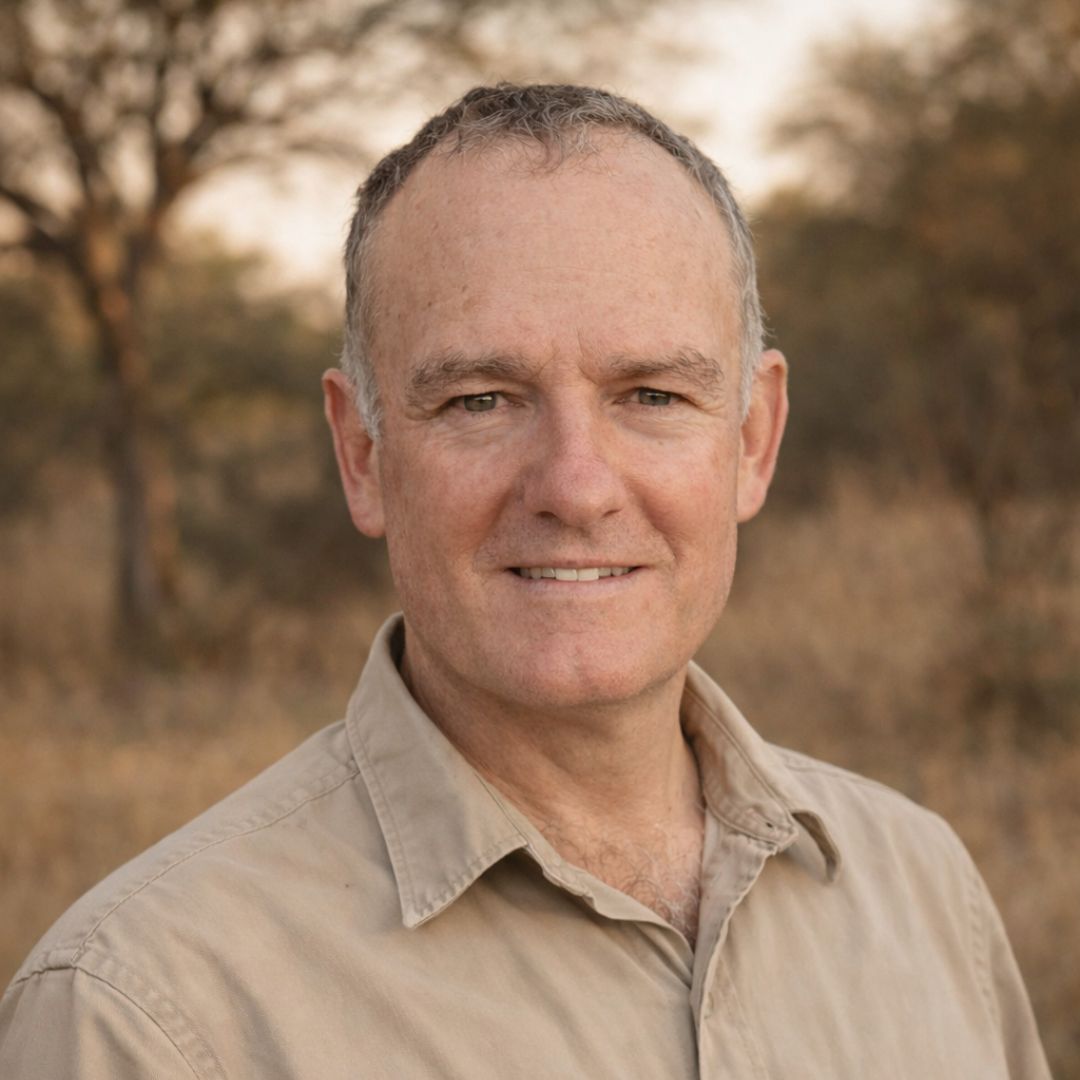
Sean Lues
Award Winning Safari Guide
Content by Award Winning Safari Guides
The content on African Signature Journeys is overseen by Sean Lues, an award-winning professional safari guide who was born and raised in Zimbabwe and has spent decades living, guiding, and managing safari operations across Africa.
Winner of the Zimbabwe Professional Guides Association Guide of the Year award, Sean is recognised for his deep knowledge of African wildlife, landscapes, and safari experiences. Now based in Australia, he combines firsthand African expertise with an understanding of what Australian travellers want from their safari adventure.
His experience helps ensure the information, recommendations, and insights shared by African Signature Journeys are practical, accurate, and based on real-world experience.