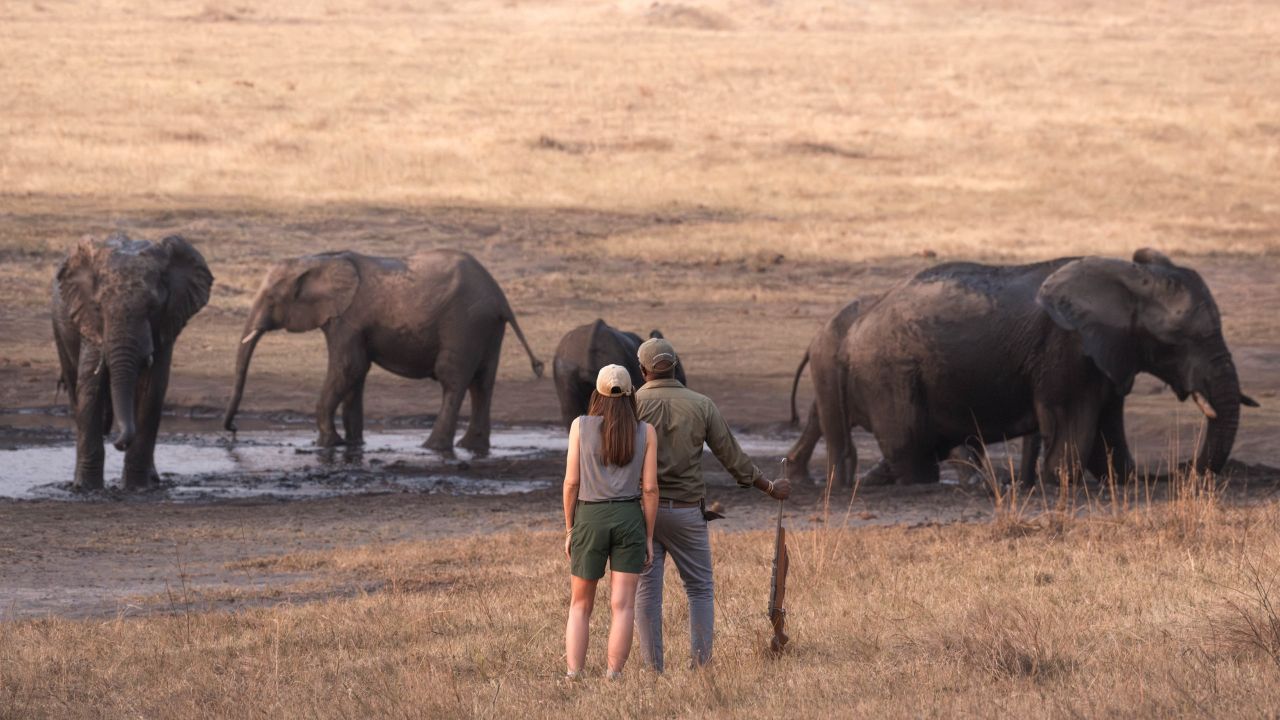
Choosing a walking safari camp is one of the decisions that most directly determines the quality of your experience more than the destination, more than the season, more than anything else in the itinerary. Two camps in the same park, in the same month, can produce experiences that are almost incomparably different.
Understanding what separates them is worth the thought before you book.
This hub covers the practical criteria for evaluating walking safari camps: guide quality, group size, location, camp format, and the specific character of the fly-camp experience. It connects to Walking Safari Countries Compared — Hub 2 for destination context and to Walking Safari Safety — Hub 3 for the guide qualification framework.
For the complete overview of the walking safari experience, see our Complete Guide to Walking Safaris in Africa.
The Guide Is the Camp
Everything else about a walking safari camp, the tent quality, the food, the view from your bed, is secondary to the quality of the guide leading your walks.
This is stated directly because it is frequently overlooked in the way walking safaris are marketed. Photographs of beautiful tents and open-air dining tables are easier to show than the quality of a guide’s judgment, but the tent and the table are not what you will remember. The morning your guide stopped the group, crouched to a set of tracks in the dust, and over the next forty minutes led you to a leopard resting in a drainage line twenty metres away that is what you will remember.
What defines a great walking guide:
- Verifiable qualification: FGASA Trails Guide certification in Southern Africa; Professional Guide qualification in Zimbabwe; KWS-registered professional in Kenya. Ask for this specifically when evaluating a camp.
- Years of experience in the specific ecosystem, not general field guiding experience. A guide who has spent ten years in the South Luangwa has an accumulated reading of that landscape that no qualification can replace.
- A guiding style that educates rather than performs. The best guides share knowledge about tracks, plants, animal behaviour, and ecological relationships in a way that builds the guest’s understanding of what they are seeing. They are not providing entertainment; they are providing context.
- Communication: The ability to convey complex environmental information simply, to read a group’s engagement level, and to adjust the walk accordingly.
When evaluating a camp, ask directly: Who is the head guide? What is their qualification? How long have they been guiding in this specific area? A camp that cannot answer these questions clearly is not a camp to book.
Group Size: Why It Matters More Than Most Things
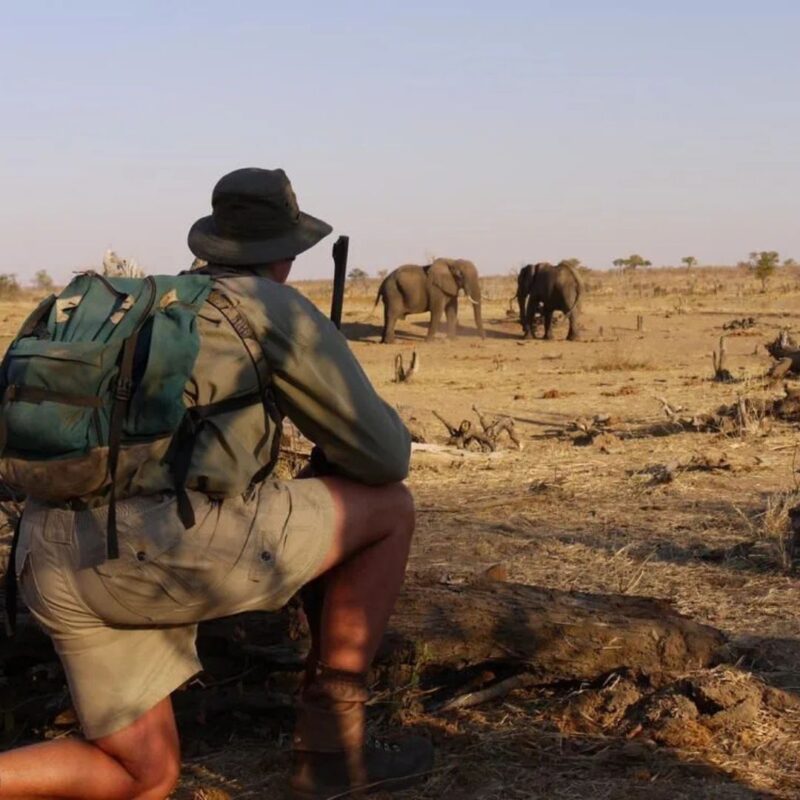
The maximum group size on a walking safari is not a preference it is a fundamental variable in the quality and safety of the experience.
The difference between a four-guest walk and an eight-guest walk is significant. The difference between an eight-guest walk and a twelve-guest walk is the difference between a walking safari and a guided bush walk.
Large groups generate noise. They require more time to position correctly when dangerous game is encountered. They produce a collective behavioural unpredictability that the guide has to manage simultaneously with managing the environment. The quality of the individual experience degrades as group size increases.
What to look for: A maximum of eight guests per walk, with a clear policy rather than a guideline that gets bent under booking pressure. Many of the best camps run a maximum of six. The very best fly-camps run four.
Ask the camp specifically: what is your maximum group size for walking? If the answer is anything above eight, or if the answer is vague, this is relevant information.
Location Within the Ecosystem
Not all areas within a given park or reserve offer the same walking quality, and camp location within the ecosystem matters significantly.
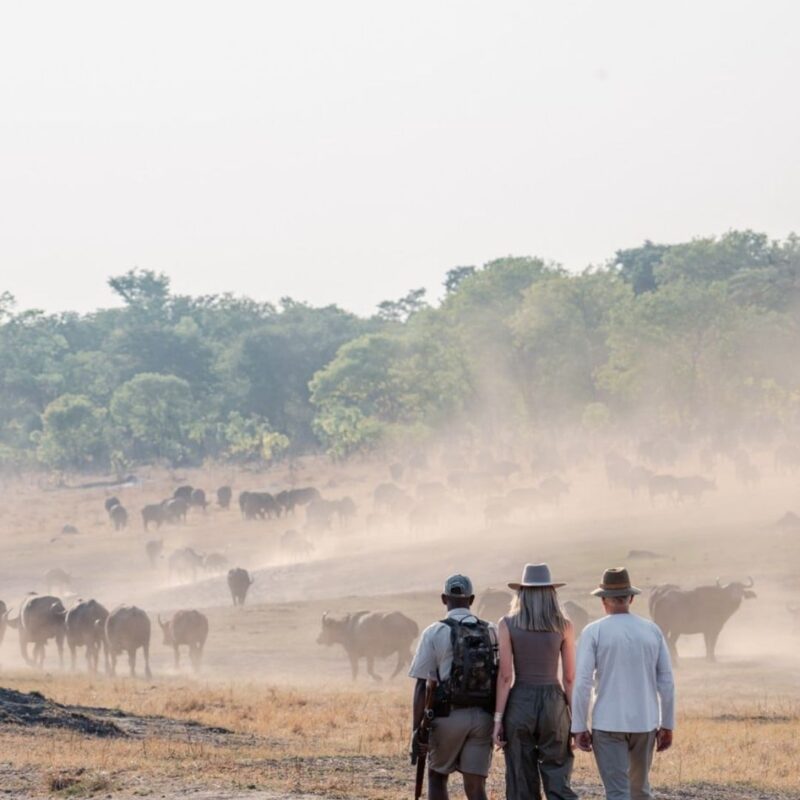
The best walking safari camps are positioned in areas of genuine wilderness away from main roads, away from vehicle traffic patterns, in terrain that the guide team knows intimately. Camps positioned on the edges of protected areas, or in high-traffic zones popular with vehicle-based operators, produce a walking experience that competes with, rather than contrasts with, the vehicle-based safari experience.
The most important criterion: can you walk directly from camp, without a vehicle transfer to a walking starting point? Camps where you step out of breakfast and onto a game trail are fundamentally different from camps where the first thirty minutes of the morning are spent in a vehicle getting to where the walking starts.
Camp Size: Smaller Is Almost Always Better
Walking safari camps work best when they are small. Four to eight guests total, not four to eight guests per guide.
Small camps produce:
- A more immersive atmosphere the quality of evenings around a fire, the conversation over dinner, the informal debrief with the guide about what the morning produced
- Flexibility in the walk schedule the guide can adjust timing, direction, and duration without navigating the logistics of a large group
- A sense of place rather than a sense of facility
The best walking safari camps in Africa, the legendary operations in the South Luangwa, at Mana Pools, in the Okavango Delta, are all small. This is not a coincidence.
The Fly-Camp: The Most Immersive Walking Safari Format
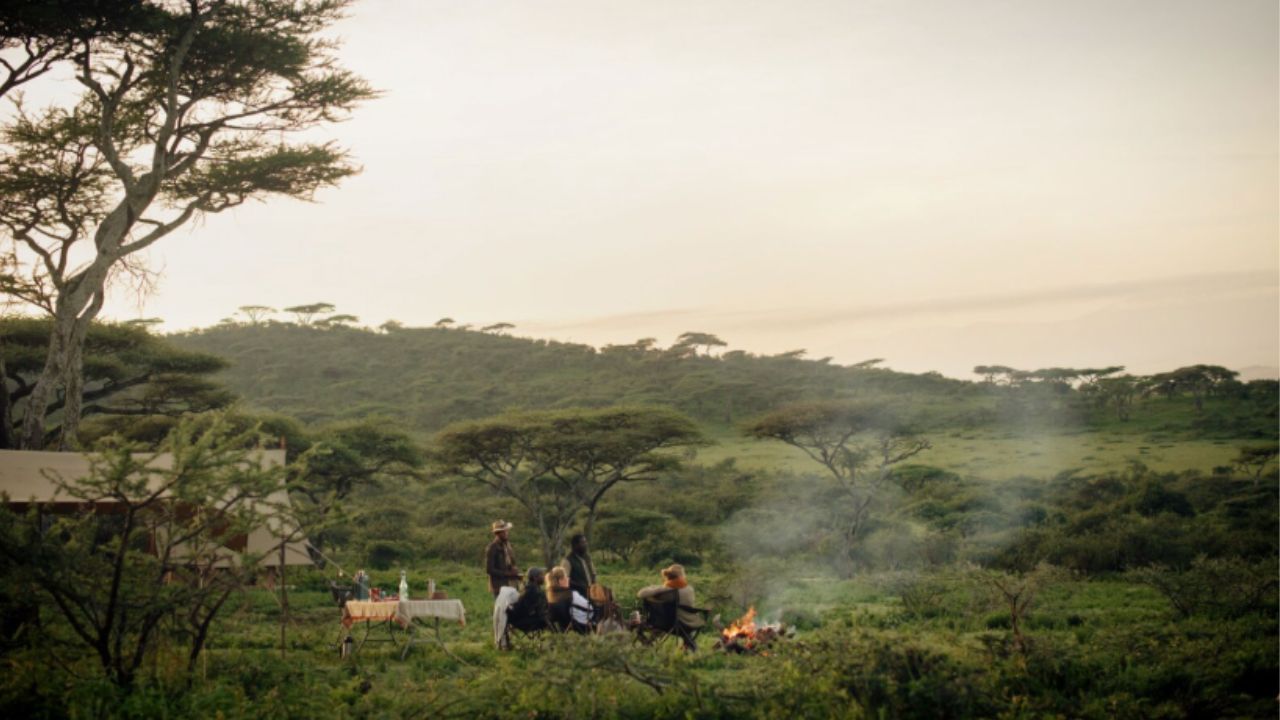
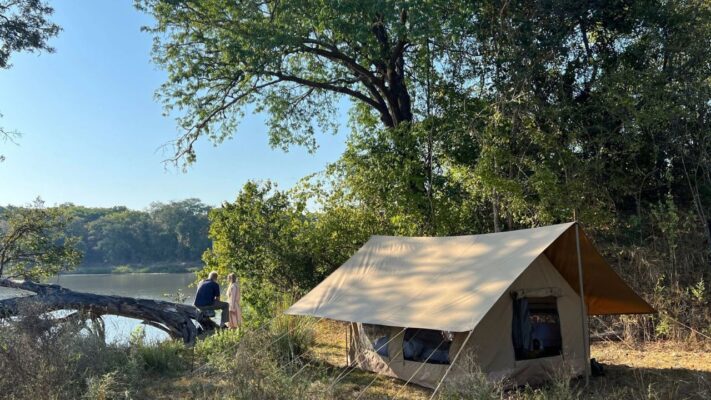
A fly-camp is a small, temporary camp established deep in wilderness terrain, typically requiring a walk in rather than a vehicle transfer. It is the furthest point from the comfortable mid-range safari hotel that the walking experience can reach.
Fly-camps in the current market are not the canvas-and-pole operations of the early walking safari era. They involve properly constructed sleeping tents, composting toilet systems, bucket showers, and camp kitchen operations that produce meals of genuine quality from equipment carried on foot or by pack animal.
What makes the fly-camp experience different is not the physical format but the context. Maybe you are in a location that no vehicle can reach. The camp has been assembled specifically for your group. The darkness at night is genuine darkness. The sounds of the night are the only sounds. There is no competing information, no signal, no news, no ambient noise of other guests, no infrastructure hum. Just the landscape you walked through today, and the knowledge that you will walk through it again tomorrow.
Environmental psychologists describe the conditions that genuinely restorative natural environments need to provide: they should be extensive, coherent, different from ordinary life, and rich in what the researchers call “soft fascination” stimulation that holds attention without taxing it. A fly-camp in the South Luangwa or the Mana Pools floodplain satisfies all of these conditions completely.
For many guests, the fly-camp component of a walking safari itinerary is the element they describe most specifically and most vividly when they return.
Private and Exclusive-Use Options
For families, groups travelling together, or guests who want the walking safari experience in a fully private format, exclusive-use camps where the entire property is reserved for a single group provide the logistical flexibility that shared camps cannot.
The specific advantages of exclusive-use:
- Walk schedules, meal timing, and activity selection are determined entirely by the group
- Guide attention is undivided – the guide works only with your group
- Multi-generational groups with different fitness levels, ages, and interests can be accommodated without reference to other guests
- The social experience of the camp evenings around the fire, shared meals is entirely within your group
South Africa’s private Kruger concessions offer the widest selection of exclusive-use walking safari properties. Kenya’s Mara conservancy camps provide exclusive-use options with direct walking access to conservancy wildlife land.
How Walking Safaris Support Conservation and Local Communities
The camp you choose has consequences beyond your own experience.
Walking safari operations, when structured correctly, employ significantly more local staff per guest than vehicle-based equivalents, such as guides, trackers, camp staff, and porters. The employment profile keeps tourism revenue circulating within local communities rather than flowing outward to distant suppliers and vehicle importers.
The community conservancy model in Kenya is the most documented example of this structure working at scale: tourism revenue paid directly to Maasai landowners as compensation for maintaining their land in wildlife habitat has reversed habitat loss in several areas and created durable economic incentives for conservation.
Botswana’s strict low-volume conservation policy, high fees, and low visitor numbers produce walking areas where the ecological carrying capacity is never approached. This policy is not coincidental; it is the result of deliberate decisions about the value of keeping an ecosystem intact.
When evaluating a camp, it is worth asking: how does this operation support the community adjacent to it? What percentage of staff is local? Is there a community revenue-sharing structure? The answers distinguish operators who take this seriously from those who use it as language.
African Signature Journeys evaluates these structures as part of the property selection process. The camps included in walking safari itineraries have been assessed for guide qualification, group size policy, location quality, and community benefit structures, not just for how they photograph.
What Great Walking Safari Camps Have in Common
Across all destinations and formats, the walking safari camps that consistently produce the best guest experiences share these characteristics:
- A head guide with deep, documented experience in the specific ecosystem
- A maximum group size that is enforced, not approximate
- Camp location in genuine wilderness, with direct walking access
- A small total guest count that produces intimacy rather than a hotel atmosphere
- A culture of knowledge-sharing rather than performance
- Transparency about community and conservation commitments
These criteria are harder to photograph than a beautiful tent. But they are what the experience is actually made of.
Signature Walking Safari Experiences

Hub Series Navigation
- Pillar: Walking Safaris in Africa — The Complete Guide
- Hub 1: Is a Walking Safari Right for You?
- Hub 2: Walking Safari Countries Compared
- Hub 3: Walking Safari Safety
- Hub 4: What to Pack for a Walking Safari
- Hub 5: Walking Safari Camps — The Difference Between Good and Great (You are here)
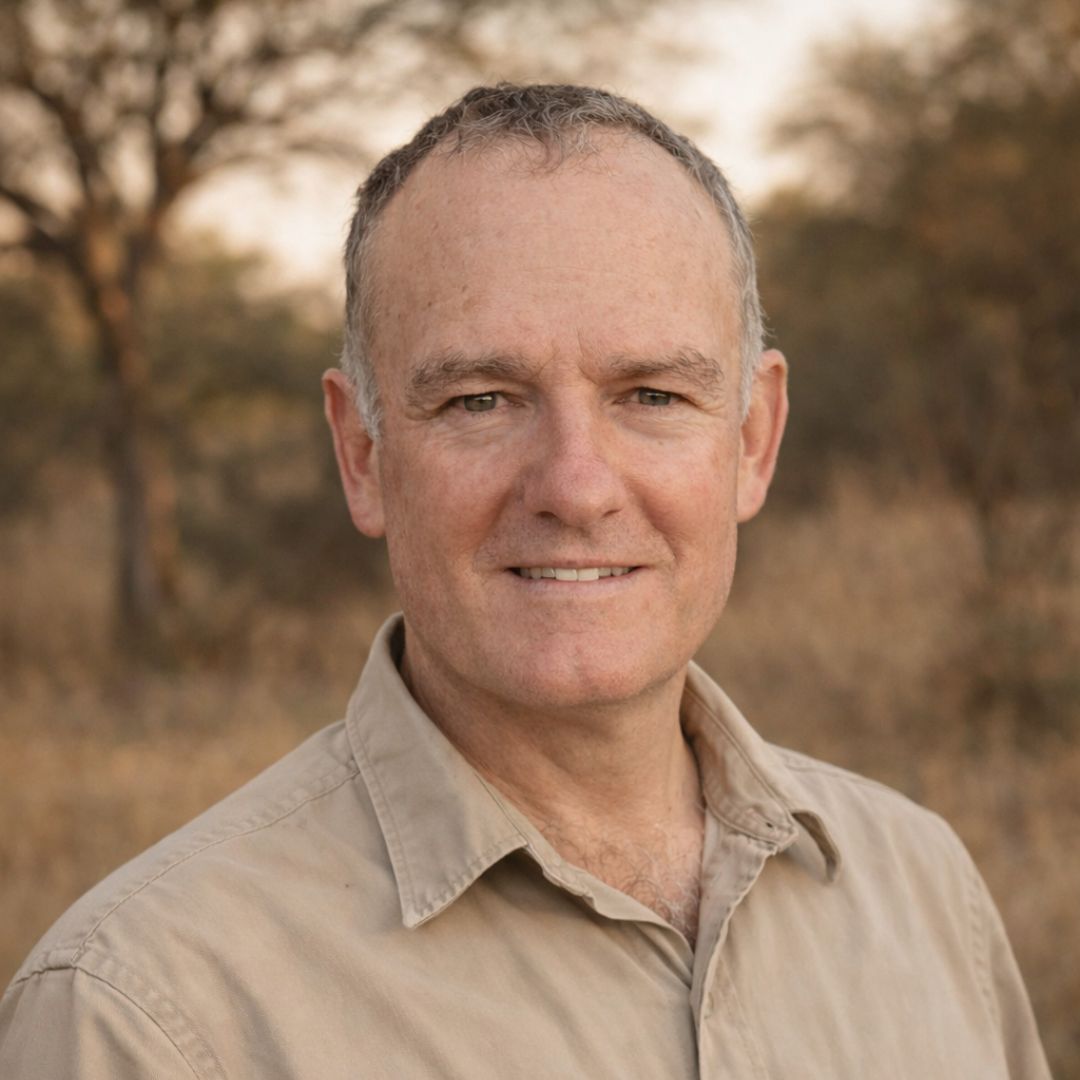
Sean Lues
Award Winning Safari Guide
Content by Award Winning Safari Guides
The content on African Signature Journeys is overseen by Sean Lues, an award-winning professional safari guide who was born and raised in Zimbabwe and has spent decades living, guiding, and managing safari operations across Africa.
Winner of the Zimbabwe Professional Guides Association Guide of the Year award, Sean is recognised for his deep knowledge of African wildlife, landscapes, and safari experiences. Now based in Australia, he combines firsthand African expertise with an understanding of what Australian travellers want from their safari adventure.
His experience helps ensure the information, recommendations, and insights shared by African Signature Journeys are practical, accurate, and based on real-world experience.