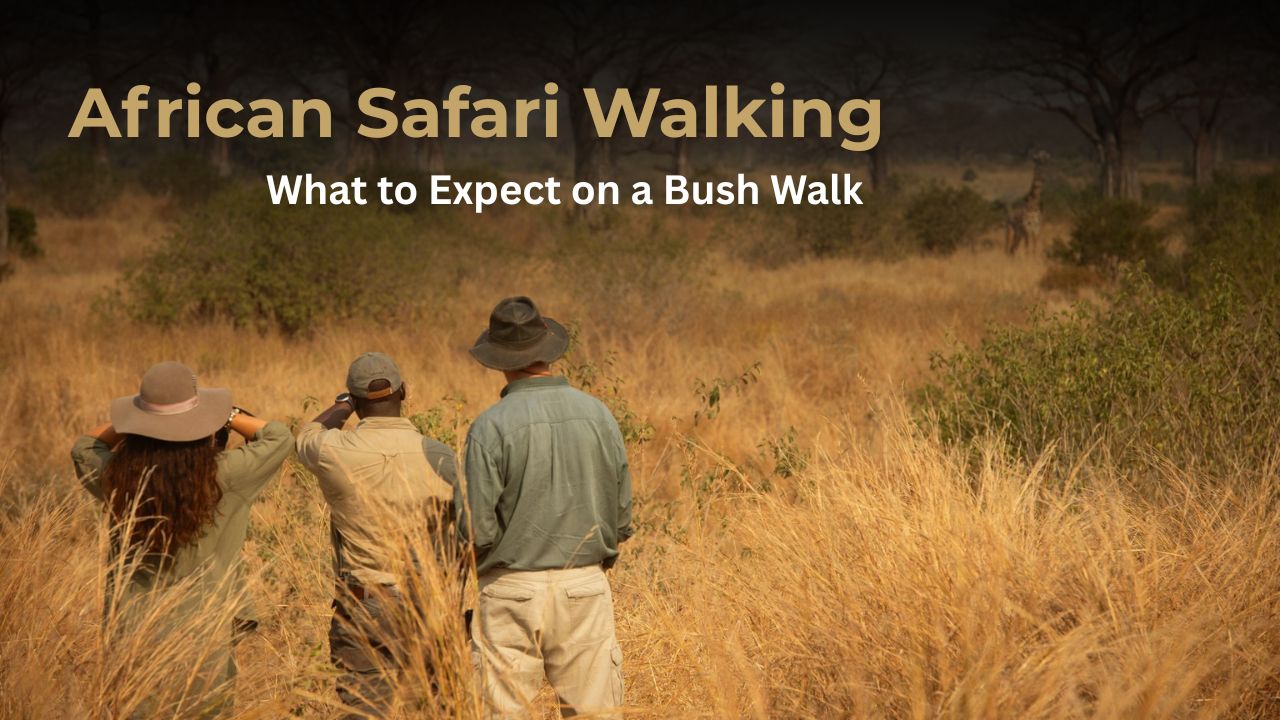
On Foot in the Bush: What a Walking Safari Actually Involves
The typical day on an African safari gives you two windows into the wild: the morning drive and the afternoon drive. Walking safaris open a third window, and it looks out onto a completely different world.
From a vehicle, Africa is spectacular. On foot, it becomes visceral. The scale changes. The sounds change. Your own awareness changes in a way that is difficult to predict and impossible to forget.
Why Walking Changes Everything
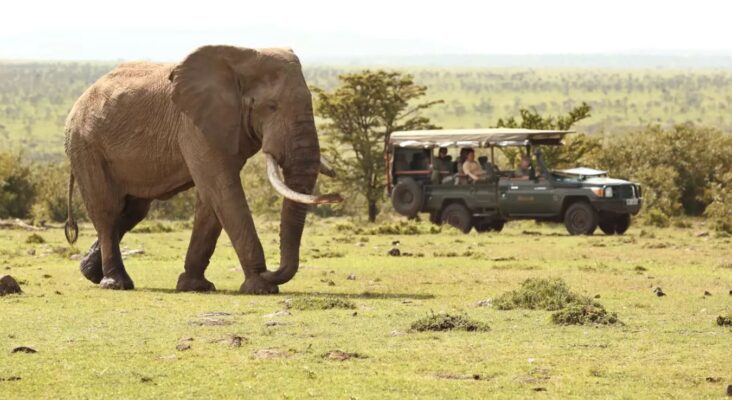
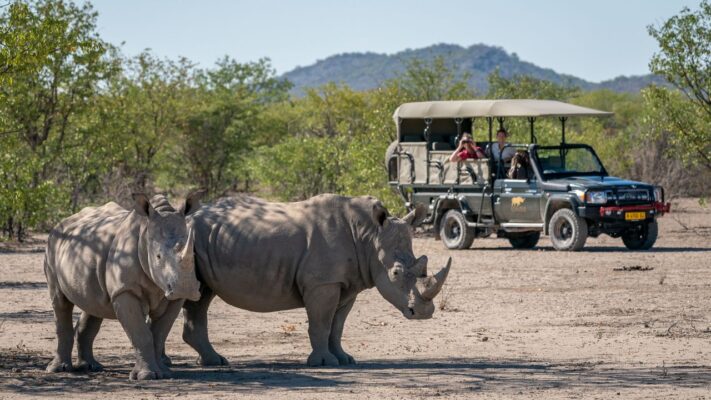
Sitting in a game drive vehicle, you are elevated, enclosed in metal, and fundamentally separate from the landscape you are moving through. Animals often habituate to safari vehicles and treat them as irrelevant a familiar shape that poses no threat. As a result, you can approach a sleeping lion at twenty metres in a vehicle without disturbing it.
On foot, you are no longer inside a machine. You are an animal in a landscape full of other animals, and your senses adjust accordingly. Within ten minutes of leaving the vehicle, most walkers notice the same thing: they have become acutely, almost uncomfortably alert. Every sound registers. Every movement in the grass becomes significant.
The smell of the bush on foot is extraordinary. Wild sage crushed underfoot, the rich iron smell of fresh dung, the distant sweet-musty scent of a lion that passed this way an hour ago. None of this reaches you in a vehicle.
Scale reasserts itself on foot. A termite mound that looks like a minor feature from the road stands three metres tall up close, an architectural wonder built by insects and used as a lookout by mongooses, leopards, and cheetahs. Elephant tracks in the mud are genuinely enormous. Furthermore, the details that disappear from the vehicle height become the whole story when you are standing among them.
How a Walking Safari Works
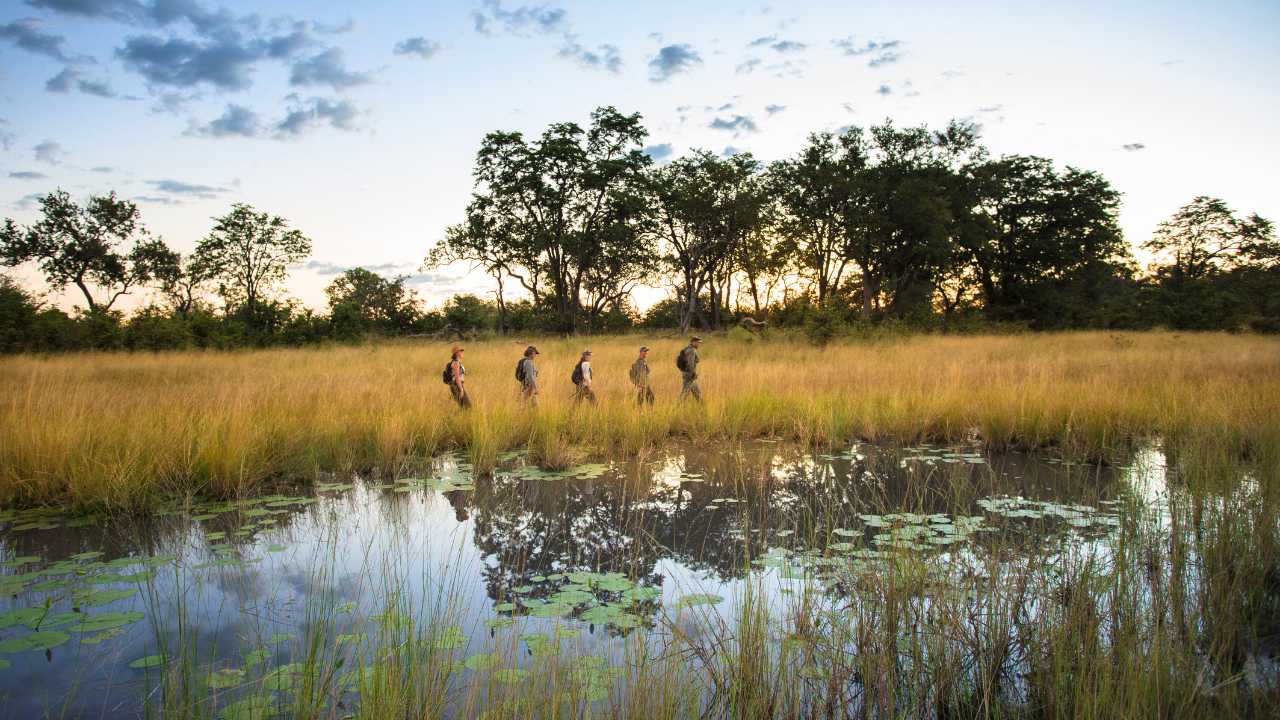
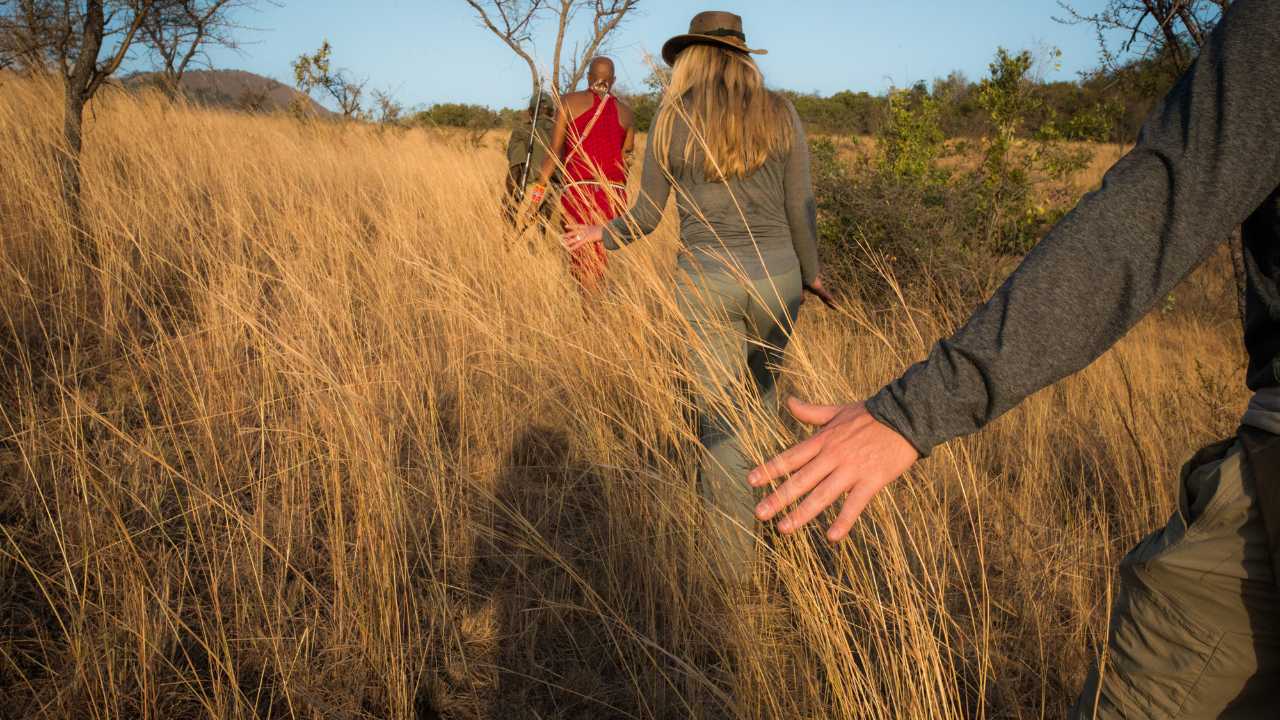
Before you leave camp, your armed ranger runs a brief safety briefing. It is not designed to frighten you, it is designed to make you feel settled and informed. You will learn the walking formation: single file, guide at the front, second guide or tracker at the rear. You will also learn the hand signals. A raised open palm means stop, immediately and silently. A closed fist means freeze. A pointing finger means look, in that direction, right now.
You will also be told how to behave in a close encounter with large wildlife. The core principle is simple: trust your guide completely. Do not run. Do not raise your arms. Stay together as a group. These instructions are given not because dangerous encounters happen regularly; they are rare in well-managed operations, but because knowing what to do means you can enjoy the walk without anxiety.
Most walks run between ninety minutes and three hours. Some specialist walking camps offer longer excursions. The pace is slow; this is not a hike with a destination, it is a moving observation. Expect to stop frequently. There will be multiple times when you crouch down to examine an insect or a track. Expect to stand completely still for five minutes while your guide listens for something he or she cannot yet see.
A maximum of eight guests per walk is standard. Many operations set the limit at six. Small numbers are not just a luxury consideration; they are a safety and experience necessity. A group of twelve people walking through the bush is noisy and ungainly. A group of four or five, by contrast, moves quietly and gives the guide genuine ability to manage the experience.
Where Walking Safaris Are Best
Walking safaris are not available everywhere, and not every camp that offers them takes them seriously. The best operations have dedicated, highly trained walking guides, different from the game drive rangers, and access to wilderness areas where walks genuinely make sense.
Zambia’s South Luangwa National Park is widely regarded as the birthplace of the modern walking safari. Norman Carr pioneered the concept here in the 1950s, and the tradition remains stronger here than almost anywhere else in Africa. The South Luangwa landscape, dense woodland giving way to open oxbow lagoons, rewards walkers with extraordinary wildlife density.
Zimbabwe’s Hwange National Park and its surrounding private concessions offer excellent walking through mopane woodland. Elephant encounters on foot here rate among the most affecting experiences in all of African wildlife travel.
Botswana’s private concessions, particularly in the Linyanti and Selinda areas, offer walking within some of the most pristine wilderness in Africa. African Signature Journeys works with operators in Botswana that have strong walking programs in landscapes where vehicle access is genuinely limited.
South Africa’s private reserves around Kruger, particularly the Timbavati and Thornybush, offer walking in Big Five country with high-calibre armed rangers. The proximity to Johannesburg, moreover, makes these properties popular for shorter itineraries that want a walking component without a long internal flight.
Kenya and Tanzania generally have more restrictions on walking in national parks. However, conservancies bordering the Maasai Mara, including Ol Kinyei, Naboisho, and Lemek, allow excellent bush walks on private land.
What You Are Likely to Encounter
Walking safaris are not guaranteed Big Five experiences. Any operator who implies otherwise should be viewed with scepticism. What walking safaris deliver with consistency, however, is depth of experience, the same bush you saw from the vehicle, but read at a completely different resolution.
The smaller things become extraordinary. Dung beetles rolling balls of elephant dung twice their body weight. Millipedes the length of a finger. Birds you can now identify by their calls because you are standing still long enough to hear them. Your guide will point out which trees are used by which species, what the scratches on a particular bark indicate, and how a particular grass type signals the presence of underground water.
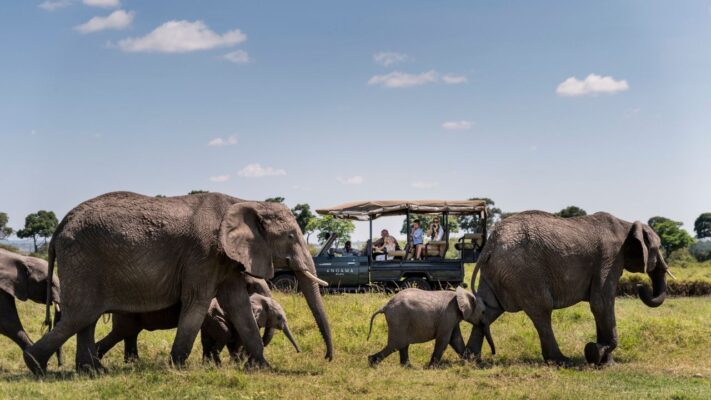
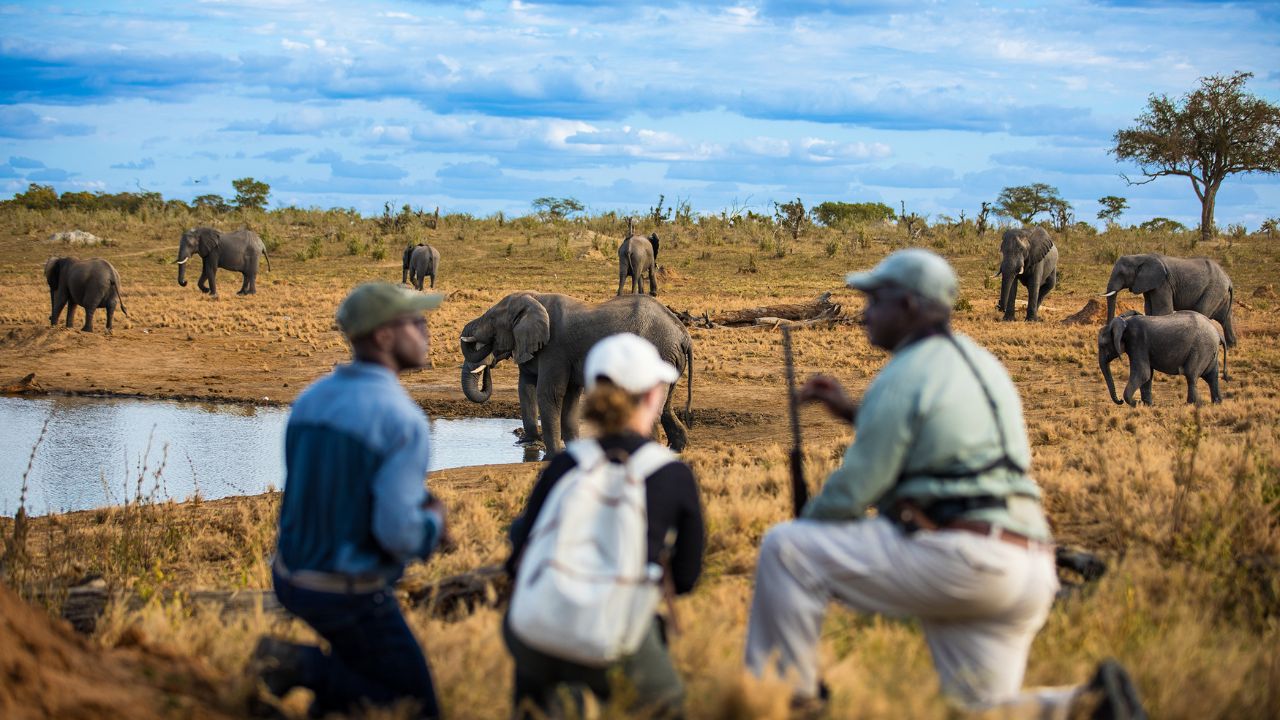
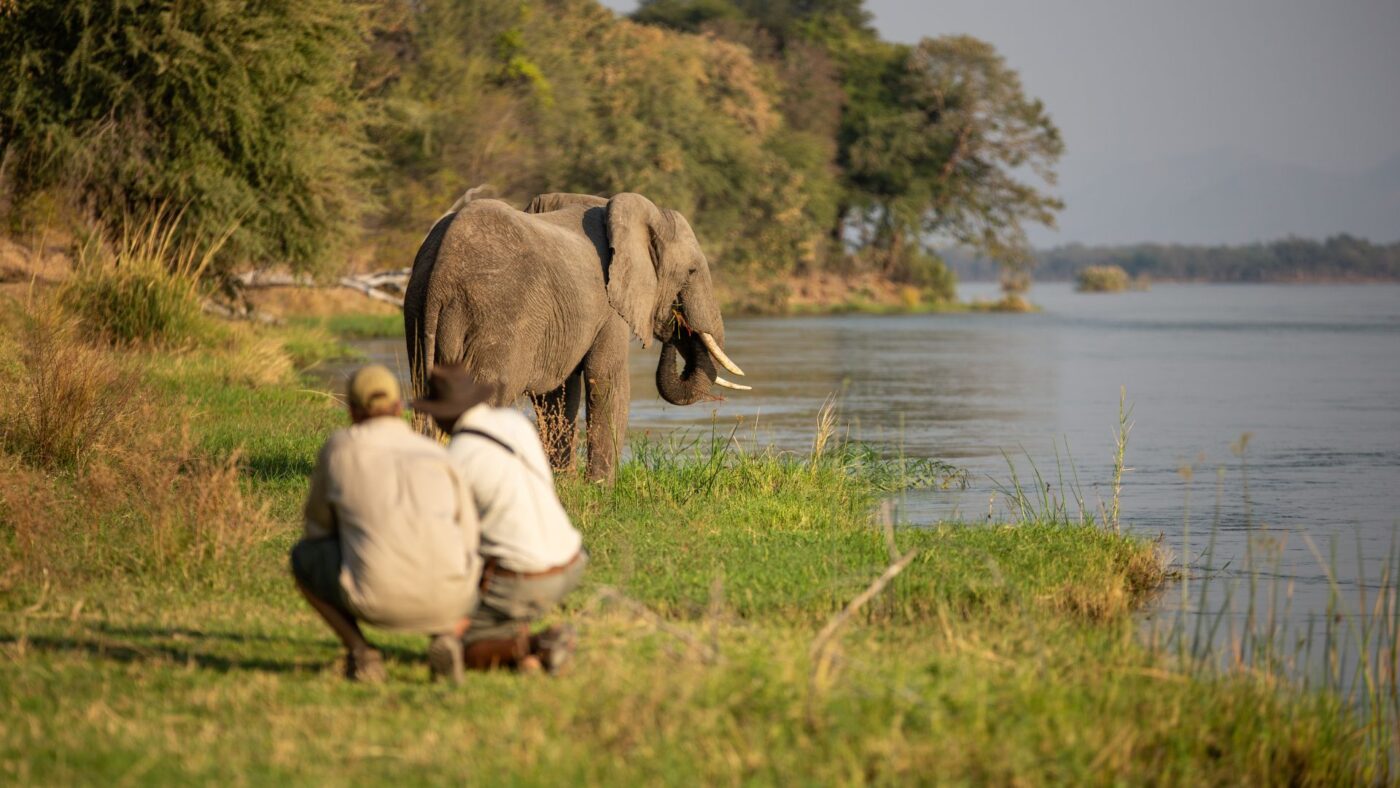
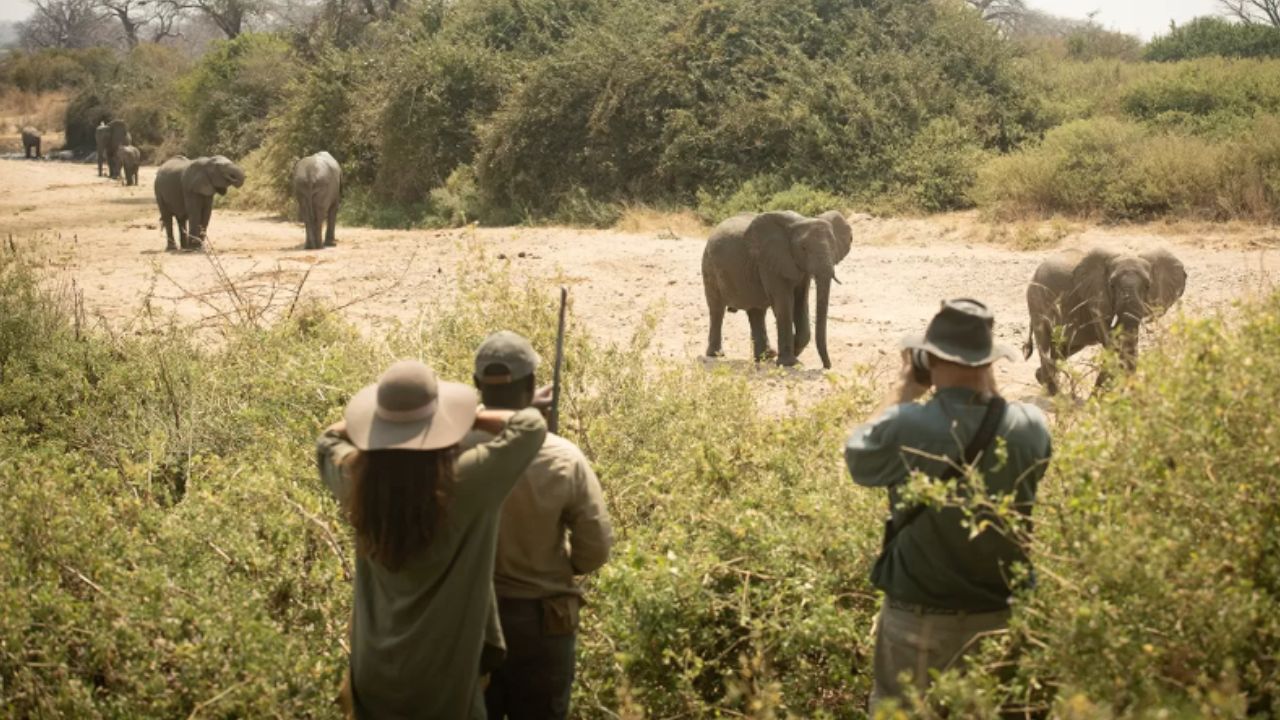
Large animal encounters on foot do happen. In fact, they happen more often than most first-time walkers expect. An elephant feeding alone in the shade, which your ranger approaches to within fifty metres before the elephant becomes aware of you and moves away, creates a feeling entirely unlike watching the same elephant from a vehicle. The encounter is mutual. The animal sees you as an animal. The quality of the moment is unlike anything else in travel.
Lions on foot are a different proposition. Experienced walking guides approach them cautiously and upwind, in the right circumstances. When it works, you watch lions from a standing position at a hundred metres with nothing between you and them. The guide’s professional reputation and guiding licence depend on making good judgements, and they almost always do.
Practical Considerations for Australian Travellers
Walking safaris have a minimum age requirement in most operations. Some set it at twelve years; others require sixteen. The physical fitness required is modest; walking safaris are not trekking. The terrain is generally flat or gently undulating, and the pace is slow. Anyone who can walk comfortably for two hours can manage a standard bush walk.
Footwear should cover the ankle and have a closed toe. Neutral-coloured clothing is also important, such as khaki, olive, tan, and grey. Avoid bright colours, white, and black. The classic advice about dark colours applies here too: avoid them in the evening when mosquitoes are active, and avoid them during walks when you do not want to stand out against the landscape.
Silence is a genuine asset on a walking safari, not a social imposition. The guides communicate largely through hand signals and whispered instructions. Conversations happen at stops and rests, not during movement. Most walkers find the enforced quiet unexpectedly meditative.
Carry water. Take your camera. Don’t bring anything you don’t need. The lighter and quieter you move, the better.
How Walking Fits Into a Multi-Day Itinerary
Most travellers who try a walking safari on their first day of a two-night stay want to do it again on day two. Mixing walking with game drives over several days builds a complete understanding of the bush in a way that drives alone cannot.
For a properly integrated experience, consider two or three nights at a property with a serious walking program within a broader itinerary. A Zambia itinerary combining the South Luangwa Valley with the Kafue National Park gives you both dimensions in depth. As discussed in Hub 1 on the game drive experience, the two activities read the bush through completely different lenses, and the combination is greater than the sum of its parts.
African Signature Journeys regularly includes walking safari experiences in bespoke itineraries for Australian travellers. If you want to understand which destinations and camps offer the strongest walking programs for your travel dates, our team can help. Get in touch at africansignature.com.
IN THIS SAFARI SERIES
PILLAR — African Safari: What to Expect Each Day
HUB 1 — African Safari Game Drive: What Really Happens
▸ HUB 2 — African Safari Walking: What to Expect on a Bush Walk ← You are here
HUB 3 — African Safari Evenings: Sundowners, Dinner, Camp Life

Sean Lues
Award Winning Safari Guide
Content by Award Winning Safari Guides
The content on African Signature Journeys is overseen by Sean Lues, an award-winning professional safari guide who was born and raised in Zimbabwe and has spent decades living, guiding, and managing safari operations across Africa.
Winner of the Zimbabwe Professional Guides Association Guide of the Year award, Sean is recognised for his deep knowledge of African wildlife, landscapes, and safari experiences. Now based in Australia, he combines firsthand African expertise with an understanding of what Australian travellers want from their safari adventure.
His experience helps ensure the information, recommendations, and insights shared by African Signature Journeys are practical, accurate, and based on real-world experience.
Do You Have a Question We Can Answer For You?
Connect with Sean