Kruger National Park – A Seasonal Guide
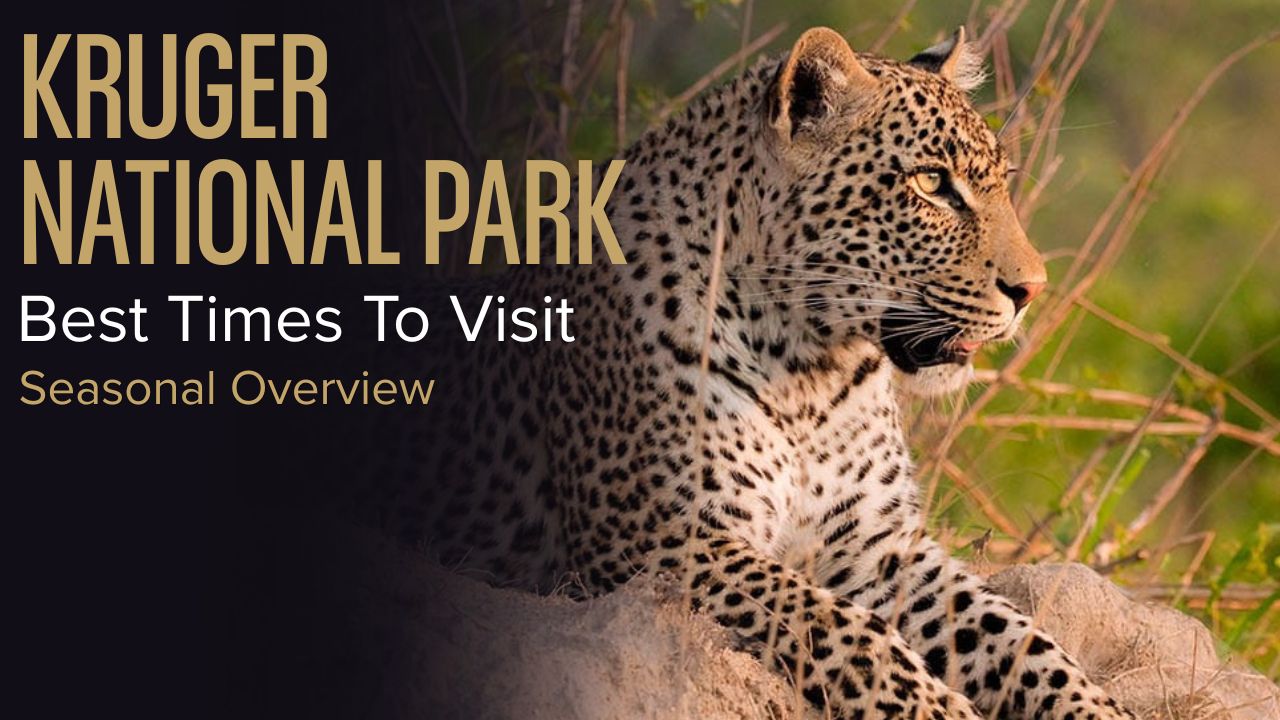
Every prospective safari traveller asks the same question. When is the best time to visit Kruger National Park?
The honest answer is that no single month suits every traveller. Kruger rewards different visitors at different times of year. A birder wants November. A first-time Big Five hunter wants August. A honeymooner wants May.
This guide breaks down Kruger’s seasons properly. It replaces vague, conflicting advice with a clear framework built around wildlife behaviour, climate data and traveller priorities. By the end, you will know exactly which window suits your trip.
Why Kruger Doesn’t Have a Single “Best” Season
Generic travel sites often push one verdict: visit in winter. That advice is incomplete.
Winter delivers outstanding predator sightings. But it also delivers freezing dawn game drives, peak lodge rates and crowded southern roads. Summer offers newborn animals, dramatic skies and quieter reserves, but it brings heat, humidity and thicker bush.
The right season depends on what you value most. Do you want guaranteed Big Five sightings or do you want lower prices, or possibly you want to avoid crowds? Your answer points to a different month.
This guide gives you the full picture, then lets you choose.
Kruger’s Climate: Wet and Dry, Not Four Seasons
Forget the European idea of spring, summer, autumn and winter. Kruger runs on a wet-dry binary shaped by subtropical rainfall patterns.
Two broad seasons anchor the year. The dry season runs from May through September. The wet, or green, season runs from October through April. Within these two seasons, four distinct ecological phases unfold.
Early dry season (May–June) brings cooling temperatures and thinning bush. Late dry season (July–September) delivers the most intense game viewing of the year, as animals concentrate around shrinking water sources. Early wet season (October–January) triggers the dramatic return of thunderstorms and newborn wildlife. Late wet season (February–April) produces peak vegetation growth and lush, green scenery.
Understanding these four phases matters more than memorising a calendar. Each phase changes how animals move, where they gather and how easily you will spot them.
The Dry Season: Kruger’s Prime Game-Viewing Window
Most first-time safari travellers choose the dry season, and for good reason.
As rainfall disappears between May and September, surface water evaporates across the interior. Herbivores retreat to permanent rivers and boreholes. Predators follow, turning riverbanks into reliable hunting corridors. Bare trees and flattened grass open long sightlines across the bush.
Wild dogs settle into den sites from June through August, making sightings more predictable. Elephant and buffalo herds gather visibly along the Sabie, Sand, Olifants and Letaba rivers. Visibility peaks in September, just before the rains return.
The trade-off is cost and crowds. July and August coincide with school holidays across South Africa and Australia, pushing up lodge rates and vehicle numbers at popular sightings.
Our Dry Season Deep-Dive covers this window month by month, including packing advice for cold mornings and how private reserves avoid the crowds.
The Green Season: When the Bush Comes Alive
The green season runs from November through April, and it deserves more attention than it usually gets.
Afternoon thunderstorms flush the bushveld into vivid colour within days. Impala lambing floods the plains with newborns each November, triggering a hunting boom for cheetahs and wild dogs. Migratory birds arrive from Europe and Central Africa, lifting the park’s species count past 500.
Lodge rates drop by 20% to 40% during this period, particularly in private concessions across Sabi Sand and Timbavati. Fewer vehicles gather at sightings. Guides rely on tracking skill rather than visual scanning, which often produces more memorable encounters.
Thicker vegetation does make spotting harder. Off-road tracking rights and experienced trackers in private reserves largely offset this challenge.
Our Green Season Guide explores the birthing season, the birding calendar and the value pricing that makes this window attractive.
The Shoulder Months: Kruger’s Best-Kept Secret
Two short windows sit between the extremes, and seasoned safari travellers treat them as insider knowledge.
May offers dry, sunny days, low malaria risk and thinning bush, without the winter crowds of July and August. September delivers the most intense dry-season game viewing of the year, paired with mild spring temperatures and low mosquito activity.
Both months bring lower rates than peak winter, quieter roads and excellent photographic light. Both also work brilliantly for multi-destination itineraries pairing Kruger with Cape Town or Victoria Falls.
Our Shoulder Seasons Guide explains why these transitional windows often outperform peak season for discerning travellers.
South Africa Wildlife Experiences





Matching Your Travel Priorities to the Right Season
Different goals point to different months. A traveller chasing Big Five sightings should target July through September, when concentrated wildlife makes success nearly guaranteed.
Birders should aim for November through February, when migratory species swell the park’s diversity. Photographers seeking dramatic skies and green backdrops should choose the early green season, from November through January.
Families with young children fare best in the dry winter months of June through August, when comfortable temperatures and minimal mosquito activity ease the logistics of travelling with kids. Couples wanting privacy should avoid July, August and December, choosing May or November instead.
Budget-conscious travellers should look to January through March, when green-season rates offer genuine savings without sacrificing quality.
Regional Variations: South, Central and North Kruger
Kruger’s seasonal patterns shift depending on where you stay.
The southern region, near the Crocodile and Sabie rivers, receives the highest rainfall and stays green longest into the dry season. It holds the highest predator density but also the busiest roads, since it sits closest to Johannesburg.
The central region, around Satara and Tshokwane, sits on nutrient-rich basalt plains. Open grasslands here provide exceptional dry-season visibility, drawing large herds and the predators that follow them.
The far north, from the Olifants River to the Limpopo border, receives the least rainfall and holds lower game densities. In exchange, it offers genuine wilderness, ancient baobabs and rare species like roan and sable antelope, along with some of the park’s best birdwatching.
Malaria Risk Through the Seasons
Malaria concerns often shape travel timing, particularly for American families and anyone travelling with young children.
Transmission risk drops to negligible levels during the dry winter, from June through September, when standing water disappears and cold nights suppress mosquito activity. Risk rises through the wet season, peaking after the rains in March and April.
Manageable precautions exist for travel during higher-risk months. These include long sleeves at dusk and dawn, air-conditioned accommodation and prescribed antimalarial medication under medical guidance. Kruger sits in a low-to-moderate risk zone, not a high-risk tropical belt, and most visitors travel safely throughout the year.
Concerned About Malaria Risks? – Take A look at our Malaria-free safari guide
Planning Advice for Australian and American Travellers
Americans and Australians approach Kruger from genuinely different starting points, and it pays to know which applies to you.
American travellers often assume “summer” means June through August, aligning with their domestic school break. In the Southern Hemisphere, those exact months mark the coldest, driest part of Kruger’s year. Packing light summer clothing for a July dawn game drive is a common and avoidable mistake.
Australian travellers already understand Southern Hemisphere seasonality, since their own winter mirrors Kruger’s. Australian trips typically run longer, often combining Kruger with Victoria Falls, Botswana or the Cape, and favour active, guided experiences over pure luxury.
Whichever market you belong to, the right season depends on your priorities, not a generic calendar rule. Our team designs each itinerary around your goals, whether that means Big Five certainty, birdlife, photography light or budget value.
Ready to plan your Kruger safari around the season that suits you? Contact African Signature Journeys and speak with our safari planning team.
Africa Is Rich With Choice
We Are Here To Help
Connect with an Africa Specialist to design a bespoke African Experience!
Hub Series Navigation
- Best Time to Visit Kruger National Park (You are here)
- The Dry Season Deep-Dive
- The Green Season Guide
- The Shoulder Seasons Guide

Sean Lues
Award Winning Safari Guide
Content by Award Winning Safari Guides
The content on African Signature Journeys is overseen by Sean Lues, an award-winning professional safari guide who was born and raised in Zimbabwe and has spent decades living, guiding, and managing safari operations across Africa.
Winner of the Zimbabwe Professional Guides Association Guide of the Year award, Sean is recognised for his deep knowledge of African wildlife, landscapes, and safari experiences. Now based in Australia, he combines firsthand African expertise with an understanding of what Australian travellers want from their safari adventure.
His experience helps ensure the information, recommendations, and insights shared by African Signature Journeys are practical, accurate, and based on real-world experience.