Private Game Reserves: What You’re Actually Paying For
In our guide to safari land types, we outlined the three main categories of African safari land. Private game reserves sit at the premium end. Understanding what drives that premium, and whether it matches what you’re looking for, is the most important conversation in luxury safari planning.
This post goes deeper on private reserves: how they work, what they allow, and why the experiences they offer are structurally unavailable on public land.
How a Private Game Reserve Actually Works
A private game reserve is land owned by individuals, companies, or conservation organisations. It is not public. Entry is permitted only to guests staying at lodges or camps within the reserve’s boundaries.
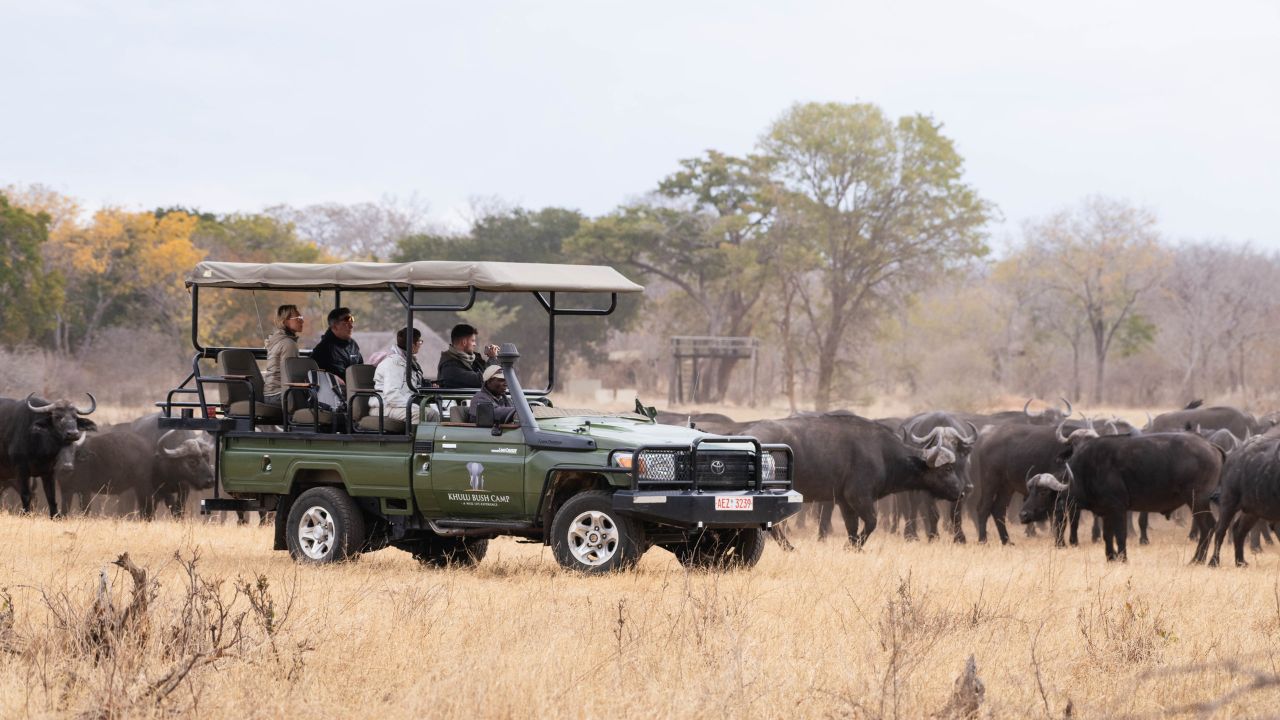
This matters immediately. There are no day visitors. No self-drive tourists wandering through. No public road cutting across the property. The only vehicles in a private reserve belong to its lodges, and each lodge operates with a fixed number of vehicles.
The reserve is managed for wildlife and the guest experience simultaneously. That combination, conservation-driven management with active hospitality, is what separates a private reserve from a national park, where management is conservation-driven and the public is admitted.
Most reserves operate as traversing agreements between multiple lodges. Guides share sighting information by radio. When a tracker locates a leopard, nearby vehicles are notified. The system is coordinated, professional, and focused on delivering the best possible encounter at every sighting.
Off-Road Driving: The Single Biggest Difference
In almost every African national park, vehicles must remain on designated roads. This is a conservation rule, and it exists for valid reasons. Road erosion is minimised. Animals are habituated to vehicles on tracks, not cutting through bush. Visitor movement is predictable and managed.
The constraint is real, though. When a lion moves into dense thicket 30 metres from the road, you wait. When a leopard climbs a tree 80 metres off the track, you view it through vegetation. The road determines what you see.
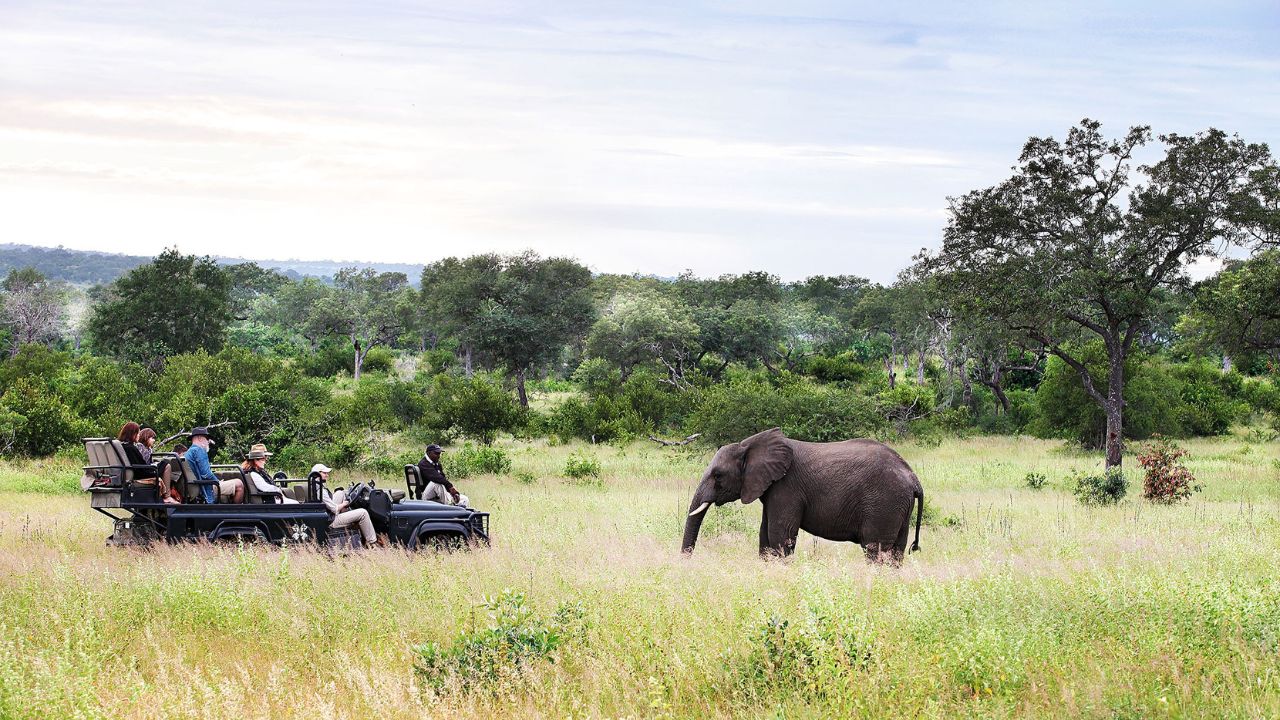
In a private game reserve, there is no road restriction. A trained guide can take the vehicle off-track and follow an animal wherever it leads. A tracker, often riding on a seat mounted above the front bumper, reads footprints, broken twigs, and animal sounds to locate wildlife before it’s visible. When a sighting is found, the vehicle positions itself for the best view, not the nearest road.
This transforms the experience in specific, concrete ways. In Sabi Sands in South Africa, the reserve’s leopards are habituated to vehicles across multiple generations, decades of off-road contact have built a tolerance that is unique in Africa. Guides park within metres of a feeding leopard. The animal continues eating. Nothing about the sighting is distant or obstructed.
The difference between watching a leopard from 50 metres on a road and pulling up three metres away in the bush is not a matter of degree. It is a different experience entirely.
Night Drives: The Half of the Safari You Would Otherwise Miss
National park gates close at sunset. In most parks, no vehicle movement is permitted after dark. This is enforced, not optional.
Nocturnal species, civets, genets, aardvarks, porcupines, bush babies, African wild cats, servals, are essentially invisible to national park visitors. Leopards, which are partly nocturnal, are far harder to locate at night without the ability to roam freely and use a spotlight.
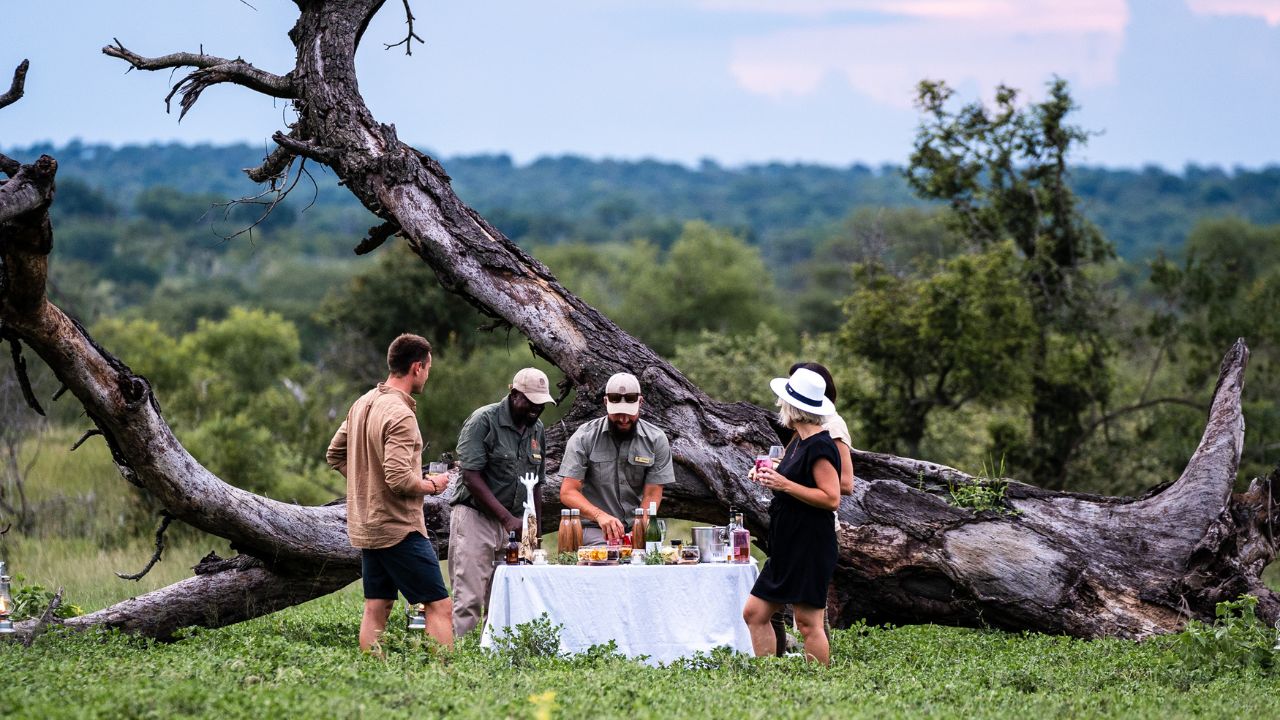
Private reserve lodges run night drives as standard. The afternoon game drive continues through dusk and into the dark, typically returning to the lodge around 9 or 10 pm. A handheld spotlight, operated carefully to avoid distressing animals, illuminates a completely different cast of characters.
The bush sounds different at night. The smells change. Hyenas are active. Lions call. The grass glows amber under the beam. A honey badger roots through termite mounds. A genet pauses in a tree, eyes reflecting green in the light. These are not supplementary experiences. For many travellers, the night drive becomes the defining memory of the safari.
Walking safaris, where available, add a third dimension. On foot, the bush operates at a different scale entirely. A guide reads tracks, identifies dung, explains plant uses, and interprets the landscape in ways impossible from a vehicle. The vulnerability, and the heightened attention it demands, changes how you see everything.
Vehicle Numbers at Sightings: Why Fewer Vehicles Matter
At a busy sighting in the Maasai Mara National Reserve during the July–October peak, it is not unusual to see 20, 30, or more vehicles. Minibuses, Land Cruisers, and open vehicles jostle for position. Guides radio the location, and within minutes the convoy assembles.
The animals respond to this. High vehicle density changes behaviour. Lions may move away. Cheetahs, which hunt by stealth across open ground, frequently abandon hunts when surrounded by vehicles.
Vehicle Numbers
Private reserves control vehicle numbers at sightings contractually. In Sabi Sands, the standard is two to four vehicles per sighting. On the most exclusive concessions, MalaMala, Singita, some Londolozi areas, a single vehicle may have a sighting entirely to itself.
The silence this produces is significant. Sitting alone on a vehicle while a cheetah walks past at three metres is qualitatively unlike watching the same animal through a gap between minibuses. The control over numbers is not incidental. It is central to what the premium purchases.
Habituated Animals: What That Phrase Actually Means
The word habituated appears often in private reserve descriptions. It deserves explanation.
Habituated animals are wild animals that have been exposed to safari vehicles over long periods, sometimes generations, and have learned that vehicles pose no threat. They do not associate a vehicle with danger. They continue their natural behaviour: feeding, playing, sleeping, nursing young, hunting.
Habituation is not taming. These animals are not domesticated, hand-raised, or fed. They are wild. The habituation is specifically to the vehicle, not to humans on foot, which is why walking safaris require armed guides and entirely different protocols.
In Sabi Sands, the leopard population has been exposed to vehicles for more than 50 years. Individual leopards are known by name, tracked across seasons, and observed raising cubs that grow up equally comfortable around vehicles. The result is leopard viewing that is unavailable anywhere else on earth. An encounter that would be a fleeting glimpse in a national park becomes an extended, close, uninterrupted observation in Sabi Sands.
This is not manufactured. It is the cumulative result of decades of conservation management, controlled vehicle access, and the absence of pressure from public traffic.
All-Inclusive Rates: What’s Included and What to Compare
Private reserve rates are quoted per person per night and described as all-inclusive. That typically means:
Accommodation, all meals (including bush breakfasts, picnic lunches, and multi-course dinners), two guided game drives per day, a night drive, house wines and spirits and local beers, and laundry. Some lodges include walking safaris, bush walks, and sundowners in the rate. A few include scheduled light aircraft transfers.
Comparing this to a national park experience requires adding the national park entry fee, guided game drive cost, accommodation, all meals, and additional activities. The gap is narrower than the headline figures suggest.
The all-inclusive model also changes how you move through a day. You are not calculating costs at each meal. You are not choosing between a guided drive or self-driving to save money. The experience is frictionless by design.
The Best Private Reserves in Africa, by Country
South Africa: Sabi Sands Game Reserve (Greater Kruger) is the benchmark, particularly for leopard viewing. Timbavati, Manyeleti, and Klaserie offer similar off-road access with lower lodge density and more competitive pricing.
Botswana: Mombo Concession in the Okavango Delta is often described as the Place of Plenty, one of the highest wildlife densities in Africa, with water-based activities layered on top. Jao, Khwai, and Selinda are outstanding alternatives.
Kenya: Private conservancies surround the Maasai Mara (covered in detail in our conservancy guide). These function as private reserves and represent the best of Kenya’s private safari land.
Tanzania: Private concessions within the Serengeti, such as those operated by Asilia, Singita, and andBeyond, offer off-road access and night drives inside the park’s ecosystem. Ruaha and Selous/Nyerere offer extraordinary wilderness with fewer visitors.
Zimbabwe: Hwange’s private concessions, including those run from lodges like The Hide and Somalisa, offer night drives and walking safaris in an under-visited Big Five destination.
Who Private Reserves Are Right For
Private reserves are not the right choice for every traveller. They suit those who:
- Are visiting Africa for the first time and want high-quality, guided sightings without the uncertainty of self-drive
- Prioritise specific encounters, particularly leopard, walking safaris, or night drives that are unavailable in national parks
- Value intimacy and low vehicle density over scale and variety of habitat
- Are celebrating a significant occasion and want the experience to be exceptional
For travellers combining national parks and private reserves in one itinerary, which we recommend, the contrast itself becomes part of the value. You understand precisely what each land type offers, because you’ve experienced both.
Plan Your Private Reserve Safari
African Signature Journeys plans bespoke itineraries across all of Africa’s key private reserve destinations. We work with a select group of lodges and know the specific operators and camps that consistently deliver.
In This Series
Safari Land Types: The Complete Guide
Private Game Reserves: What the Premium Buys (You are here)
African Conservancies: Community, Conservation, and Safari
National Parks: Where to Go and What to Expect
Explore Our African Signature Experiences


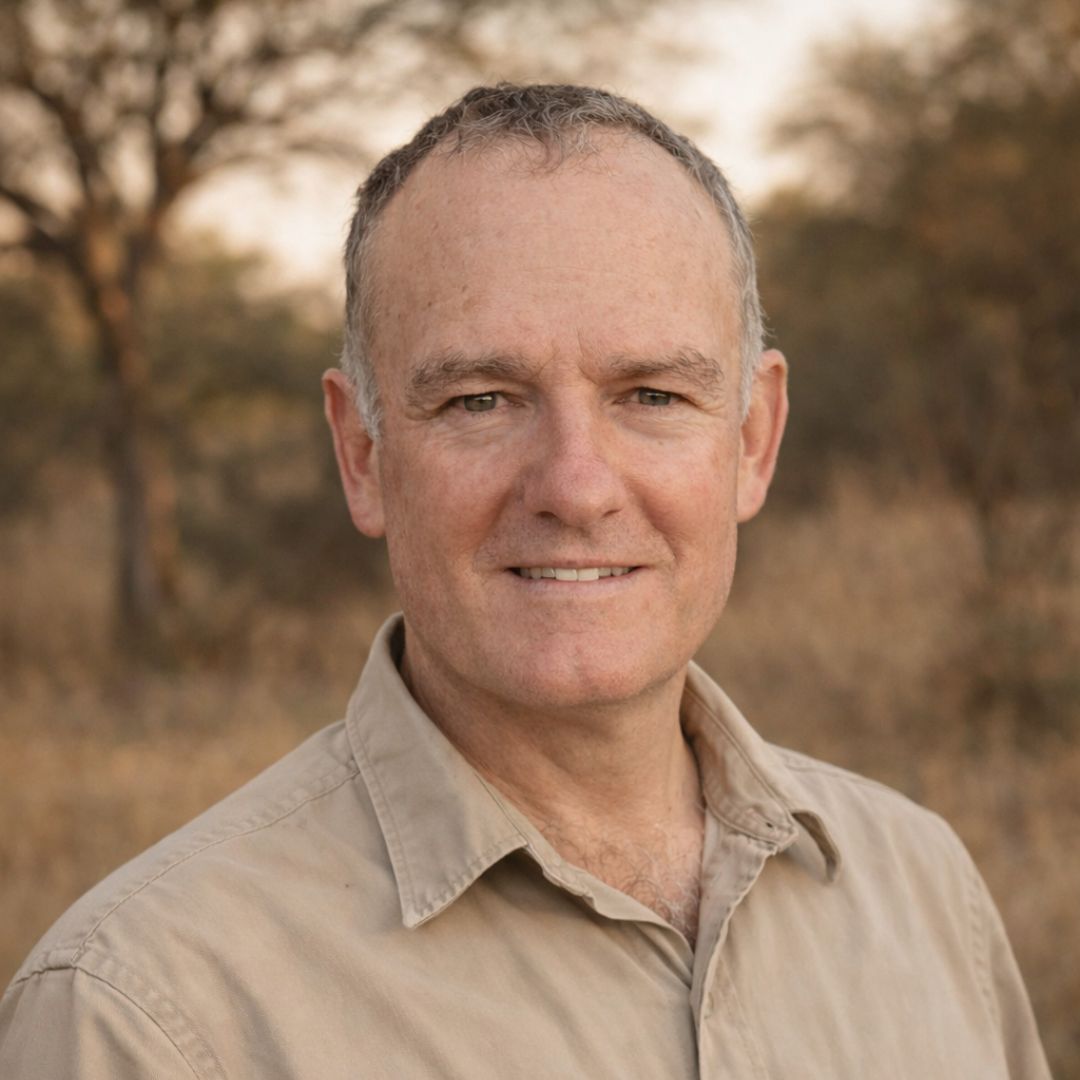
Sean Lues
Award Winning Safari Guide
Content by Award Winning Safari Guides
The content on African Signature Journeys is overseen by Sean Lues, an award-winning professional safari guide who was born and raised in Zimbabwe and has spent decades living, guiding, and managing safari operations across Africa.
Winner of the Zimbabwe Professional Guides Association Guide of the Year award, Sean is recognised for his deep knowledge of African wildlife, landscapes, and safari experiences. Now based in Australia, he combines firsthand African expertise with an understanding of what Australian travellers want from their safari adventure.
His experience helps ensure the information, recommendations, and insights shared by African Signature Journeys are practical, accurate, and based on real-world experience.