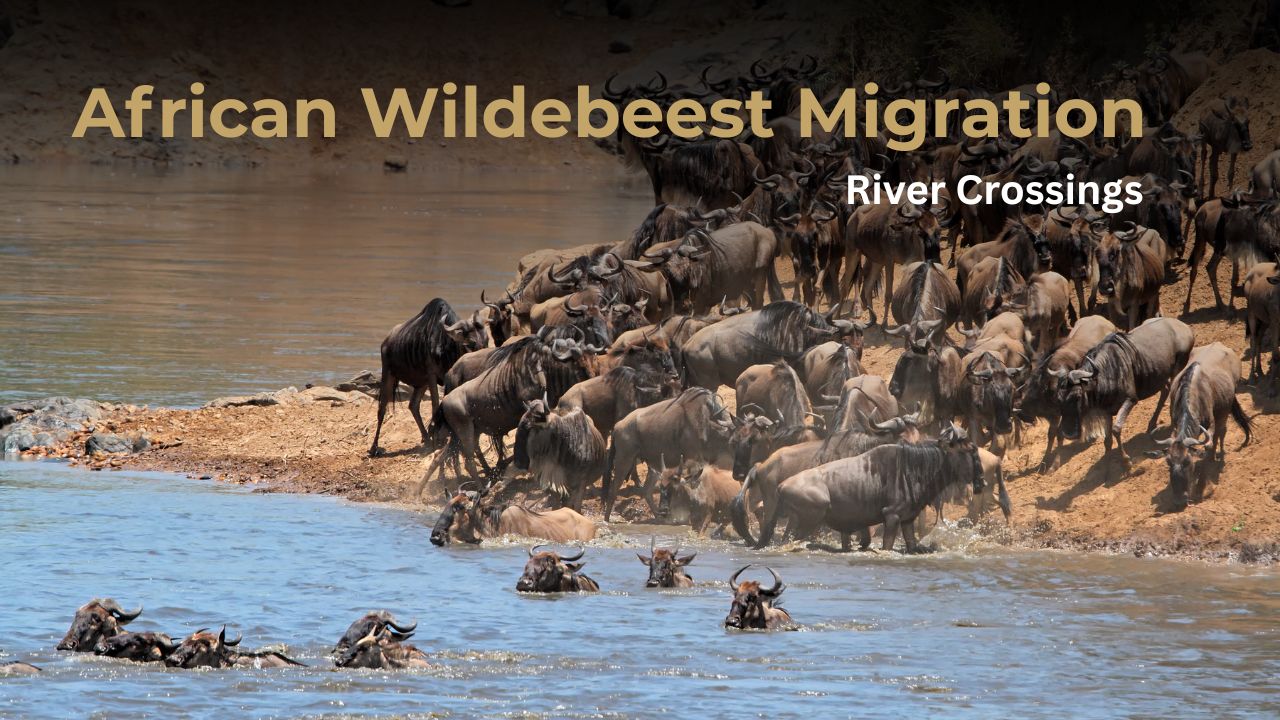
The Mara River Crossings: Drama, Danger, and What Nobody Tells You
If the Great Wildebeest Migration is Africa’s greatest wildlife event, the Mara River crossings are its most electrifying moment. Our migration overview explains where the crossings fit within the full annual cycle. This guide goes deeper, into the mechanics of what actually happens, the geography that shapes it, and the practical realities of watching it.
There is genuine drama here. There is also genuine misunderstanding, and the misunderstanding costs travellers significantly if it shapes their planning.
Two Rivers, Two Crossing Seasons
The migration’s river crossing season actually begins before the Mara River is even reached.
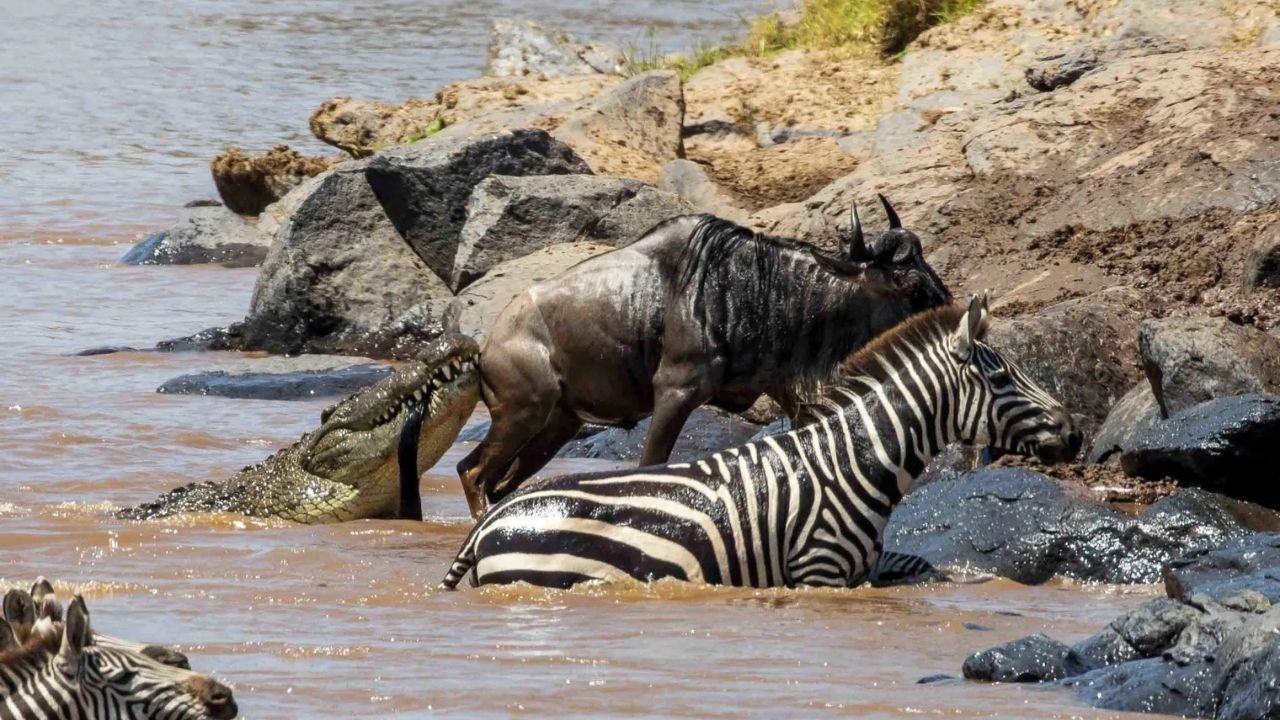
From May through June, the herds push northwest through the Serengeti’s Western Corridor and encounter the Grumeti River. The Grumeti is very different from the Mara, slow, sluggish, choked with papyrus and water hyacinth. It’s still, warm pools are home to enormous Nile crocodiles, some of the largest and oldest on the continent.
The Grumeti crossings are less photographed than the Mara crossings but no less dangerous. The crocodiles here have learned to ambush at predictable shallow crossing points. The water obscures their approach. A wildebeest at the Grumeti often does not see the threat until it is too late.
The Mara River crossings begin in earnest from late July. The Mara flows through the northern Serengeti before crossing into Kenya’s Masai Mara. It is faster, deeper in places, and lined with steep clay banks that make entry and exit treacherous. This is where the iconic crossing images originate.
The Geography of a Crossing
Understanding the physical geography of the Mara River explains why the crossings happen as they do.
The northern Serengeti’s river runs through a corridor of fig trees, doum palms, and riverine bush. The banks vary: in some places they are gently graded, allowing easy descent to the water. In others, they drop two to three metres in near-vertical clay walls.
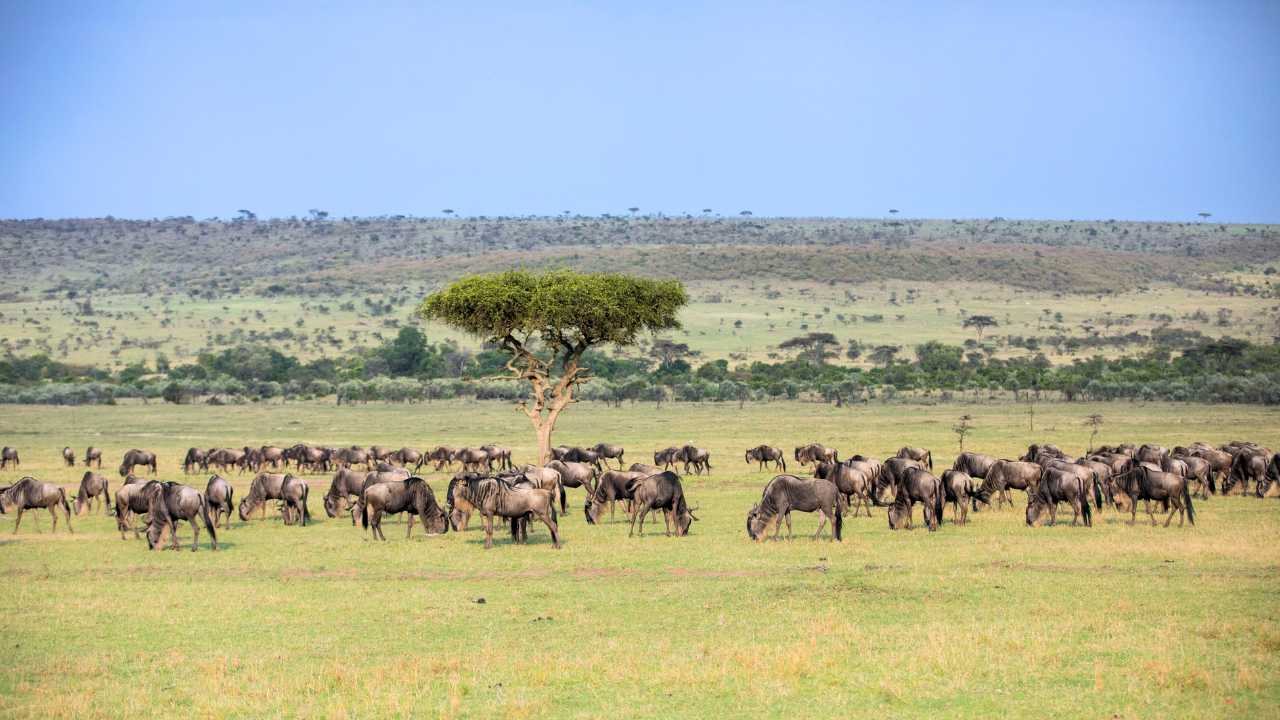
The herds gather on the high bank above a crossing point, sometimes for hours, sometimes for days. They pace the edge. Individuals approach and retreat. There is clearly something that functions like collective hesitation.
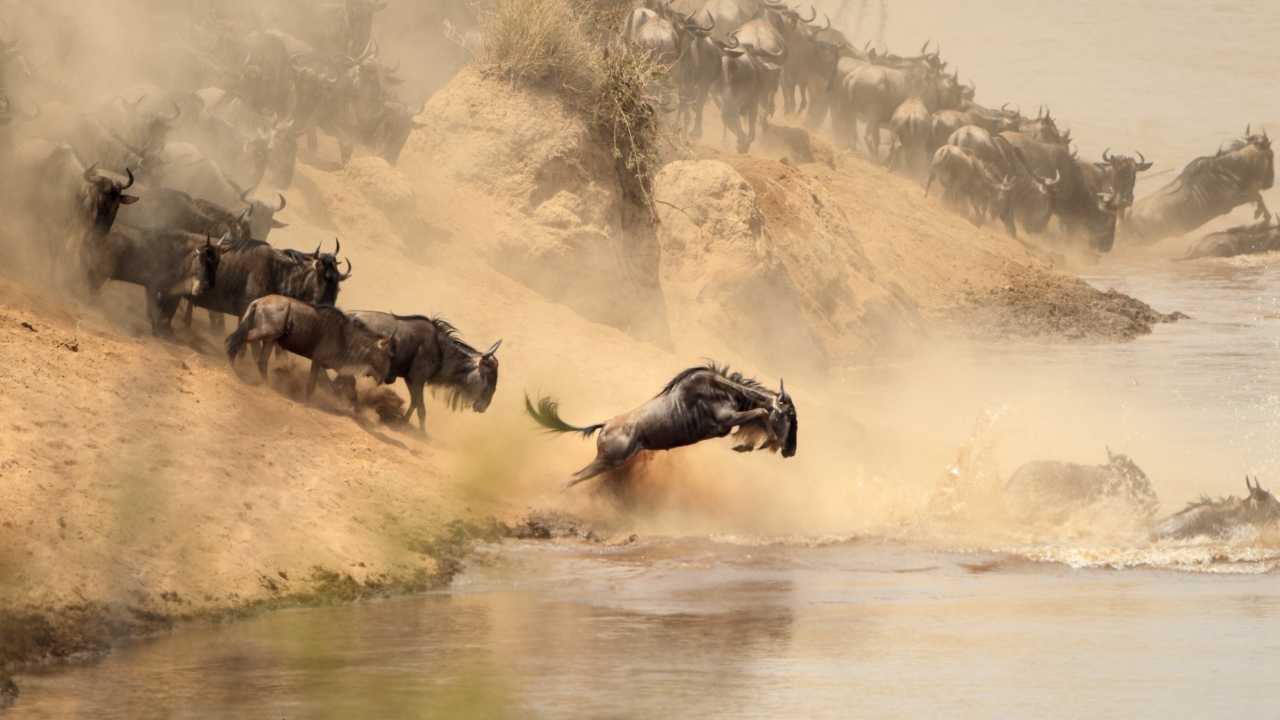
Then one animal jumps.
The trigger that causes the first wildebeest to leap is not fully understood. It appears to involve threshold dynamics, a critical density of animals pressing toward the bank that makes hesitation unsustainable. Once the first animal enters the water, the herd follows in a wave that cannot be stopped.
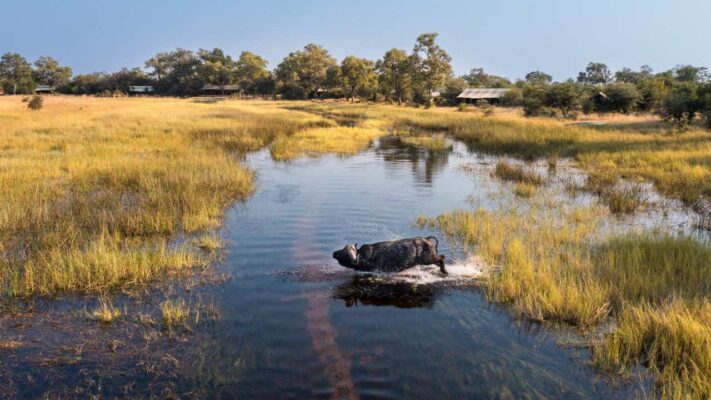
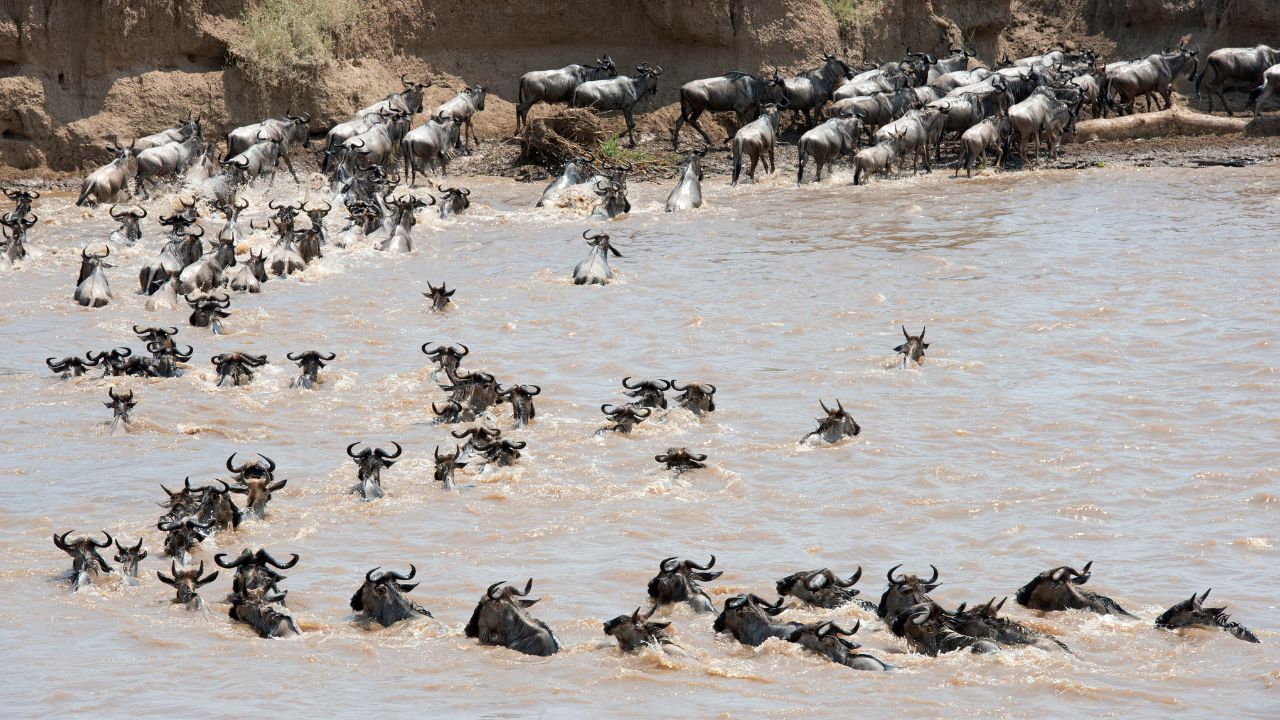
Thousands of wildebeest enter the water simultaneously. The current sweeps downstream animals. The crocodiles move. The crush is violent, chaotic, and extraordinarily loud. Animals are trampled in the shallows, dragged under mid-river, or slammed against the far bank by the force of the current and the bodies behind them.
Those that emerge on the far side scramble up whatever exit they can find, often being pushed down again by animals coming from above. Then it ends, usually in minutes. The survivors move off.
The Kenya vs Tanzania Question
Here is the fact that most travellers get wrong, and that some itineraries are built around incorrectly.
The Mara River does not form the international border between Tanzania and Kenya. The river runs through the northern Serengeti in Tanzania. When wildebeest cross the Mara River, they cross from one Tanzanian bank to another Tanzanian bank.
You do not need to be in Kenya to witness a Mara River crossing.
A significant proportion of the migration, some estimates suggest more than half, never enters Kenya at all. These animals spend the crossing season in Tanzania’s northern Serengeti, crossing the Mara River back and forth between the Tanzanian banks, and then heading south again when the short rains arrive in November.
The assumption that Kenya equals crossings and Tanzania equals calving is wrong. The northern Serengeti holds the Mara River crossings and has been doing so for longer than the Masai Mara became the dominant choice for operators.
The Masai Mara in Kenya is excellent and worth visiting. But it is not the only, or necessarily the best, place to witness the crossings. It depends on timing, on where the herds are concentrated, and on your personal preference for crowd levels.
Northern Serengeti vs Masai Mara
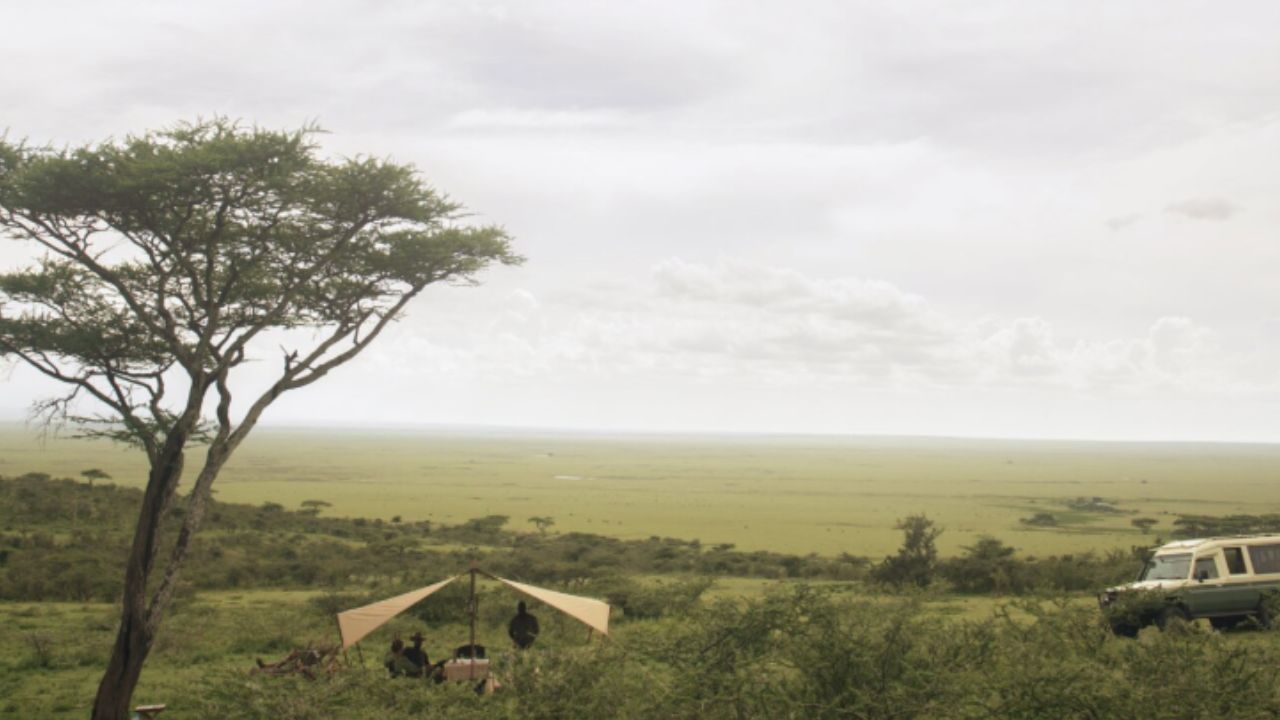
The Masai Mara offers well-developed infrastructure, a wide range of camps at different price points, and easy access from Nairobi. Crossing sites near the famous Serena and Governor’s crossings are well-known and reliably visited by game drive vehicles from multiple camps simultaneously.
On the Tanzanian side, there are still many camps, although not many permanent ones, with most camps being set up just for the migration ‘season’.
That concentration means crowds. On an active crossing day at a popular Mara crossing point, you may share the bank with twenty or many more vehicles.
The crossing itself is identical.
What will matter most – as in with every safari, but even more so here – is the quality of your guide. Not being tempted to race for crossings, unconcerned about what smaller wildlife is being run over in the haste to get there. Not having to be the one at the front of the queue, where the vehicle may actually be in the way of animals exiting the river. Being patient, waiting somewhere for hours, hoping this will be the right crossing. Being able to explain what is happening, what is going on around, keeping everyone interested in the greater system.
There are good guides out there – and there are good places to experience. You just have to make sure you get the right ones.
The Wait
Every experienced guide will tell you the same thing: the crossing cannot be predicted.
You go to the river, and you watch the herd build on the opposite bank. You wait. The crossing might begin in twenty minutes. It might begin in three hours. It might not happen that day at all, the herd retreats, disperses, and reconvenes elsewhere.
This uncertainty is not a flaw. It is the experience. The waiting itself, the tension, the false starts, the herd pressing forward and pulling back, is part of what makes the moment of crossing so overwhelming when it finally happens.
Most camps in the northern Serengeti and Masai Mara offer what guides call ‘crossing sessions’, full morning or full afternoon stints at the river, rather than brief drive-by visits. This approach is essential. Allocate time, bring water and sunscreen, and let the river dictate the schedule.
For visitors who want to understand the broader context of the migration, including the calving season that precedes the crossings, our Ndutu Calving Season guide covers that phase in detail.
For logistics, including visa requirements, health documents, and internal flight restrictions for Australian travellers, our migration planning guide has everything you need before you book.
Photography and Practical Conditions
The light at the Mara River can be challenging. The riverine vegetation creates dappled shadows. Crossing animals backlit by early morning sun produce silhouettes rather than detail, but this can also be used to your advantage.
Mid-morning light, from around 8 am to 10 am, often gives the best exposure at crossings. The sun is high enough to illuminate the action from the side without overexposing the sky. Dust and mist that often hang over the plains in the early hours have usually cleared.
Wildebeest are notoriously difficult to photograph in the harsh lighting conditions.
A 100–400mm zoom lens handles most crossing scenarios. The crossings happen at different distances depending on where the herd chooses to enter. A wide-angle lens is useful for environmental shots that convey the scale of the event.
Dust is minimal at the river but increases sharply when the herd builds and presses toward the bank. Protect your camera. The vehicle’s dust from movement on the tracks approaching the river is far more problematic than the crossing itself.
African Signature Journeys can help to position you at the right river at the right time. Contact us to start planning your crossing safari.
CONTENT SERIES: THE WILDEBEEST MIGRATION
→ Complete Safari Guide: Wildebeest Migration
→ Ndutu Calving Season: Wildebeest Migration
▶ Mara River Crossings: Wildebeest Migration ← You are here
→ Planning Your Safari: Wildebeest Migration
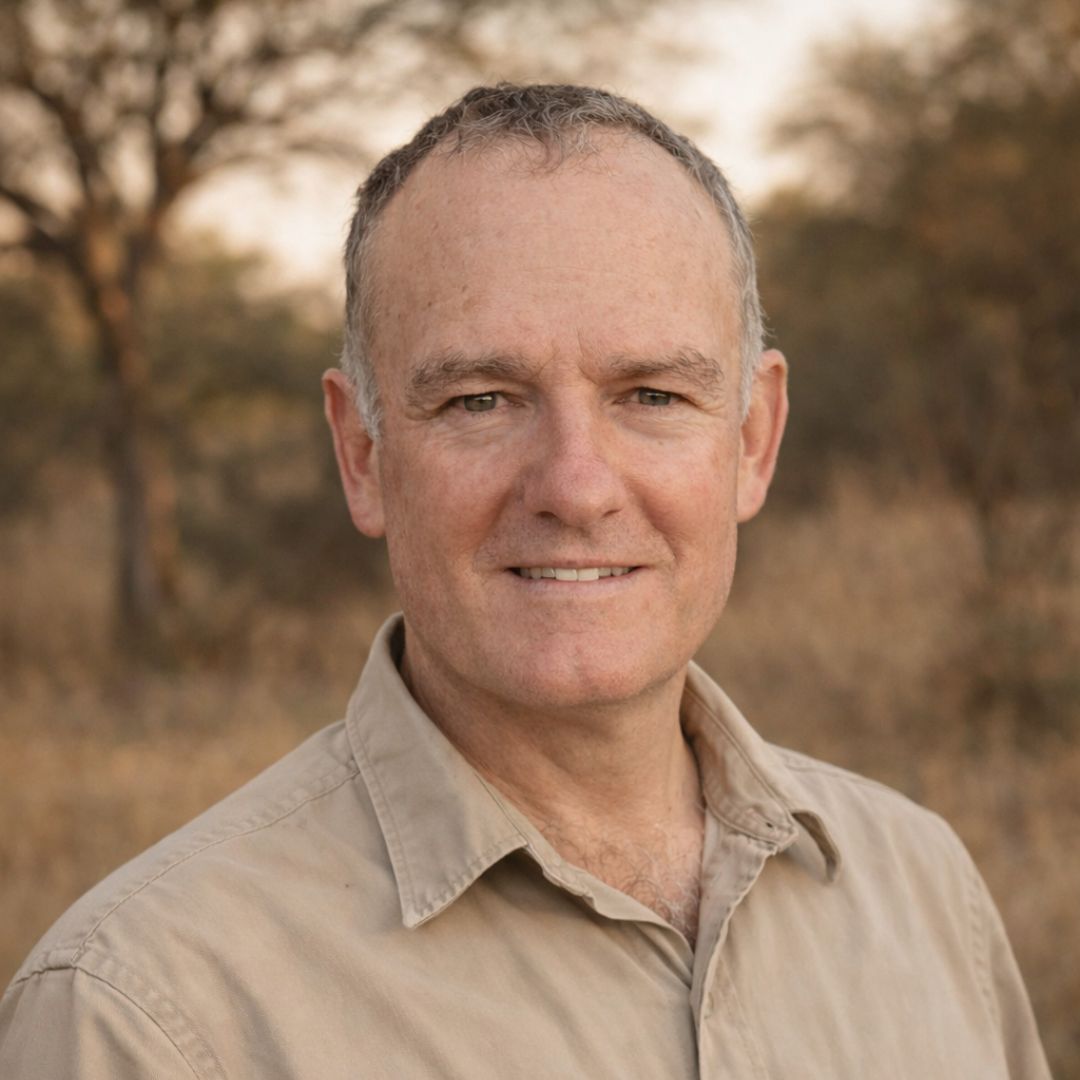
Sean Lues
Award Winning Safari Guide
Content by Award Winning Safari Guides
The content on African Signature Journeys is overseen by Sean Lues, an award-winning professional safari guide who was born and raised in Zimbabwe and has spent decades living, guiding, and managing safari operations across Africa.
Winner of the Zimbabwe Professional Guides Association Guide of the Year award, Sean is recognised for his deep knowledge of African wildlife, landscapes, and safari experiences. Now based in Australia, he combines firsthand African expertise with an understanding of what Australian travellers want from their safari adventure.
His experience helps ensure the information, recommendations, and insights shared by African Signature Journeys are practical, accurate, and based on real-world experience.
Do You Have a Question We Can Answer For You?
Connect with Sean